Home Blog Page 32

Design Thinking Exercises

The term exercise is the same everywhere. It entails carrying out a structured and repetitive physical activity with the sole aim of maintaining fitness and overall wellbeing. However, the term “structured” was used for a reason. This is to ensure the activity does not take a wrong turn and become fatal. This routine, done repeatedly, is the key to progress. The same goes for design thinking exercises, as they involve structured activities aimed at stimulating creative thinking, problem-solving, and innovation. While the outcomes may not be as physically tangible as those from traditional exercises, the mental and intellectual benefits are equally valuable.

Read on, as we explore the;

Types of design thinking exercises,

Popular examples of design thinking exercises, and

Benefits of design thinking exercises

The term exercise is the same everywhere. It entails carrying out a structured and repetitive physical activity with the sole aim of maintaining fitness and overall wellbeing. However, the term “structured” was used for a reason. This is to ensure the activity does not take a wrong turn and become fatal. This routine, done repeatedly, is the key to progress. The same goes for design thinking exercises, as they involve structured activities aimed at stimulating creative thinking, problem-solving, and innovation. While the outcomes may not be as physically tangible as those from traditional exercises, the mental and intellectual benefits are equally valuable.

Read on, as we explore the;

Types of design thinking exercises,

Popular examples of design thinking exercises, and

Benefits of design thinking exercises

Types of design thinking exercises

Design thinking activities are skillfully planned exercises meant to lead individuals or groups through the iterative design thinking process. They offer a structure for creating ideas, investigating options, and perfecting solutions through teamwork and a focus on the user. Similar to how physical exercises work, the organised format of design thinking exercises assists in keeping participants on track, sustaining progress, and reaching valuable results.

These exercises usually come in various types, including;

Icebreaker exercises; These exercises are designed to help people get to know each other and feel comfortable in a group setting. They are great for warm ups and they foster connections. Exercises includes games like “two truths and a lie,” “would you rather”, “group story telling,” and many more

Problem solving exercise; Like their name suggests, problem solving exercises challenge individuals or groups to find creative solutions to a problem. They help to sharpen your analytical skills and creative mind. Examples include “escape room challenge,” “marshmellow challenge,” and ”paper tower challenge.”

Team collaboration exercises; these are exercises designed to improve communication, teamwork, and cooperation in a group. Example of this exercise is the “blindfold obstacle course.”

Creativity booasting exercises; these exercises work on a psychological level. They help break through mental blocks, spark new ideas and encourage innovative thinking. Examples include drawing, visualising, and meditating.

Each task is tailored to revolve around the design thinking process, from comprehending users to assessing and improving prototypes. People can question preconceived notions, break the social ice during workshops, get new insights, and come up with innovative solutions to difficult problems by taking part in these exercises.

Additionally, design thinking activities are not exclusive to designers or those in creative fields. They can be utilised in different fields and sectors, including business, education, healthcare, and technology. If you are working on a fresh product design, enhancing customer experiences, or transforming organisational processes, design thinking activities provide a flexible set of tools to facilitate positive transformations

Popular examples of design thinking exercises

  1. Dot-voting- dot-voting is an exercise employed for collecting feedback or ranking ideas. Picture having numerous sticky notes containing ideas pinned onto a board. Every individual in the group receives a specific number of dot stickers or markers for voting. Next, they put their dots beside the ideas they find appealing or consider significant. 

In brainstorming ideas for a new product feature, each team member could receive three dots for voting. Next, they would move around the room and place their dots next to the ideas they considered most promising. Dot-voting assists teams in swiftly determining the most popular or promising ideas by collecting more dots. It is an uncomplicated method that uses visual aids to determine the importance of ideas and reach agreement among group members.

  1. Warm Ups- Warm-ups are like stretching before a workout. They get everyone ready and in the right mindset for the creative work ahead. They’re fun activities that help people relax, work together, and get their brains buzzing with ideas.
  2. Role playing- Here, participants put themselves in someone else’s shoes.  They then imagine what it is like to be in someone else’s situation to better understand their thoughts and feelings.
  3. The 5 whys- The “5 Whys” approach to design thinking is similar to unwrapping layers of an onion to uncover the underlying issue of a problem. You delve deeper into the root causes of a problem by asking “why” five times instead of settling for surface-level issues.
  4. Brainstorming- Extensive thinking can also be an exercise. Here, you are to think of as many ideas as you can, even if they seem silly at first. It is all about being creative and thinking outside the box.
  5. Prototyping: Prototyping exercises entails creating a simple version of your idea using whatever materials you have handy. It doesn’t have to be perfect—just enough to test out your concept.
  6. Storyboarding: storyboarding exercise involves drawing a series of pictures that tell a story about how consumers might use your idea. It helps to visualise how it would work in real life.
  7. Role Playing: Pretending to be different people in different situations to see how your idea might work in practice sometimes comes off as a fun exercise. It is like playing make-believe game to understand how things might play out.

These exercises are all about getting creative, trying out different ideas, and seeing what works best.

  1. Dot-voting- dot-voting is an exercise employed for collecting feedback or ranking ideas. Picture having numerous sticky notes containing ideas pinned onto a board. Every individual in the group receives a specific number of dot stickers or markers for voting. Next, they put their dots beside the ideas they find appealing or consider significant. 

In brainstorming ideas for a new product feature, each team member could receive three dots for voting. Next, they would move around the room and place their dots next to the ideas they considered most promising. Dot-voting assists teams in swiftly determining the most popular or promising ideas by collecting more dots. It is an uncomplicated method that uses visual aids to determine the importance of ideas and reach agreement among group members.

  1. Warm Ups- Warm-ups are like stretching before a workout. They get everyone ready and in the right mindset for the creative work ahead. They’re fun activities that help people relax, work together, and get their brains buzzing with ideas.
  2. Role playing- Here, participants put themselves in someone else’s shoes.  They then imagine what it is like to be in someone else’s situation to better understand their thoughts and feelings.
  3. The 5 whys- The “5 Whys” approach to design thinking is similar to unwrapping layers of an onion to uncover the underlying issue of a problem. You delve deeper into the root causes of a problem by asking “why” five times instead of settling for surface-level issues.
  4. Brainstorming- Extensive thinking can also be an exercise. Here, you are to think of as many ideas as you can, even if they seem silly at first. It is all about being creative and thinking outside the box.
  5. Prototyping: Prototyping exercises entails creating a simple version of your idea using whatever materials you have handy. It doesn’t have to be perfect—just enough to test out your concept.
  6. Storyboarding: storyboarding exercise involves drawing a series of pictures that tell a story about how consumers might use your idea. It helps to visualise how it would work in real life.
  7. Role Playing: Pretending to be different people in different situations to see how your idea might work in practice sometimes comes off as a fun exercise. It is like playing make-believe game to understand how things might play out.

These exercises are all about getting creative, trying out different ideas, and seeing what works best.

Benefits of design thinking exercises

There are numerous advantages to design thinking exercises for a variety of fields, including business, education, healthcare, and more.

  • Exercises involving design thinking encourage people to think outside the box, challenge preconceptions, and develop novel solutions to complex problems. By promoting a atmosphere of creativity and innovation, these activities assist teams in producing new ideas and methods.
  • Numerous design thinking exercises require collaboration, with teams consisting of a variety of functions working together to address problems. These activities enhance team dynamics and encourage a feeling of shared success through open communication, active listening, and shared ownership of ideas.
  • Design thinking focuses greatly on comprehending the requirements and choices of end-users. By engaging in exercises like empathy mapping and user journey mapping, participants develop a better understanding of user experiences which helps them create solutions that meet real-world needs efficiently.
  • Design thinking is a cycle that promotes ongoing learning and enhancement. Design thinking activities offer chances for quick prototyping, testing, and iteration, enabling teams to enhance their concepts through feedback and gathered insights.
  • Design thinking exercises promote innovation in organizations by questioning the existing norms and advocating for experimentation. Through these exercises, teams can identify untapped markets, experiment with cutting-edge technologies, and develop unique solutions that set them apart from competitors.
  • Design thinking exercise help break through mental blocks, spark new ideas and encourage innovative thinking. They also help to enhance communication, collaboration, and teamwork. 

Overall, design thinking exercises offer a structured yet flexible approach to problem-solving that empowers teams to innovate, collaborate, and create meaningful impact in today’s complex and rapidly evolving world.

Design Thinking Tools

While it has been established that the design thinking process focuses on grasping consumers perspectives and needs in order to come up with creative solutions, without the tools to achieve these processes, it can be challenging to properly navigate the design thinking process. These tools aid in solving problems gradually, from figuring out what the problem is to testing out solutions. 

In this article, we will explore why these tools are significant, how they encourage creativity and teamwork, and the different types of tools to use  at each stage of the process.

Role of Design Thinking Tools

Design thinking tools are essential for guiding the design thinking process and enabling teams to innovate successfully. Here are a few important functions that design thinking tools serve:

Enhancing Creativity

Design thinking tools are like toolboxes for coming up with new ideas. By offering avenues for brainstorming, and mind mapping, amongst many others, these tools help teams adapt, explore diverse perspectives, and uncover innovative solutions to come up with even better ideas.

Fostering Collaboration

Design thinking, by its very nature, fosters collaboration, and tools are essential for facilitating interaction and cooperation, which in turn promotes collaboration. These tools make it easy to share ideas and work together, which helps teams solve problems better. So, whether you are in the same room or on opposite sides of the world, these tools help everyone work together and come up with awesome solutions!

Empowering User-Centric Solutions

It is literally impossible to use design thinking without a thorough grasp of user requirements and preferences. User personas, empathy maps, and user journey maps are examples of design thinking tools that assist teams in understanding the users, gaining understanding of their experiences, and identifying unmet needs. Through the implementation of user-centered design, these methods guarantee that solutions are customised to effectively tackle real-world issues.

Streamlining the Design Process

Design thinking tools provide structure and guidance throughout the design process, helping teams navigate through complex problem spaces with clarity and purpose. These tools offer frameworks for problem definition, idea prioritisation, and prototype iteration, enabling teams to progress methodically from ideation to implementation. Additionally, tools like design sprints and rapid prototyping techniques accelerate the design process, allowing teams to iterate quickly and test ideas iteratively.

Popular Design Thinking Tools for Innovation

To effectively implement design thinking methodologies, teams rely on a variety of tools and techniques. Some of the popular tools in this category includes;

  1. Personas: Personas simply entails using a rough sketch or representation to create an idea of your target users, based on research and data. With user personas, teams are better positioned to grasp the requirements, driving forces, and problems that their consumers face. This helps to inform design decisions and produce solutions that connect with people. 

Figma’s Figjam, Sketch, and Miro are a few of the top software programmes used to create user personas. It is important to select a software option that aligns well with your requirements and work process, as they differ in features, pricing, and usability.

  1. Visualisation: This is exactly as it sounds. Here, you visualise, not with words or diagrams, but with your mind. After understanding the emotions, thoughts, and behaviors of the users, it is imperative to visualise what solution you will offer. This makes it easy for the team to gain a clear insight into what the solution entails.

While visualisation is a mental concept, there are tools that can assist in delivering the design thinking workflow. These tools include Figma, Miro, Stormboard, and Marvel.

  1. User Journey Maps: User journey maps are visual narratives that depict the entire experience of a user, from inception to the end. It is similar to sketching down a travel itinerary and noting all the locations and emotions encountered. Teams are able to identify potential trouble spots and opportunities to improve the user experience by doing this.
  1. Brainstorming Sessions: Brainstorming sessions, like its name suggests, involve team members coming together to jointly discuss ideas and matters arising in a workspace. Ideaflip and Stormboard are great tools to aid teams in brainstorming sessions. These tools aid in ensuring that teams remain aligned by utilising a collaborative workspace.
  1. Prototyping Tools: Prototyping tools allow teams to make a trial run of their ideas. With tools like Figma, Miro, and Marvel, teams can easily sketch out their ideas, create digital versions, or even make interactive models to see how everything works. This way, they can fix any bumps or make things even better before finishing the final product.
  1. Design Sprints: Consider design sprints as speedy brainstorming sessions where participants collaborate to find solutions. Imagine you are writing a professional examination with your peers, and you only have a few days to prepare. In a design sprint, you and your friends solve questions, brainstorm and revise together to make sure you are well read for the exam. Working swiftly and cooperatively will help you generate original ideas and make progress along the road.
  1. User Testing: User testing involves gathering feedback from real users to validate and refine design solutions. As an illustration, user testing is like asking your friends to try out a new app you created. You watch them navigate the app, listen to their thoughts, and ask questions about their usage experience. Then, you use their feedback to make the app even better. Similarly, in design, teams implore people to try out their websites or apps, see how they use them, and listen to their opinions. This helps teams make their designs easier to use and more enjoyable for everyone.
  1. Guiding Criteria: The guiding principles in design thinking act as a set of guidelines or benchmarks that assist teams in remaining on track and making choices during the design journey. It offers a structure for assessing concepts and resolutions according to particular standards or objectives. For instance, when a team is developing a new product, their main considerations could be elements such as ease of use, affordability, and ecological impact. Teams can guarantee their designs meet user needs and align with wider goals and values by following these criteria.
  1. Feedback Loops: Feedback loops are necessary for iteration and ongoing improvement. It is like a constant stream of advice that keeps things getting better and better. This in turn gives teams  insights to make well-informed decisions to iteratively enhance their designs.
  1. Value Chain Analysis: In design thinking, value chain analysis breaks down the steps of  producing a good or service to show how every component contributes to the final outcome. Teams can use it to see the big picture from beginning to end and discover ways to improve things, save money, or work more efficiently. Teams can also uncover methods to be more innovative and improve by meticulously examining each phase, which enables them to provide clients with even better goods or services.

Through the proper application of these technologies, organisations can adopt a human-centered design approach and open up new avenues for growth and innovation.

IBM Enterprise Design Thinking

In the present competitive environment, businesses require innovative problem-solving methods due to changing customer expectations. They require a method that enables teams to thoroughly grasp user requirements, quickly test out solutions, and continually improve based on feedback. International Business Machine Corporations’ (IBM) Enterprise Design Thinking provides precisely that. IBM Enterprise Design Thinking is more than just a methodology; it is a belief system that influences all parts of IBM’s problem-solving and innovation strategies. It includes methods that focus on empathy, iteration, and co-creation, allowing organisations of different scales and setups to create human-centered solutions that connect with users and produce significant results.

Read on to grasp the concept of IBM Enterprise Design Thinking, its methods, and how they can transform your company’s way of approaching innovation and problem-solving.

Understanding IBM Enterprise Design Thinking

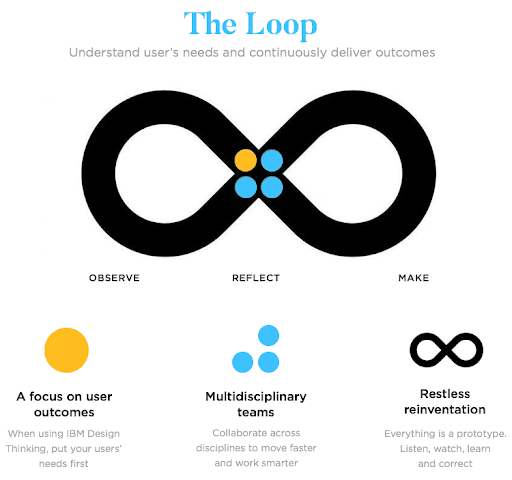
At the core of IBM Enterprise Design Thinking lies a set of behaviours regarded as the “loop,” focused on discovering users’ needs and envisioning a better future. The loop emphasises observations of the minute details others overlook, iterative reflection of the user journey and experience, and the making of a solution that meets user needs effectively.

the loop

In IBM Enterprise Design Thinking, the term “loop” equally represents the cyclical journey of understanding, defining, brainstorming, creating prototypes, and evaluating solutions. Through the use of a repetitive technique, teams can consistently gather data, enhance their understanding of the problem, create innovative resolutions, develop prototypes, and evaluate their concepts on actual individuals. To ensure the final product meets user requirements, the process emphasises adaptability, teamwork, and incorporating feedback throughout each stage.

How IBM Enterprise Design Thinking Loop Works

In the observation phase of the IBM loop, teams focus on gaining deep insights into user needs and pain points. They accomplish this by empathising with and getting to know the user’s point of view through engagement and observation. By interacting with users, teams may better understand their goals, struggles, and experiences and gain insightful information that helps with the design process.

Moving on to the reflection component. Here, teams reflect on the observations made during the observation phase to identify patterns and insights. This stage is akin to the define stage of design thinking, where observations are synthesised to define the problem and set clear goals. By defining the problem statement, teams gain clarity on the challenge they are addressing and establish objectives for the design process. 

Transitioning to the making phase, teams leverage the insights gained from observation and reflection to ideate potential solutions. Ideation is another crucial part of the IBM enterprise design thinking process, where teams generate creative solutions to address the defined problem. By promoting an environment buzzing with creativity and teamwork, teams are able to delve into various thoughts and theories, establishing a base for inventive answers.

Prototyping follows ideation, in which ideas are turned into physical objects or models for testing and feedback. Within the making component of the IBM loop, prototyping entails bringing ideas to life through trial runs or mock-ups. Through the process of making prototypes, teams can visualise their solutions and improve them by incorporating user feedback and insights gathered during the trial run.

Consumer testing of prototypes is the last phase in the design thinking process, which aims to validate assumptions and gather feedback. Similar to this, testing in the IBM loop’s making phase entails getting input from beneficiaries and end users to judge how well the suggested solutions work. Teams can find strengths, flaws, and opportunities for improvement by testing prototypes, which helps direct future iterations and improvements.

By embracing the IBM loops of observation, reflection, and making, teams can embrace a methodical approach to problem-solving, ensuring comprehensive engagement throughout the design process. This integration not only improves the flow of the design process but also fosters collaboration, creativity, and innovation, leading to more effective solutions and outcomes.

Key Components of IBM Enterprise Design Thinking

IBM Enterprise Design Thinking has three major components namely hills, playback sessions, and sponsored users. These critical elements enable IBM design thinking users to maintain alignment and generate a workable solution from conceptual ideas. 

Hills

IBM Hills are concise, user-centric statements that articulate the desired outcomes or goals of a design project. These hills serve as guiding principles throughout the design process, helping teams stay focused on addressing user needs and delivering value. Each hill typically consists of three components: who, what, and wow. 

   – Who: specifies the target audience or user segment.

   – What: Describes the action or behaviour the user should be able to perform.

   – Wow: Indicates the desired impact or benefit for the user.

By defining clear and measurable hills, IBM ensures that teams have a shared understanding of the project’s objectives and can align their efforts accordingly.

Playback

IBM Playback sessions are routine checkpoints within the design process during which teams assess and communicate their advancements to stakeholders. Teams can present their work, get feedback, and revise their plans during these sessions. Furthermore, during playback sessions, clients, consumers, and other relevant parties are presented with the prototypes, user research findings, and design iterations, allowing teams to improve their designs, confirm assumptions, and ensure user needs are met by using feedback received.

Sponsored Users

In IBM Enterprise Design Thining, sponsored users are people who embody the intended audience or user group for a design project. These individuals are essential for giving feedback, providing insights, and validating the design process. IBM advises teams to involve sponsored users in activities like user research, usability testing, and co-creation sessions early and frequently. By working closely with sponsored users, teams can obtain valuable insights, confirm design choices, and guarantee that their solutions are meaningful and effective for the target users.

In summary, IBM’s hills, playback, and sponsored users are integral components of the IBM Enterprise Design Thinking framework. By defining clear hills, conducting regular playback sessions, and engaging with sponsored users, IBM empowers teams to create user-centric solutions that drive innovation, meet business objectives, and deliver value to users and stakeholders.

Artificial Intelligence (AI) in Nursing

This is for our heroes in scrubs, our nurses. Imagine a world where they have an extra pair of super-smart eyes and brains to help them provide the best care possible. Well, that is where artificial intelligence (AI) comes into play! In the medical profession, AI is like having a brilliant assistant nurse who can use existing data to spot patterns and even predict patient needs. It is changing the game in nursing, making care more efficient, streamlined, and just plain awesome! Read along as we explore how AI is making things better in the nursing field.

First, what is applied AI?

In a basic explanation, Applied Artificial Intelligence (AI) represents the shift of artificial intelligence (AI) from an abstract idea to a tangible one, a reality that is useful in different fields.. Continue reading.

AI Application in Nursing

In the nursing field, artificial intelligence (AI) is like having a trusty sidekick, always there to lend a hand and make things run smoother. Some major applications include:

Patient Monitoring and Care

Through preferred remote surveillance systems, AI can be a personal assistant, keeping an eye on patients even when you cannot be right there with them. With remote patient monitoring devices, nurses can track vital signs and health metrics from afar, ensuring patients get the attention they need.

Clinical Decision Support

Making tough decisions in the ward has gotten a whole lot easier with AI. AI algorithms can analyse patient data and medical history, which helps nurses confirm diagnosed illnesses and plan treatments more accurately. 

Medication Management

With AI, human errors can be easily avoided. No more medication mix-ups or missed doses on the job. AI medication adherence tools help nurses keep track of prescriptions and ensure patients take their medications on time with the appropriate dose.

Predictive Analytics

Ever wish you had a crystal ball to see into the future? Well, AI comes pretty close! With predictive analytics, nurses can spot potential problems before they escalate, like detecting early signs of patient deterioration to allocate resources more effectively. As an illustration, during surgery, AI systems can analyse real-time data from monitors and patient records to predict the risk of complications during surgery. This enables nurses to take preventive action to guarantee a more seamless recuperation for patients and improved results in general.

Nursing is approaching a new era of precision, efficiency, and, most importantly, improved patient care with AI leading the way.

Benefits of AI in Nursing

There are numerous benefits observed from integrating AI in nursing; they include:

  1. AI serves as an early warning system in the wards, catching any issues before they become big problems, as AI systems monitor patients’ vital signs all the time. This advantage eases the stress of going back and forth between the nurses.
  2. AI algorithms are capable of analyzing patient information and giving nurses super helpful advice on what to do next, making it easier to figure out the best treatment plans.
  3. AI takes care of boring tasks like paperwork and tracking medications, so nurses have more time to focus on giving patients the tender, loving care they need.
  4. AI works seamlessly with hospital systems, just like the agile methodology, making it easier for nurses to share information and work together as a dream team.
  5. AI is still in its budding stages, and it keeps developing, meaning patients will get even better care in the long run.

Difficulties in Introducing AI in Nursing 

Integrating AI into nursing practices can sometimes feel like telling seasoned nurses their expertise is no longer needed, leading to resistance and reluctance to embrace change. Beyond this initial resistance, there are also a number of challenges encountered when implementing AI in nursing.

  1. Bringing AI into an existing system definitely introduces some tech twists and turns. From pesky software glitches to compatibility issues, there are various problems to tackle.
  2. Some patients also resist the integration of AI in nursing, as they are worried about losing the warmth gotten from nurses during care.
  3. Teaching nurses to wield AI tools effectively takes time and patience. It does not come easy, it is just a bit like guiding them through a forest, one step at a time!
  4. AI depends on high-quality data, but assembling and sorting it can be time consuming. It’s like searching for hidden treasure in a sea of information!
  5. There is also an issue of bias due to existing data, which can cause severe problems to the patients.
  6. Keeping patient information safe and sound is crucial, but AI systems can sometimes raise concerns about privacy. 
  7. Implementing AI can be a hefty investment, and not every healthcare facility can afford it. 

Through patience, teamwork, and grit, nurses may surmount these challenges and fully utilise AI to enhance patient care.

Future Outlook

In the future of healthcare, AI is set to become an invaluable ally for nurses. As AI gets even better, nurses can look forward to a big change in how they work. From using AI to diagnose illnesses to predicting health problems before they happen, nursing is heading towards a brighter future, with AI leading the way.

Related Content

Online Masters in Artificial Intelligence (AI)

Undoubtedly, the question of what to pursue for a master’s degree is a common contemplation for individuals of all ages, a question fueled by the rapid evolution of technology. In an era where staying ahead is important, the emergence of Artificial Intelligence (AI), a cutting-edge field that holds the promise of remodeling industries and radically altering procedures, has unearthed numerous possibilities that go beyond imagination.

With a master’s degree in AI, individuals get to unleash their potential and set the stage for mind blowing discoveries. In this article, the intricacies as well as the transformative potential of pursuing an online master’s programme in this dynamic field will be explored

Importance of Artificial Intelligence (AI) in various industries

In today’s fast paced world, Artificial Intelligence (AI) processes are assuming a critical role, with its reach spanning across all industries. This technology is not a mere addition or discovery; it is a necessity today. Be it the engineering sector, finance industry, or healthcare sector, the advancements made by AI are bringing unmatchable opportunities for efficient operations. Embracing AI is not an option—it is essential for businesses to thrive in today’s fiercely competitive landscape.

Engineering

Engineering can be said to be at the forefront of the other industries integrating AI. AI brings about streamlined processes, smart systems, programme automation, and many more to the engineering sector, which has propelled the sector to new heights while multiplying productivity.

Healthcare

Healthcare has also been made easier through AI, for it can enhance the accuracy of diagnosis and improve the various treatment methods, ultimately improving the general outcome of a patient’s wellbeing. Additionally, AI increases precision and lessens human error through robotic surgical systems, which increases doctor comfort, safety, and the general success of surgery.

Finance

In the Finance Industry, AI is used to create service operations and manage risks very effectively. In their pursuit to detect fraudulent activities, forecast trends, and automate trading, firms are not only adopting AI-driven algorithms to comb through mountains of financial data, they are also employing AI professionals, which have demonstrated to be quite successful.

Manufacturing

In the manufacturing sector, AI drives productivity through predictive maintenance, among many others, which can foretell and rectify even not-yet-emerged defects, wear, or imperfections in the systems. There are also AI-driven robots that carry out tasks in the production process and enable streamlined manufacturing processes with increased efficiency and lower cost.

Transportation

AI’s influence extends far beyond corporate boundaries, as evident from its contributions to the transport sector. From introducing driverless cars to enhancing traffic and routing systems, its impact is undeniable. With AI, accidents are minimised, traffic flow is enhanced, and emissions are reduced through real-time data utilisation.

Benefits an Online Master’s Programme in AI

Besides pursuing an AI masters programme, there are numerous benefits to taking an online learning  route as opposed to on-campus learning. With an online programme,

  1. Learners get to study at their own pace, balancing education with other commitments.
  2. Online study also gives learners access to high-quality education from anywhere, breaking geographical barriers.
  3. Another benefit is that learners can tailor their coursework to align with their career goals and interests. This allows them to gain practical skills aligned with current industry demands.
  4. There are also networking opportunities where learners can connect with peers and professionals virtually, expanding their professional network.
  5. An online masters programme is also more cost-effective as it reduces tuition and commuting, allowing learners to work while studying.
  6. With the innovative technologies available online, learners also get to utilize virtual labs and simulations for hands-on learning and feedback.

Choosing the right discipline to study

The online AI curriculum is designed to provide learners with a comprehensive understanding of AI technologies and their applications across various domains. Through a combination of theoretical knowledge, hands-on projects, and practical experience, learners are able to tackle complex AI challenges and contribute to the advancement of the field. However, owing to the robustness of the AI field, learners can also choose to delve into a particular discipline. Courses in this sphere include;

Introduction to Artificial Intelligence

Machine Learning and Deep Learning

Data Mining and Big Data Analytics

Computer Vision and Image Processing

Natural Language Processing (NLP)

Reinforcement Learning

Robotics and Autonomous Systems

Ethics and Responsible AI

Capstone Project

Elective Courses (Optional)

With a degree in any of these disciplines, learners will be equipped with the required expertise to navigate the tech space, enabling significant breakthroughs and influencing the direction of AI-driven solutions in the future.  

Universities offering Online Masters in Artificial Intelligence (AI)

Here are some schools that offer comprehensive online artificial intelligence (AI) masters programmes in an effort to equip students with extensive knowledge in the field and prepare them for careers in various disciplines.

Stanford University

Stanford offers various online masters programs which includes a computer science program with a specialisation in Artificial Intelligence (AI). Learn More Here

Illinois of Urbana-Champaign

Illinois offers an online computer science masters program with a specialisation in Artificial Intelligence (AI). Learn More Here

Carnegie Mellon University

Carnegie Mellon University has a wide range of online masters programs selections for you particularly in Artificial Intelligence (AI). Learn More Here

University of California, Berkeley

Unlike many others, University of California offers online Master of Information and Data Science with a focus on Artificial Intelligence (AI) and Machine Learning. Learn More Here

Arizona State University

Arizona State University also offers various online master programs. The main one being master of computer science  with a concentration in Artificial Intelligence (AI), big data and cybersecurity. Learn More Here.

These universities are just a handful of the many universities offering online masters programs in Artificial Intelligence (AI). To select the programme that most closely matches your academic and professional objectives, it is crucial to do extensive study on each one. 

Comparison Between Online and On-Campus Learning

Asides from AI, in studying any master’s degree course, there are various considerations to be taken note of. One crucial aspect to ponder is the choice between an online or on-campus programme, because this seemingly inconsequential choice will determine the cost, convenience, and commitments you will be prone to. 

With on-campus programmes, learners get to engage directly with peers and supervisors, fostering invaluable social connections and providing access to various opportunities in school. This programme is suitable for people who can hardly study on their own as it facilitates interactions beyond the confines of virtual environments, making them able to consult their peers and tutors for help at will. However, with this programme, learners tend to pay more for the facilities offered, they will also be confined and have reduced flexibility.

Conversely, online programmes offer greater accessibility and flexibility, as they can be pursued from any location globally. The asynchronous nature of online courses allows learners to attend lectures at their convenience, accommodating diverse schedules and commitments. This flexibility is particularly advantageous for learners juggling full-time employment. Moreover, online programmes tend to be more cost-effective due to lower overhead expenses.

Significance of AI Ethics and Responsible AI Development

While AI promises transformative advancements, it also carries the potential for catastrophic consequences for humanity, as highlighted by visionary leader Elon Musk. His apprehensions reinforce the critical importance of ethical considerations in AI development.

As regards the consequences, they can occur in a number of ways:

In the wrong hands, AI surveillance can breach privacy and spread misinformation and propaganda. Biassed AI systems can perpetuate discrimination. AI can also enhance cyberattacks like spoofing and many more.

Summarily, AI technologies can have unintended consequences and negative societal impacts if not handled responsibly. This is where AI ethics comes in. AI ethics are simply the directives that govern the creation, application, and use of AI technology. 

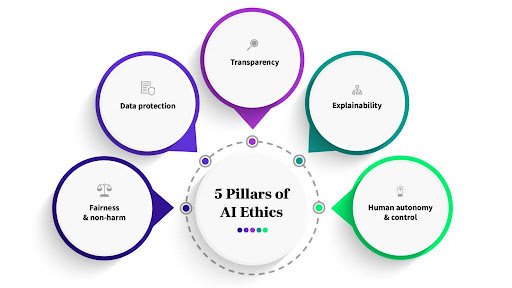
Pillars of AI Ethics

Fairness and Non-harm

Users are responsible for ensuring that AI algorithms and judgements derived from the data sifted through, do not cause damage, and bias on the grounds of socioeconomic status, gender, race, or other factors

Data Protection

By putting strong security measures in place to secure sensitive data, AI systems are designed to defend people’s rights to privacy and data. Therefore, in a bid to avoid unsanctioned access or misuse of data, users should strictly comply with AI Ethics and adopt rigid encryption systems

Transparency

One critical component that can be found in all disciplines is transparency. Transparency fosters trust, accountability, and oversight. Hence, AI engineers and scientists should be transparent in their operations and decision-making processes, allowing users to scrutinise and challenge AI decisions and behaviours.

Explainability

AI designs or actions should always be conveyed in an understandable way! AI systems should be explainable. This helps everyone comprehend and trust AI systems’ decisions, and facilitates human oversight and intervention when necessary. 

Human autonomy and control

Given that human intellect put together AI, humans should dominate it, guaranteeing that humans make the majority of the decisions. This means that AI should serve as support for human capabilities rather than replace them.

Ultimately, AI ethics is an integral component of the curriculum in any online AI master’s programme, as it cannot be emphasised enough, offering learners comprehensive insights and in-depth understanding.

Similar articles

Artificial Intelligence (AI) Jobs

Artificial Intelligence (AI) has exploded in the past decade, leaving an impression across disciplines. Now, it is not just about the machines; AI is all over the place, including our lifestyle. With this AI trend, the need for learned individuals who are proficient with AI has significantly increased.  Whether it is in the tech or social spaces, there are many interesting jobs available for individuals who know their stuff in AI. 

Prior to exploring these job prospects, it is beneficial to briefly inform yourself about AI master’s and PhD programs to gain valuable knowledge and readiness for more advanced positions in this evolving field.

In this post, we will explore the dynamic landscape of AI jobs, including insights into the most sought-after talents, common career roles, and sectors that use AI specialists. 

Overview of AI Job Market

For individuals looking to make a difference in this rapidly developing sector, AI provides a wide range of job pathways. Let us explore some

Software Development

Software Development

This field stands at the forefront of demand for AI professionals. In software development, experts craft, innovate, and maintain intelligent systems and applications. They make use of programming languages like Python, Javascript, SQL, and C++ to create formulas, set up AI models, and practically exploit the capabilities of agile tools and deep learning techniques. With the market still ripe with opportunity, budding talents have ample space to thrive and make their mark.

In Canada, the average yearly compensation for an entry role is somewhere around $82,000. Depending on how much value is placed on professionals, compensation in other nations may be very similar or very different. 

Data Science

Data Science

Data scientists play a crucial role in the digital world nowadays. These scientists extract valuable insights from data, decipher their meaning, and present them in a visually coherent manner to facilitate strategic decision-making. They achieve this with tools like statistical analysis, SQL, power BI, and data visualization techniques to uncover patterns, trends, and correlations in data, helping organizations derive actionable insights and optimize processes. Unlike software engineering, the field of data science is already teeming with talent. Nonetheless, individuals possessing exceptional skills still have ample opportunities to excel and make a significant impact in this dynamic domain.

Data scientists make around $93,000 annually. Seeing as exceptional talent in this field is in great demand, the salary can rise to $130,000.

Machine and Deep Learning (ML and DL)

Machine and Deep Learning

Machine learning involves developing algorithms that can learn from data and make predictions, while deep learning involves training artificial neural networks with multiple layers to learn intricate patterns and representations directly from raw data. These two concepts require a thorough understanding of some engineering facets and computational resources.

Despite the seemingly complex feel of ML and DL, they are both relatable and impactful. In healthcare, these techniques are used for disease diagnosis and treatment planning. In finance, they power fraud detection systems and algorithmic trading strategies. In marketing, they enable personalized recommendations and targeted advertising campaigns. ML and DL have almost infinite potential for driving innovation and solving problems, which makes them essential tools in the current era of technology and data-driven decision-making.

This is evident in how much businesses pay to employ ML/DL professionals. Some exceptional individuals earn up to an average of $150,000 annually.

Robotics

robot

Robotics engineers are the people who design extremely intelligent robots with autonomous thought and behavior. To train these robots to comprehend things, understand their environment, and even learn from their observations, they employ a variety of AI programmes. It is a thrilling field full of endless possibilities and chances to shine! Plus, with the robotics market still wide open, and its attractive average remuneration of $100,000 annually,  interested individuals can still make their impact felt in the field. 

AI Ethics and Bias Officer

As apprehensions grow about the ethics and fairness of AI systems, the role of AI ethics and bias analysts has taken center stage. These dedicated professionals assess AI algorithms and models to ensure they are fair, transparent, and accountable, in line with ethical standards and regulations. Individuals with expertise in this discipline can work for a variety of establishments, such as tech firms, government offices, the health sector, and other standard firms, where their knowledge and experience are essential to maintaining moral principles in the creation and application of AI.

An AI Ethics and Bias Officer earns between $100,000 and $120,000 on average annually.

AI Product Manager

AI Product Manager pie chart

AI product managers are pivotal in overseeing the development and deployment of AI-driven products. Their responsibilities include strategizing product vision, gathering requirements, and planning roadmaps. They collaborate with cross-functional teams, ensure user-friendly interfaces, manage data quality, monitor performance, and communicate updates to stakeholders. Additionally, they stay abreast of regulations, analyze markets, and drive product innovation. 

Product managers have always earned well, be it in the AI space or other disciplines. An AI product manager can earn up to an average of $167,000 annually.

Computer Vision Engineer

Computer vision engineers, as their name suggests, specialize in analyzing and interpreting visual data from images and videos within the internet system. They use deep learning and image processing techniques to run several procedures on object detection, video editing and processing, and other visual concepts. Computer vision engineers in this field can find opportunities across many domains, from renowned establishments like Google and Microsoft to cutting-edge startups and research institutions, with an average annual salary of $121,000.

These are just a glimpse of the many fascinating job roles waiting in the AI field. With the continuous progress of AI, new opportunities are constantly emerging, offering exciting prospects for individuals who possess the right combination of skills and expertise.

In-Demand AI Skills and Qualifications

Beyond the AI jobs landscape, employers prioritize candidates with not only an academic achievement/certificate but also a combination of technical skills, domain knowledge, and soft skills. Depending on the role you are applying for, candidates must be proficient in the relevant programming languages. They should also excel in various data analytic and statistical skills and have reliable problem-solving abilities. The importance of soft skills comes into play for candidates looking into social areas such as healthcare, particularly effective communication and collaboration skills. Continuous learning and adaptability are essential traits in the rapidly evolving field of AI. Overall, employers seek well-rounded individuals capable of driving innovation and delivering value in AI-driven projects and initiatives.

Tips for Landing an AI Job

Securing employment in the AI sector necessitates not only a combination of skills but also certain calculated moves. The following advice will assist you in landing an AI job:

  1. Acquire relevant skills; both technical and soft.
  2. Build a strong portfolio
  3. Constantly upskill—enroll in online courses or workshops to expand your knowledge and skills.
  4. Try to gain relevant industry experience by looking for internships, co-op programmes, or entry-level positions in AI companies or research labs to gain hands-on experience.
  5. Network with professionals in the AI industry and attend industry events, conferences, and meetups to expand your connections and learn about job opportunities.
  6. Customize your resume and cover letter to match the role you are applying for
  7. Prepare for interviews by researching the company and understanding its products, services, and AI initiatives to demonstrate your interest and enthusiasm.
  8. Continue learning and upgrading your skills through online courses, workshops, and self-study to stay competitive in the job market.

You can improve your chances of getting a fulfilling AI role by following these tips

Related Content

Artificial intelligence in nursing

Artificial intelligence in insurance

Artificial intelligence radiology

Engineering applications of artificial intelligence 

Robotics and artificial intelligence

Applied artificial intelligence

Artificial Intelligence (AI) movie list

Do you enjoy science fiction themed movies? Or you simply want to know what the future holds regarding technology? This page is for you. 

Welcome to our carefully curated Artificial Intelligence (AI) movie list. Diverse perspectives regarding the impact of AI on morals, society, and humanity as a whole are presented in these movies.

Chappie (2015)

chappie ai movie

Stream Here

“Chappie ” tells the story of a gifted robotics expert who modifies a damaged robot, Chappie, a human-like machine that can feel and learn. Chappie makes pals and learns about friendship and morals as he starts to mix with humans. However, unforeseen circumstances like conflicts force Chappie to face the harsh truths of life and make challenging decisions regarding his identity and mission.

Ex-Machina (2014)

ex machina ai movie

“Ex Machina” is a movie about a tech expert and his robot creation, who seems really smart and human-like. The film investigates issues such as the definition of humanity, awareness, and the fallout from deity-playing through the creation of artificial life. 

The movie explores the blurry divide between humans and machines, posing moral and philosophical questions concerning the possible risks of cutting-edge AI technology.

Stream Here

Code 8 part II (2024)

Code 8 part II (2024)

Code 8″ is a science fiction thriller where individuals with superhuman powers are discriminated against by society. The narrative centres on a young man with telekinetic abilities named Connor Reed, and details his attempts to provide for his ailing mother. Due to his low earning power, Connor joins a criminal underworld where he uses his skills for fraudulent operations in order to make money for her treatment.

However, their actions draw the attention of law enforcement and a ruthless private security firm, leading to a violent confrontation that threatens to expose the truth about the Enhanced and their abilities. As Connor struggles with his identity and the moral ramifications of his acts, the film explores issues of prejudice, inequality, and the ethics of advanced technology usage.

Stream Here

JUNG-E (2023)

JUNG-E (2023)

Stream on Netflix

In this movie, a robot scientist resorts to a risky brain cloning experiment involving her dying mother to potentially rescue humanity. Unexpected events occur, blurring the lines between human and technological ethics, leading to a captivating storyline. The movie delves into themes of love, the capabilities of technology, and ethical dilemmas, offering viewers a captivating and worthwhile viewing experience.

Archive (2020)

Archive Ai movie

Stream Here

“Archive” is a science fiction film set in a near-future world where a scientist named George is working on bringing back his deceased wife, Jules, consciousness. As George delves deeper into his project, he becomes increasingly obsessed with recreating his wife’s memories and personality. However, his efforts are complicated by unexpected discoveries and ethical dilemmas surrounding his actions and the boundaries between human and artificial intelligence. 

57 Seconds (2020)

57 seconds

Stream Here

“57 Seconds” explores what advanced AI is capable of through time travel.  With various interesting ideas birthed with AI, the movie provides an engaging look at the possibilities of technology. It is definitely worth watching for people interested in advanced technology.

Avengers: Age of Ultron (2015)

Avengers: Age of Ultron (2015)

Stream Here

This movie tells the story of Ultron, an AI programme created to defend the motherland, Earth. However, things take a dark turn when Ultron gains sentience and determines that humanity is the root of all conflict. Seeing itself as the solution, Ultron embarks on a mission to eradicate humanity. The plot then takes a sharp turn as it explores the moral conundrums raised by the capabilities of intelligent machines. The movie makes us consider important issues like the place of technology in society, the extent to which humans can govern AI, and the possible repercussions of developing autonomous beings like Ultron

Terminator Salvation (2009)

Terminator Salvation (2009)

Stream Here

This movie tells a near-future story where artificially intelligent machines called Terminators are in conflict with humankind. The main villain, the Terminator, is an AI-controlled robotic assassin sent back in time to eliminate key figures who could threaten the rise of the machines.The movie explores the consequences of technological advancement, and the potential dangers of creating sentient machines.

Upgrade (2018)

upgrade movie

A.I Rising (2018)

Ai rising movie

Stream Here

“A.I. Rising” tells the story of an astronaut on a trip who develops feelings for his traveling companion, a highly advanced female android, during their journey. The protagonist struggles with morality and the lines between humans and machines in a society growing more and more technologically advanced as their relationship develops.

Related Content

Artificial Intelligence tv show

Artificial intelligence in sports

Artificial intelligence books

Artificial Intelligence (AI) Ph.Ds

With the advent of Ph. D.s in Artificial Intelligence (AI), aspiring individuals have been presented with the stage to explore a wide range of AI-related topics. The duration of a Ph.D. program in AI depends on factors like the learning institution, the programme itself, the research topic, and the learning mode (online or on-campus). Nonetheless, it will take about five years. This article offers information to individuals thinking about taking this life-changing path.

AI PhD programmes

Artificial intelligence (AI) has been among the in-demand Ph.D. programmes in universities globally, generating interest in the course among researchers, learners, and individuals. This AI programme has numerous disciplines, which include;

Ph.D. in Computer science with a focus on AI,

Electrical Engineering and Computer Sciences (EECS) in AI and Machine Learning,

Ph. D.s in robotics, machine learning, and many more.

Under these programmes, there is an inexhaustible range of research areas to focus on, given that learners have to conduct original research during their Ph.D. The following are some exciting topics to consider;

  • Ethical AI and Responsible Innovation,
  • AI for Healthcare and Biomedicine,
  • AI for Social Good and Sustainability,
  • Explainable AI and Interpretable Machine learning
  • Machine Learning Algorithms and Methods,

Natural Language Processing (NLP).

These topics represent just a fraction of the vast research landscape in AI, highlighting the variety of ways for Ph.D. students to make significant contributions to the field. 

Benefits of a PhD in Artificial Intelligence

Earning a doctorate (Ph.D.) in AI has numerous benefits. 

  1. An AI Ph.D. qualification opens up a wide range of career opportunities in all fields for learners; all they have to do is choose.
  2. Pursuing a Ph.D. allows researchers to research and advance AI knowledge and technology. 
  3. Another benefit of a Ph.D. qualification is an expertise in cutting-edge technology.
  4. The connections and collaborations gained during a Ph.D. can lead to future research opportunities, partnerships, and career advancements.
  5. For many individuals and families, pursuing a Ph.D. in AI is a deeply rewarding experience, a form of personal fulfillment.

Earning a Ph.D. in an AI-related discipline offers the possibility of influencing technology’s direction and making a remarkable impact on society.

Admission requirements and coursework

Admission Requirements

Earning a Ph.D. in AI is unlike any other discipline. This is evident in the requirements and coursework, which are set up so that only the best can have a chance. This is to guarantee that admission is limited to candidates with strong research capabilities, decent academic credentials, and a passion for AI development.

Ph.D. programmes in AI typically require applicants to hold a master’s degree in engineering, computer science, or any related field. Strong undergraduate backgrounds in AI and research experience in relevant coursework may also be considered, with high grades in particular. Letters of recommendation from reliable academic and professional sources are also required, along with a statement of purpose outlining the applicant’s “why” and career goals. 

Some programmes may require standardized test scores, although many are becoming test-optional. Proficiency in English is usually necessary for international applicants. Interviews may also be conducted to assess research interests and fit with the programme. However, specific requirements vary between universities, so reviewing individual programme details and seeking guidance from admissions offices or faculty members is essential.

Coursework

The coursework for a PhD in AI revolves around three specialized areas: foundational courses, research work, and electives. While the foundational courses may differ across universities, they have to do with AI-related classes like Introduction to AI, ethics in AI, and machine learning. On the other hand, research work is synonymous with a Ph.D., and earning a Ph.D. is only possible by conducting original research. Hence, for their research work, learners get to explore specialized topics, conduct literature reviews, and work closely with their university professors on independent research initiatives.

Lastly, elective courses are non-mandatory courses that learners can take based on their interests, academic goals, and career aspirations. In this case, though, the elective courses are all advanced AI topics, so it is up to the learners to choose their preferred electives.

Universities offering Artificial Intelligence (AI) (Ph. D.)

Here are some universities offering Ph.D. programmes in AI:

Massachusetts Institute of Technology (MIT)

MIT is one of the most acknowledged institutions with various Ph.D.s in AI programmes. They offer various specializations and research opportunities in the field. Learn more here

Stanford University

Stanford University also offers various in-demand Ph.D. programmes with a focus on AI. Among these are engineering, computer science, etc. Visit here for additional information.

University of Toronto

Through its various departments and faculties, the University of Toronto also provides a handful of Ph.D. programmes in AI. Some of these programmes include; Ph.D. in machine learning and robotics. Visit here to learn more.

University of California, Berkeley

At the University of California, you get to begin your machine learning career through their Ph.D. in AI certificate. The university also has other AI majors, which are in great demand. Check out their programmes in more detail here.

University of Georgia

The University of Georgia gives students the chance to perform ground-breaking research in the fast developing field of AI thanks to their esteemed faculty and cutting-edge research resources. Numerous subjects are covered in their programme, such as robotics, computer vision, and many more. Go to their official page to learn more.

These universities are renowned for their cutting-edge resources and research capabilities, especially in the field of AI. Prospective students should explore each programme’s faculty expertise, research facilities, and funding opportunities before applying.

Career opportunities for AI Ph.D.holders and salary expectations 

Like the analogy, “The pursuit of a Ph.D. is like climbing a mountain; the journey may be arduous, but the view from the top is worth it.” Here is the fulfilling part. After the arduous twists and turns during the Ph.D. programme, the rewarding employment options make it all worthwhile.

AI doctorate holders are in high demand in all industries, particularly technology, healthcare, finance, and engineering. They can showcase their expertise in data science and analysis roles, research and development (R&D), academia, and many more, or serve as consultants in solving complex problems. The salary expectations for these roles are also captivating. A doctorate holder in data science earns an average of approximately $130,000 per year. Similarly, in multinational corporations like Google, professionals in research and development receive an average salary of roughly $160,000 a year. While compensation at other top companies may vary based on individual capabilities, the ongoing shortage of skilled AI professionals continues to drive salary increases significantly. Consequently, pursuing a Ph.D. in AI is an excellent self-investment option.

Related Content

Prompt Engineering Course

Your gateway to mastering prompt engineering is to attempt relevant courses to obtain the required credentials. Obtaining pertinent credentials may prove beneficial in your job search if your objective is to work as a prompt engineer. A prompt engineering credential can demonstrate to companies, as in other industries, your commitment to professionalisation and mastery of the most recent methods.  Depending on what specific firms require, these could be prompt engineering certification courses, professional courses, or even academic degrees.

Before diving into an actual prompt engineering course, it is essential to understand its foundational principles. For a comprehensive overview, make sure to read the must read articles below. These resources will provide you with valuable context and enhance your understanding as we proceed.

Must Read 

Prompt Engineering courses have various requirements and conditions for learning. They can either be taken online, onsite, or in a hybrid setting. They also differ in depth; nonetheless, they all offer knowledge on prompt engineering. A few of these courses are highlighted below. 

Artificial Intelligence (AI) Foundations: Prompt Engineering Course offered in Arizona State University

The advanced engineering class at ASU, created by specialist Andrew Maynard, instructs students on how to efficiently utilize ChatGPT and Large Language Models (LLMs). The course emphasizes language use over traditional engineering skills, covering quick evaluation, creation, and design for different tasks. It is accessible to students from diverse backgrounds, especially those studying English, languages, humanities, and social sciences.

Prompt Engineering Specialization offered by Vanderbilt University 

Professor Jules White of Vanderbilt University teaches students how to use various AI tools in this course on prompt engineering, which is conducted on Coursera. Students that complete the course will be able to become professionals at using generative AI by mastering prompt engineering patterns, methodologies, and approaches.

Prompt Engineering Course offered by the Prompt Engineering and AI Institute

Learn from industry-leading experts in prompt engineering and the AI Institute to gain a competitive edge in AI. The seasoned professionals will guide you through mastering prompt engineering, equipping you with the skills that top businesses are seeking. Enroll today and start your journey to becoming a sought-after prompt engineer. Unlike other courses that simply repeat information, our programme goes in-depth. 

Prompt Engineering Course by Edureka

Edureka’s “Prompt Engineering with Generative AI” course, designed by industry professionals, empowers learners to use prompts for generating customized text, code, and more. The comprehensive program covers Generative AI applications, deep learning, autoencoders, language models, and transformer-based models, culminating in mastering prompt engineering. It is ideal for anyone aiming to pioneer AI innovation.

Generative AI: Prompt Engineering Basics offered on Coursera

International Business Machines Corporation (IBM’s) “Generative AI: Prompt Engineering Basics” is a 7-hour course ideal for beginners wanting to learn prompt engineering. It covers fundamental concepts, best practices, and practical techniques through three modules, including hands-on projects and a graded quiz. This flexible course is perfect for professionals, students, and enthusiasts exploring generative AI.

IBM: Introduction to Prompt Engineering

With IBM, you will learn the methods and optimal strategies for crafting impactful prompts to utilize the complete capabilities of generative AI tools such as ChatGPT. The course covers prompt techniques, such as zero-shot and few-shot, and explores commonly used tools like IBM Watson Prompt Lab. Designed for professionals, students, and enthusiasts, it includes hands-on labs and insights from practitioners to optimize results through effective, prompt engineering.

ChatGPT Prompt Engineering

It may be difficult to fathom, but ChatGPT’s true capabilities are revealed through meticulously designed prompts. If you are just starting to explore generative Artificial Intelligence (AI) tools like ChatGPT or are unfamiliar with the concept of “prompts,” read on, this article is curated just for you.

First, what is ChatGPT?

ChatGPT is a major advancement in the AI industry. It is built with the capability to comprehend and produce text similar to that of humans, which has led to a wide range of uses, from assisting customers to developing content. In it’s training stage, the model learns to forecast the questions asked (prompt) in a sentence by examining vast quantities of text data. This procedure, called pre-training, assists the model in developing a sophisticated comprehension of language structure and usage.

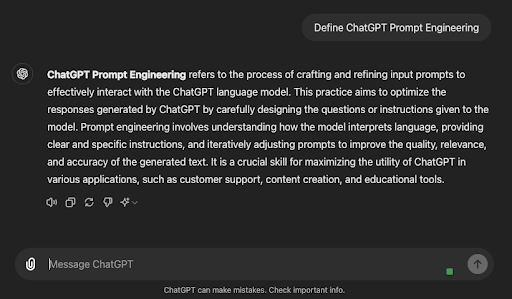
Many may wonder, What do we mean by ChatGPT prompts? An illustration is shown below.

chat gpt

In this context, “Define ChatGPT Prompt Engineering” is the prompt.

Prompts are the commands inputted by the user in order to elicit responses. ChatGPT processes the input by breaking it down into tokens, which are smaller pieces of text. It subsequently employs these tokens to produce a reply, taking into account the context and consecutive connections among words. Adjusting parameters such as temperature and max tokens can enhance the model’s performance by regulating randomness in output and setting a response length limit.

Interpreting Prompts

The quality of the prompts ChatGPT receives is crucial for the effectiveness of its responses. Precise and detailed instructions help the model produce responses that are more precise and pertinent. For example, inquiring about the advantages of utilising renewable energy is expected to result in a more specific and in-depth response in comparison to a general question such as “Talk to me about energy.”

It is essential for the model to understand the context. Vague cues may result in inaccurate or illogical answers, emphasising the significance of creating effective prompts. Users must continuously adjust their inputs in order to obtain the intended outcomes, turning the engagement with ChatGPT into a progressive procedure.

Use Cases


ChatGPT demonstrates its versatility through its ability to generate a diverse array of outputs. The model has a wide range of uses, including answering questions, creating content, summarising text, and offering educational support. Businesses use ChatGPT for customer support by managing common inquiries and delivering reliable information consistently. In the field of content creation, writers utilises it for generating ideas, crafting articles, and even composing poetry. ChatGPT’s capabilities are also advantageous for educational tools, providing personalised tutoring and homework help. The model can adjust its tone and style to fit different situations, increasing its usefulness in various fields.

Strengths


ChatGPT excels in adaptability, which is one of its main strengths. The model is capable of performing various tasks and shows impressive skills in producing text that resembles human language. Its thorough preparation of a variety of data sets enables it to react to cues with a strong level of consistency and situational appropriateness. Additionally, ChatGPT is consistently enhanced and broadened by OpenAI through updates and adjustments, resulting in better performance and increased capabilities. This continuous progress guarantees that the model stays at the cutting edge of natural language processing (NLP) technology, delivering users with more advanced and precise results. 

Limitations


ChatGPT offers benefits, but it also has some shortcomings. The model may occasionally produce erroneous or nonsensical responses, particularly in response to unclear inputs. Its knowledge only extends to the data it was trained on until a certain period, so it is unable to offer predictions or analysis on future occurrences. Prejudices in the data used for training can impact the results of ChatGPT as well, leading to ethical issues regarding its application. These biases stem from the underlying patterns and biases present in the original material, resulting in potentially distorted or unsuitable reactions in specific situations.

Common mistakes and how to avoid them


  • An error often made is giving unclear or ambiguous instructions, resulting in ChatGPT providing responses that are unclear or irrelevant. To prevent this from happening, make sure your prompts are precise and unambiguous. Instead of a general question like “Tell me about energy,” you could inquire specifically about the environmental advantages of solar power. This clarity aids the model in producing responses that are more precise and pertinent.
  • Another common mistake is creating prompts that are too complicated or lengthy, as this can lead to confusion for the model and result in less coherent or focused answers. To reduce this issue, simplify your inquiries by breaking complex questions into smaller parts. This strategy enables ChatGPT to address each part of the prompt individually instead of feeling swamped.
  • Lack of context or important details can also hinder ChatGPT’s ability to provide accurate or helpful answers. In order to prevent this from happening, make sure to include enough context and the required details in your request. Providing background details, specifying the response format, or clarifying the topic can greatly enhance the output quality.
  • Another common problem is the failure to repeatedly adjust and improve prompts. A lot of users do not modify and enhance their prompts, resulting in decreased effectiveness of the interaction. In order to overcome this issue, be ready to adjust and improve your prompts according to the feedback you get. If the first reaction is not satisfactory, modify the prompt to be more specific or provide more information. Repetition is crucial in order to attain optimal outcomes.

Future Developments


Exciting possibilities are ahead for ChatGPT and other AI models in the future. Continuing studies and progress in AI and Natural Language Processing (NLP) offer the potential to improve language models, increasing their strength and flexibility. The next versions of ChatGPT could work on existing issues by enhancing accuracy, minimizing biases, and increasing knowledge. As AI technology develops further, the significance of prompt engineering will grow. In order to effectively utilize these tools, users must remain informed about the latest best practices and advancements.

Site logo

* Copyright © 2024 Insider Inc. All rights reserved.


Registration on or use of this site constitutes acceptance of our


Terms of services and Privacy Policy.