Home Blog Page 27

Enterprise Architecture (EA) Job

One of the fastest-growing career domains with different specializations is technology, as it has several benefits with a good salary attached to it. One of these specializations is Enterprise Architecture (EA). 

This article will examine the skills and qualifications, career paths, required certificates, and salaries for  Enterprise Architecture (EA) jobs.

Who is an Enterprise Architect?

The enterprise architect is a senior-level professional seeking reasoning in the designing and implementation of strategic architecture across disparate clusters of systems in an enterprise. The aim is to create an active solution for future changes that might affect the business objectives. An enterprise architect, who is an information technology (IT) personnel in an organization has some responsibilities to fulfill for the smooth running of the organization, such as, evaluating the internal functions and business development strategies and processes, as well as suggestions for ways for improvement. An enterprise architect is expected to create a business solutions prototype to reflect the organization’s plans and goals, as well as implement the business vision. A good enterprise architect has to understand the ecosystem of the organization and how it depends on the other systems for the solution provided. S/he has to take a well-organized approach to view all the architectural subsections and programs in order to guide the enterprise to make a well-informed decision regarding maintenance and risk control. They are also in charge of making policies and plans regarding solutions, and to also enquire and partner with management to ensure all plans, goals and objectives are aligned adequately. Enterprise architects anchor and influence the delivery of cross-cutting abilities that enhance change, as well as support and consulting collaborations across the corporation.

Skills and Qualifications of an Enterprise Architect 

Strategic thinking skill

Critical thinking is the capability to define and understand Information from various sources and perspectives and make reasoned judgments and decisions. An enterprise architect must have this skill as it helps to avoid assumptions and errors that can hurt judgment and performance. It can also help present solutions in a convincing way.

Critical analytical skill 

Enterprise architecture is focused heavily on solving complex problems related to IT architecture, technology and business processes, as well as gathering and evaluating data in order to develop creative solutions to improve business processes and outcomes. Analytical skill is simply one’s capacity to gather information and thoroughly analyze the information. It aids in problem solving and makes meaningful decisions based on data collected from the information, like designing effective solutions.

Communication skill 

An enterprise architect is saddled with the responsibility of interacting with various people in the organization like the executives, management and different colleagues. They communicate the advantages of architectural approaches very clearly. A Good communication skill is important to relay difficult and technical terms in a way that will be easily understood, especially for members of the management who have no technical background. It helps to make sure that everyone in the organization understands and supports the architectural goal.

Leadership skill 

An enterprise architect helps to manage and coordinate activities and teams across the technological aspects of the organization’s project, programs and departments. Leadership skills often include the ability to motivate and coordinate a team to achieve a common goal and keep a project track to promote productivity. It also involves making critical IT decisions, inspiring confidence and gaining respect from business as well as technology stakeholders.

Career Path for an Enterprise Architect

Enterprise architecture is a field that has a broad range of career options for IT personnel. They boast a robust skill set that places enterprise architects in different career options apart from the archaic enterprise role. When choosing a career path, a lot of things have to be put into consideration, like skills, career objectives and interests. In essence, choose a job that best resonates with your type of person. Here are some of the career options you can opt for:

  • Junior IT role
  • Mid-level IT role
  • Enterprise Architect 
  • Chief Architect / Chief Technology Officer
  • Specialization and Consultancy
  • Cloud Architect
  • Data Architect
  • Solution Architect
  • Technical Architect
  • Technology Strategist

Salaries and Job market

The income of an enterprise architect is determined by a wide range of factors like education, skills, certification and many many. The increase in the level of education brings about an increase in the salary of any IT personnel, same as an enterprise architect. Experience and certification are also important factors to take note of, the more experience and numbers of certain certifications in the field, the higher the chances of an increased salary. Other factors that can also affect the range of salary are the location, industry, and the company size. All these are what determine the salary of an enterprise architect. In the USA for instance, an enterprise architect gets an annual average salary of about $134,320, which can start from $120,110 to $149,320. In the UK, an enterprise architect gets an average annual salary of £79,230. But generally, the average annual salary is between $139,500 to $157,900.

Conclusion

The technology landscape is constantly changing and in very high demand, therefore, considering enterprise architecture jobs will be a wise thing to do as enterprise architects will be at the core of these changes in order to blend technical knowledge and strategic thinking to solve complex problems and design creative architecture. They also play a crucial role in developing and implementing technology solutions that help businesses move forward. Furthermore while on the job, they will gain an understanding of how different arms of the organization function and they also stand to gain satisfaction from seeing their ideas come to life and bringing about positive change.


BENEFITS OF ENTERPRISE ARCHITECTURE (EA)

When modern business and organizations alike are continually challenged to innovate, optimize efficiency, and adapt to rapid technological advancements, there is always a need for a strategic initiative. This is where Enterprise Architecture (EA) comes in. Enterprise Architecture (EA) acts as a guide for coordinating IT capabilities with business goals, promoting efficient operations, improving decision-making, and eventually promoting sustainable growth. 

In this article, some core benefits of Enterprise Architecture (EA) will be explored, whilst illustrating the pivotal role Enterprise Architecture (EA) plays in shaping organizational resilience in today’s dynamic environment.

What is Enterprise Architecture?

The Federation of Enterprise Architecture Professional Organizations defines the international definition as “a well-defined practice for conducting enterprise analysis, design, planning, and implementation, using a comprehensive approach at all times, for the successful development and execution of strategy.” Enterprise Architecture (EA) is focused on how a business operates, particularly with regard to the roles and procedures that generate and utilize corporate data.

Benefits of Enterprise Architecture (EA)

Quantifying the advantages of Enterprise Architecture (EA) is frequently difficult, which results in it being misunderstood and not fully utilized in various organizations. While some view Enterprise Architecture (EA) as focused on structuring and oversight, it has now developed into something greater which will be examined below..

Strategic Alignment

A systematic approach to aligning IT strategy with overarching business objectives is provided by enterprise architecture. Through the mapping of existing IT systems, processes, data flows, and technologies, companies can use Enterprise Architecture (EA) to visualize how their IT infrastructure supports and enhances business operations. Interestingly, this alignment ensures that IT spending is intentionally directed toward maximizing return on investment (ROI) and achieving desired outcomes. Furthermore, Enterprise Architecture (EA) facilitates the seamless integration of new initiatives and technological advancements in a manner that fortifies and upholds the organization’s strategic orientation.

Enhanced Decision-Making 

An organization’s ability to make educated judgments is critical to its success. Enterprise Architecture (EA) gives stakeholders comprehensive visibility into the firm’s dependencies and IT landscape, thereby empowering them. Enterprise Architecture (EA) provides executives and decision-makers with a unified view of systems and processes, enabling them to make data-driven decisions consistent with corporate objectives. Real-time analytics and predictive modeling capabilities enhance decision-making even further by forecasting results, identifying hazards, and identifying opportunities for creative and operational improvements.

Operational Efficiency

By automating repetitive operations and facilitating smooth information flow between departments, enterprise architecture (EA) reduces operating expenses while simultaneously increasing productivity. Higher levels of operational efficiency and customer responsiveness can be attained by enterprises as a result. 

Risk Management

In today’s networked digital economy, operational risks, regulatory compliance, and cybersecurity concerns are ongoing issues. Enterprise architecture is essential for reducing these risks because it maintains data integrity, complies with regulations, and implements robust security measures. With the aid of Enterprise Architecture (EA), organizations may proactively identify and address any risks by putting in place strong IT frameworks and carrying out thorough risk assessments. 

Innovation Enablement 

Innovation is essential for both sustained growth and competitive advantage. Innovation is encouraged by enterprise architecture, which makes it simpler for a company to be adaptable and nimble. By building flexible IT frameworks and modular systems, enterprise architecture (EA) enables quick prototyping and experimentation with new technologies and business models. Businesses that possess agility are better equipped to respond quickly to changes in the market, customer feedback, and emerging trends, all of which foster continuous innovation and product development. 

Customer Experience Enhancement

Enterprise architecture is essential to enhancing the customer experience since it connects consumer-facing systems with backend operations, such as customer relationship management (CRM) platforms and e-commerce websites. Enterprise Architecture (EA) ensures constant data flow and movement between channels, enabling tailored interactions, quick customer support, and customized service delivery. This integration improves client satisfaction and loyalty while fortifying the organization’s competitive position in the market.

Scalability and Flexibility 

Cloud computing, virtualization, and containerization technologies are used by Enterprise Architecture (EA) to provide dynamic resource scalability in response to demand. IT systems may grow with the business thanks to its scalability, which won’t compromise security or efficiency. Moreover, Enterprise Architecture (EA) promotes flexibility by allowing businesses to incorporate new technologies and adjust their IT strategies in response to shifting market conditions and organizational goals.

  ENTERPRISE ARCHITECTURE (EA) TRAINING

Think of Enterprise Architecture (EA) training as a method for organization’s to bring about informed changes as regards processes, information and technology in modern business. It helps organizations determine how they can realize their present and future goals.

Ready to streamline operations and hit those big goals? 

This article explains why Enterprise Architecture (EA) training is essential, what it covers, and how it can transform your business strategies.

What is Enterprise Architecture (EA) Training ?

Enterprise Architecture (EA) training primarily centers on gaining a comprehensive understanding of organizing and overseeing an organization’s IT and business operations, leading to improved and strategic utilization of technology. Training in Enterprise Architecture (EA) is crucial for companies aiming to maximize operational efficiency and effectively reach strategic objectives. Its significance is increasing in the modern business world, as companies increasingly depend on technology to drive their objectives and functions.

Importance of Enterprise Architecture (EA) Training

1. Alignment and Understanding

Enterprise Architecture (EA) training is groundbreaking as it eliminates the idea of “working alone in employees” and establishes a team oriented vision across your organization. Teams can better relate and eliminate unnecessary duplications when they work together towards shared goals. 

2. Efficiency and Resource Optimization

Effective training on Enterprise Architecture (EA)  can  significantly improve an organization’s productivity, allowing them to maximize their resources effectively. With this training, employees are able to learn to spot and make use of their limited resources to streamline processes, and use what they have learnt smartly. 

3. Risk Management and Compliance

It is essential to undergo Enterprise Architecture (EA) training to effectively manage risks and ensure compliance. By gaining a thorough understanding of an organization’s structure, a team can identify possible problems and weaknesses. This foresight enables them to address issues proactively, keep data secure, and meet all the regulatory requirements. 

4. Enhanced Decision-Making

By undergoing Enterprise Architecture (EA) training, professionals can make more informed decisions regarding technology investments, system collaborations, and process adjustments. Having a roadmap ensures that your technology and procedures align and produce optimal outcomes. Additionally, it prevents expensive errors and ensures smooth operations.

5. Improved Project Outcomes and Professional Development

With enhanced planning and alignment with business objectives, projects are more likely to meet their deadlines and remain within budget with a strong architectural framework in place. Training enhances personal abilities and qualifications, increasing the worth of team members and potentially creating new career paths.

What Does Enterprise Architecture (EA) Training Cover?

1. Frameworks and Methodologies

In addition to introductory modules, Enterprise Architecture (EA) training usually covers a range of frameworks and methodologies that offer structured processes to build and implement enterprise architecture. Some popular Enterprise Architecture  (EA) frameworks you might encounter include:

  • TOGAF ( The Open Group Architecture Framework): TOGAF provides a distinct path for creating, strategizing, and overseeing enterprise architectures.
  • Zachman Framework: Zachman focuses on structuring enterprise architecture from six viewpoints: contextual, conceptual, logical, physical, detailed, and the functional viewpoint.

These frameworks provide a common language and set of practices for Enterprise Architecture (EA) practitioners, enabling them to effectively communicate and collaborate on architectural initiatives.

2. Business and IT Alignment

Ensuring alignment between IT systems and business objectives is a significant aspect of Enterprise Architecture (EA). This ensures that IT investments and projects are in line with the organization’s goals, leading to increased value and a competitive advantage. Enterprise Architecture (EA) training enables professionals to grasp the theory and acquire the expertise needed to address pushback, facilitate changes, and ensure alignment among all stakeholders. It includes all aspects of gaining approval from stakeholders, coordinating communications, and monitoring advancements.

3. Communication and Collaboration

Enterprise Architecture (EA) training stresses the need for good communication and teamwork between business and IT. When everyone is on the same page about why certain decisions are made, it helps keep everyone engaged. Plus, working together makes it easier to agree on what  is important and get things done.

4. Governance and Compliance

Enterprise Architecture (EA) training also covers governance and compliance. Here, you get exposed to setting up governance structures, figuring out roles, and making sure you follow both company rules and outside regulations. This keeps your architectural decisions on track with your organization’s goals and helps avoid any compliance issues.

Who Should Attend Enterprise Architecture (EA) Training?

Enterprise Architecture (EA) training is handy for a various of roles, including:

  • IT Managers and Architects as they are in charge of designing IT systems that fit business needs.
  • Business Analysts: They figure out what the business needs and help shape architectural choices.
  • Project Managers: They handle Enterprise Architecture (EA) projects and make sure they line up with project goals.
  • Executives and Senior Management: They set the big-picture strategy and ensure Enterprise Enterprise (EA) aligns with company goals.

Challenges and Considerations

While Enterprise Architecture (EA) training has many benefits, organizations might face a few hurdles:

  • Some employees might push back against new architectural practices if they disrupt current workflows.
  • Identifying and addressing skill deficiencies can be challenging, particularly in companies that have both IT and business departments.
  • Finding enough time, budget, and expertise for Enterprise Architecture  (EA) training and implementation can be a challenge.

In order to address these difficulties, organizations must develop a thorough training plan for Enterprise Architecture (EA) that meets the needs of all individuals concerned. This strategy should provide consistent assistance through workshops, seminars, and ongoing education to ensure that everyone remains knowledgeable about Enterprise Architecture (EA) principles.

Future Trends in Enterprise Architecture Training

Looking ahead, several factors such as agile methodologies, Internet of Things (IoT), Artificial Intelligence (AI), Cybersecurity, and others will influence the training of Enterprise Architecture (EA). Staying informed about these trends will ensure that companies equip their teams with the necessary skills to navigate the complexities of the current business environment.

Ultimately, Enterprise Architecture (EA) training is more than just technology; it involves assisting employees in aligning IT with business objectives. This training enhances decision-making, improves operations, fosters innovation, and mitigates risks. In today’s digital era, participating in Enterprise Architecture (EA) training can be seen as a wise decision to assist organizations in adjusting and prospering.

AIOps tools

The transformation to digital enterprise systems within dynamic enterprise networks presents numerous challenges in maintaining seamless application performance. The coexistence of modern services and outdated systems complicates the IT landscape, necessitating multiple management tools. This fragmentation can hide important details, leading to incomplete information and inefficient use of data. Consequently, pinpointing the root cause of system issues becomes difficult, leading to service delivery delays and a negative customer experience. Artificial Intelligence (AI) for IT Operations (AIOps) tools address these challenges by streamlining operations and enhancing system performance, thereby improving efficiency and customer satisfaction.

In this post, we will Introduce you to how AIOps works, AIOps tools, and highlight a few examples to give you a better understanding of what AIOps tools functions.

How does AIOps work

AIOps uses advanced analytics to optimize, automate, and consolidate isolated IT operations data. To understand how AIOps works, consider its main feature. AIOps collects data from various sources, such as historical performance records, event data, infrastructure details, application demand, system logs, and metrics. This data can be both structured (like databases) and unstructured (like social media posts and documents).

Once collected, the data is analyzed using machine learning (ML) to identify errors that may require IT staff attention, filtering out real risks from noise and false alarms. AIOps goes further by pinpointing the root cause of problems, alerting IT staff, and providing them with the necessary information to address and prevent issues, thereby promoting efficiency. Additionally, AIOps can resolve problems automatically, reducing the need for manual intervention and improving response times.

Overview of AIOps tools

AIOps tools make it easy to gather data from various IT sources, merge them together, and provide a strong base for AI-driven insights and automation. They use advanced analytics, ML, and AI to turn raw data into useful information, improve system performance, and automate routine tasks. This in turn enhances efficiency and reduces the need for manual work, which allows IT teams to focus on important tasks while the tools proactively identify and fix recurring problems. Additionally, AIOps tools optimize resource use through capacity planning and real-time monitoring, ensuring IT resources meet business needs.

AIOps tools are rapidly evolving with the integration of cutting-edge technologies like generative AI and natural language processing (NLP), which enhance automation and communication within IT operations. Explainable AI is also improving transparency and trust in AI-driven decisions. Additionally, edge computing and quantum computing are expanding the capabilities of AIOps tools to include real-time processing and complex problem-solving.

Top 5 examples of AIOps tools

Moogsoft

Moogsoft

Moogsoft is a popular AIOps tool that improves IT incident detection, control and design. It provides services that help streamline IT operations and is renowned for its monitoring solutions that allow IT teams to prioritize problems and address issues quickly, resulting in lower risks. Moogsoft offers an AIOps solution that aids continuity by identifying risks before they become critical which helps to prevent recurring problems. It is designed to help the IT team boast of operational excellence.

Splunk

Splunk

The Splunk Enterprise tool is an IT service intelligence (ITSI) platform that simplifies AIOps for IT teams, enhances data security and improves observation while also helping to identify, investigate and react to complex threats. It can gather and analyze data from different sources because of its compatibility with various applications.  This tool can discover and take action on major issues, and fix major threats before they result in great downtime that will affect the organization’s productivity. It can also be integrated with other AIOps tools like ClickUp to bring all IT operation data into the task management platform.

BigPanda

BigPanda

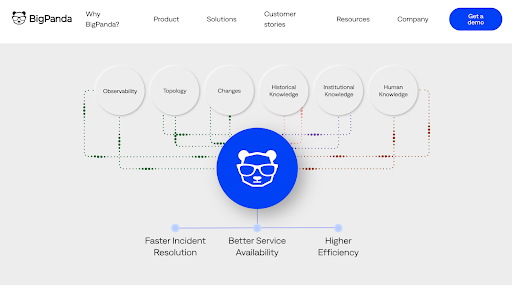
Big Panda is another AIOps-driven tool that automates incident management and correlates alerts, as well as makes IT operations more efficient for faster problem resolution. It is also good at gathering data from different sources and collating them into a single unified system. Its proactive approach helps to prevent recurring problems by providing root cause analysis, which helps to enhance system reliability and improve IT’s overall operations and stability.

Datadog

Datadog

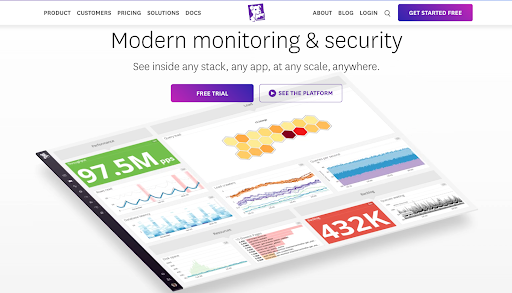
Datadog is a comprehensive monitoring tool for cloud systems, logs and databases which can be used to display data from different sources and set up metrics. It uses ML to automate the analysis of the performance of systems and applications so that IT teams can be signaled when problems arise without having to manually set up alarms for every potential risk mode.

LogicMonitor

LogicMonitor

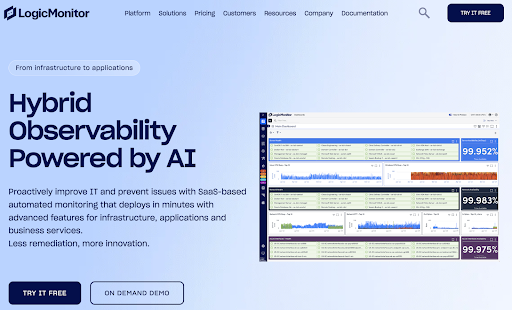
Similar to the other AIOps tools, LogicMonitor is capable of predictive monitoring which helps organizations to stay ahead of potential risks and maintain a good level of infrastructure performance. It provides an AI-powered and automatic alert mechanism, which makes it easy to reduce disruption while encouraging change with AIOps.

End Note

AIOps tools are invaluable and continually play a huge role in shaping the AI industry. Organizations that are likely to stay relevant and competitive in this digital age are those that are capable of harnessing AI wisely to meet the changing demands of their business. In the future, it is anticipated that AIOps tools will continue to aid businesses in their IT operations by encouraging collaborations and offering full visibility to improve IT services.

AIOps Insights

Given the ever changing tech landscape today, dealing with intricate IT environments is anything but simple. Traditional IT operations (ITOps) approaches typically fail to keep pace with the volume and complexity of today’s data, necessitating a better approach for IT operations. This is where Artificial Intelligence for IT Operations (AIOps) comes in. AIOps is currently of significant importance in IT as it offers powerful AI-driven automation and analytics to improve IT operations.

Read on to grasp the fundamentals of AIOps, its relevance, and how it is being used in practical contexts. 

The Evolution of AIOps

The path to AIOps started with Software Development and IT Operations (DevOps), which merges software development and IT operations to accelerate software deployment. DevOps brought in automation and teamwork, removing obstacles and encouraging ongoing upgrades and enhancements.

Expanding on this achievement, businesses utilized these concepts for data handling, leading to the emergence of Data Operations (DataOps). DataOps employs agile techniques for managing data, with an emphasis on collaboration, automation, and ongoing monitoring during the data’s lifespan. Machine Learning Operations (MLOps) was created to simplify the handling of machine learning models as machine learning and AI became more significant. MLOps incorporates DevOps methodologies into the field of machine learning to guarantee efficient deployment, monitoring, and optimization of models.

Ultimately, AIOps surfaced, utilizing AI and ML to revolutionize IT operations. AIOps tools streamline regular tasks, process large data sets, and offer valuable insights to improve decision-making and effectiveness. This development marks the completion of using advanced technologies to enhance efficiency and effectiveness in IT operations.

AIOPS Insights and Analytics 

AIOps Insights uses smart automation and AI to collect and combine information from different sources, link related incidents, and help teams quickly detect and fix problems. It allows operators to manage incidents efficiently through easy team collaboration. AIOps Insights offers a central platform that helps businesses cut cloud costs, spot failures faster, and shift from reacting to problems to preventing them.

Benefits of using AIOps Insights

  • Using AIOps insights saves time and effort by automating repetitive tasks
  • It also helps reduce the financial strain from manual maintenance and delayed incident resolution.
  • Predictive analytics capabilities provided by AIOps insights enable businesses to anticipate future events that may impact availability, performance, and issues.
  • AIOps insights bring about enhanced security by analyzing past data to detect threats proactively.
  • AIOps insights gathers and evaluates information from different origins to produce a consistent and standardized perspective of occurrences and happenings. This result is not specific to any particular department or scenario, allowing all departments to communicate using the same data terminology.

AIOps Implementation

STEP 1: Align AIOps with Business Goals

It is essential to align AIOps with the overarching objectives of the company in order to execute it properly. This is important in maintaining a smooth client experience and safeguarding income. 

STEP 2: Connect Your Event Data to Your AIOps Tooling

To effectively use AIOps, it is important to connect data from different sources and monitoring tools into one unified view, often called a “single pane of glass.” This integration gives a complete picture of an organization’s IT environment, helping teams make better decisions and respond to issues more quickly.

STEP 3: Reduce Noise

One of the major problems in managing IT operations is handling the constant inflow of alerts and notifications, especially if they do not contain  important Information. By focusing on reducing unnecessary alerts, organizations can better use your resources and address the most critical issues. 

STEP 4: Enrich and Normalize Your Event Data and Incidents

Event data or System logs in an organization can vary widely, making it hard for different teams to use and analyze. To improve response times and teamwork, system logs need to be standardized. Companies should integrate various systems and data sources to automatically add relevant information to incidents.

STEP 5 : Craft End-to-End Event-Driven Auto-Remediation

One of the most powerful features of AIOps is its ability to automate the solution of recurring issues, freeing up valuable human resources. Identify common and well-documented incidents in your organization, then use analytical conditional statements to create automation sequences based on system logs.

AIOPs Software

AIOps, or  Artificial Intelligence for IT Operations, is an essential advancement in IT management due to its advanced software solutions. The software element plays a crucial role in AIOps by utilizing sophisticated methods to boost efficiency, reduce manual duties, and improve IT operations.As you read further, this article will offer additional information on the components of AIOps, its key features, benefits, challenges, and potential opportunities ahead. 

What is AIOps Software?

AIOps employs Artificial Intelligence (AI) and Machine Learning (ML) to automate and enhance IT operations, serving as a more sophisticated type of software. The objective of this software is to minimize manual labor, lessen downtime, and enhance IT operations through the application of AI-driven analysis and automation. AIOps software revolutionizes IT operations management through the utilization of artificial intelligence. Big data analytics is used to examine vast amounts of data generated in different IT settings. AIOps tools analyze system logs, performance metrics, and network traffic data to predict problems before they escalate. AIOps software uses machine learning algorithms to identify patterns and anomalies, indicating possible issues and allowing for proactive measures. Automation of routine IT tasks is a key function of AIOps software. Therefore, the software component of AIOps includes a collection of applications and utilities that assist in utilizing AI and ML methods to improve IT operations.This consists of:

  1. Data Aggregation and Integration: A software that gathers and combines information from different IT systems and sources such as logs, metrics, and events.
  2. Analytics and Machine Learning: Applications utilizing AI and ML algorithms to analyze data, detect anomalies, spot patterns, predict problems, and conduct root cause analysis.
  3. Automation and Orchestration: Tools that streamline IT operations by automating responses to identified issues and coordinating tasks and workflows.
  4. Visualization and Reporting: Interfaces that offer dashboards and reports for IT teams to visualize system health, performance trends, and insights gained from data.
  5. Integration with IT Systems:Software that works with current IT infrastructure and tools to guarantee smooth operation and data flow. 

 Essentially, the software part of AIOps includes all the technological elements and features that support advanced data analysis, automation, and operational efficiency in IT settings.

Key Features of AIOps Software

Integration of AI and Machine Learning

AI imitates human thinking and problem-solving, machine learning (ML) teaches algorithms to find patterns by training data. Some of these technologies, individually and collectively driving improvements in software through process automation to help reduce errors while enhancing decision-making. AI and ML help the software to become intelligent and user-friendly, which is very important for IT operations these days.

Collecting and Analyzing Data

AIOps depends on gathering and examining extensive amounts of data from diverse origins. AI algorithms analyze this data to identify patterns and correlations that human analysts could overlook. This ability assists organizations in predicting issues, identifying fresh dangers, and making better decisions using detailed data insights.

Benefits of AIOps

Enhanced Collaboration and Efficiency

AIOps breaks down data silos and fosters better communication among IT teams, even across different locations. This increased collaboration improves overall efficiency and effectiveness.

Optimized IT Infrastructure

AIOps guarantees efficient operation of customer-facing applications by monitoring and optimizing IT infrastructure. Assisting in resolving problems such as network congestion and ineffective resource distribution improves the overall user experience.

Faster and More Accurate Root Cause Analysis

AIOps stands out in pinpointing the underlying reasons for IT problems, leading to a decrease in the time required to solve issues. By examining occurrences and their consequences, AIOps facilitates faster and more precise incident resolution.

Proactive Anomaly Detection

AIOps platforms use machine learning algorithms to constantly observe data and identify abnormalities. This proactive strategy enables organizations to handle possible issues before they escalate into significant challenges.

Practical Cases Network Tracking and Enhancement

Network tracking involves monitoring data movement within a network to improve performance, security, and resource management. Key benefits include:

  • Improving performance: Identifying and resolving network congestion and inefficiencies. 
  • Effective allocation of resources: Enhancing bandwidth and resource allocation.
  • Security Analysis: Detecting unusual activity and potential security threats.
  • Enhanced Performance and Security:Enhancing user experience and bolstering network defenses through ongoing monitoring.

Application Performance Management (APM)

APM entails overseeing and controlling software application performance and accessibility by designing, supervising, improving, assessing, and incentivizing to ensure they meet performance criteria.

Challenges and Considerations Building Trust and Reliability

One major challenge with AIOps is establishing trust in its decisions and recommendations, especially during initial implementation. To overcome this, effective communication and training are essential for gaining user trust.

Increasing IT Complexity

As IT systems become more complex, integrating various data types and sources can be challenging. AIOps helps by correlating and contextualizing data to make it more actionable.

Data Overload

Organizations generate massive amounts of data from numerous sources. AIOps must handle this data efficiently to detect and resolve issues at a detailed level, where many network problems first appear.

Future Directions for AIOps

In the upcoming years, AIOps is anticipated to have a big impact on security tasks like detecting threats, anomalies, and monitoring compliance. By integrating these features, AIOps can aid companies in reducing cybersecurity risks and improving the robustness and effectiveness of their IT systems. AIOps is revolutionizing IT operations through improved automation, effectiveness, and decision-making. Although there are difficulties, the potential to transform IT management means it is a key area for organizations to prioritize in the future.

In summary, AIOps software represents a transformative shift in IT operations and software development. By harnessing the power of AI, organizations can achieve more efficient and proactive management of their IT infrastructure, ultimately leading to improved performance, reduced downtime, and enhanced innovation.

AIOps SOLUTIONS

Nowadays, the performance of a business is synonymous with the performance of its IT system. The speedy advancement of technology is increasing the demand for IT to produce successful business results and top-notch customer experiences while keeping costs minimal. 

Artificial intelligence for IT operations (AIOps) solutions provide a comprehensive and integrated set of technology-infused performance, forecasting and preventing possible risks before it can disrupt the system.  This guide is curated to uncover how AIOps solutions provide the necessary insights to enhance business performance. 

Understanding AIOps Solution

AIOps is simply a platform that merges the concepts of machine learning (ML) and Artificial Intelligence (AI) to maximize IT processes. AIOps solutions are very effective for enhancing IT operations processes like detection of issues, correlation of events, root cause analysis and many more. These solutions generate and collate data from various IT systems, creating a unified data set on a large platform. After gathering the data, AIOps identifies patterns, relationships, and risks. The solution then automatically generates responses, significantly reducing troubleshooting time.

Challenges of Implementing AIOps Solutions

Implementing AIOps Solutions can be difficult as it presents a number of challenges. Dealing with these challenges requires detailed planning, investment in technology, as well as, commitment to management. Some of the challenges obstructing the implementation of AIOps are:

Complexities

AIOps platform regularly offers a wide range of features and functionality, which can be quite tasking to new users. These complexities in the platform often cause a huge challenge during usage. The delicate series of interconnected systems further complicates the process in huge volume, various quality and format.

Integration

AIOps has a lot of potential in influencing IT operations automatically but this can only be made possible if it integrates seamlessly with existing systems. The difficulty of integrating the different systems, formats, and volumes can be tricky at times.

Cost

Budget constraint is another considerable challenge obstructing the implementation of AIOps solutions. AIOps are naturally costly as merging data infrastructure, AI and ML platforms with legal systems require huge capitals. Moreover, creating a system capable of operating and maintaining AIOps systems is quite expensive. This is one of the reasons stopping organizations from acquiring AIOps solutions despite its long-term benefits.

Data volume

Availability of data from reliable sources is very important for AI and ML models to learn and make future predictions. In order to make a meaningful prediction, AIOps must effectively process and analyze a wide area of data from different sources, as the number of data generated from modern IT is huge. In addition, generating accurate and relevant data from mountains of data can be quite difficult and time consuming. Therefore, proper management of these data volumes is important for the implementation of AIOps solutions.

Some AIOps Solution

The AIOps landscape has greatly developed in recent years, with a lot of providers rendering solutions. The solutions are designed to counter the different IT operational challenges. Some of the common solutions rendered by AIOps based on specific organization needs include:

Incident Management Solutions

Incident management is a key application of AIOps. IT incident management is the process where service operations are identified and analyzed, and incidents are fixed to return to normal. AIOps incident management solutions use root cause analysis to investigate an incident to generate more effective actions. These solutions make it possible to report real-time incidents, injuries and other events from the system through a channel that enables two-way communication with real-time media. AIOps upgrades incident management from non-responsive to proactive and smart function, otherwise enhancing the efficiency of IT operations.

Performance Optimization Solutions

Performance optimization solutions are aimed at clarifying the effectiveness of applications and systems to enhance productivity, speed and management. It plays a major role in ensuring that resources are made available and put into place. Performance optimization utilizes different techniques and focuses on improving the efficiency of a system by minimizing its usage, improving data processing and increasing data analytics. 

IT Automation Solutions

IT automation solutions help to build software and applications to stand in place of repeat processes in organizations which minimizes manual intervention. It increases IT infrastructure and applications delivery by automatically working on the system that would otherwise require a manual fix. IT automation is an important tool that improves business, allows cost savings and also allows IT staff to focus on more important tasks. A fully automated production-ready resource can make deliveries possible in days instead of weeks. 

IT Risk Management Solutions

IT Risk Management Solutions helps to manage cybersecurity risks through applications, policies and technologies. It is a process that deals with the identification, assessment and management of the vulnerabilities that serve as threats to sensitive resources. IT risk management is an essential practice for every business as risks are inherent and residual in every organization.

IT Cost Optimization Solutions

IT Cost Optimization solutionsare aimed at reducing cost by all means in an organization while still satisfying both the client and the organization, which can result in a higher healthy profit gap within an organization. It also helps to boost efficiency, by satisfying the customer needs faster and efficiently.

AIOps PLATFORM

Introduction to the AIOps Platform

Artificial intelligence for IT operation (AIOps) platforms refers to platforms that make use of machine learning (ML), artificial intelligence (AI) and analytics for automating routine tasks. It is a platform used to generate vast amounts of data from operational systems and analyze these data to predict potential risks, maximize resources, and also respond to these problems adequately. AIOps platforms enhance efficiency and productivity by automatically operating systems and getting tasks done which allows IT staff to focus on more important tasks and leads to overall improved service, reduced downtime and lower operational cost.

Core Functionalities of the AIOps Platform

Data Ingestion and Integration

These two terms are interrelated. Data ingestion is the first stage in this process, and this is where data is gathered from different sources. Upon gathering from different sources, data integration combines and unifies the data into a single system. This is something that the AIOps platform does effortlessly; it gathers data from diverse sources and then processes it to create a unified view of the IT environment. A robust view of this function is essential to build a detailed data foundation that aids AI-driven insights and automation. The integrated data also helps the organization to identify difficult patterns and anomalies that would have been hidden.

Data Analysis 

This function of the AIOps platform has the ability to filter alerts, thereby separating false warnings from real dangers. It gathers an amount of IT operational data from different sources to transform it into performable insight through advanced analytics, ML and AI. This data-driven approach helps to analyze gathered data using algorithms like anomaly detection, pattern detection and predictive analytics, to find errors that might require the service of an IT staff. In other words, it maximizes system performance and automatically operates tasks which helps to reduce costs and leads to a more efficient and resilient IT environment.

Automation

Automation is the bedrock of the AIOps platform. AIOps provide the ability to automate and gather data from multiple sources, which increases speed and accuracy. It brings out the effectiveness and efficiency of IT operations by automatically routing tasks and complex workloads. Automation enables the platforms to detect and predict risks, self-correct problems, and reduce the need for manual error correction. Automation also streamlines service management by adopting various IT functions, which ultimately enhances the overall efficiency of IT operations, improves service quality and reduces cost. 

Capacity Optimization

This is also another key function of the AIOps platform; it involves the analysis of historical data and real-time data to identify the areas that need improvement and to maximize resource allocation. It involves the use of techniques like capacity planning, actual monitoring and so on, and an automated adjustment to make sure that resources align with the demands and objectives of the organization. 

AIOps PLATFORM SELECTION

Selecting the right AIOps platform requires strategy and technique. In order to be able to transform your IT operations with AIOps, here are some criteria to consider.

  • Security: As AIOps platform deals with a wide range of sensitive IT data, robust data protection and privacy control are important. Organizations must consider platforms that offer strong data encryption, and access control and adhere to the industry-set standards and regulations. In addition, the platform’s capability to discover and react accordingly to threats is very important and must therefore be put into consideration.
  • Availability: Organizations must prioritize platforms with a proven record of high availability, as AIOps are the backbone of IT operations and must be consistently accessible to ensure the overall effectiveness and availability of IT services. The platform should guarantee an availability rate of over 90% to maintain the functionality of IT services. It should also be capable of maintaining performance under pressure or heavy load to reduce the risk of service disruptions and ensure business continuity.
  •  Performance: When selecting an AIOps platform, performance is a crucial factor to consider. An AIOps platform must be able to process a range of data, provide performance insights, and aid in responses to incidents. A platform that struggles to keep up with an increased load will hinder the organization’s productivity. Therefore, high-performance platforms are essential to maximize IT operations and achieve business value.

Key Takeaways

  • AIOps platforms use AI, ML, and analytics to automate routine IT tasks.
  • They generate and analyze large amounts of operational data to predict risks, optimize resources, and respond to issues.
  • AIOps platforms enhance efficiency and productivity, allowing IT staff to focus on critical tasks, leading to improved service, reduced downtime, and lower operational costs.
  • Data ingestion gathers data from various sources, while data integration unifies it into a single system.
  • A unified data view supports AI-driven insights and automation, helping to identify hidden patterns and anomalies.
  • AIOps platforms filter alerts to separate false warnings from real dangers.
  • Automation enables AIOps platforms to detect and predict risks, self-correct problems, and reduce manual error correction.
  • Automation streamlines service management, improving efficiency, service quality, and reducing costs.
  • Capacity optimization involves analyzing historical and real-time data to maximize resource allocation and align with organizational demands.
  • Security is crucial, requiring robust data protection, privacy controls, strong encryption, access control, and adherence to industry standards.
  • High availability is essential, with platforms needing to guarantee over 90% availability to maintain IT service functionality.
  • Performance is critical, with AIOps platforms needing to handle increased loads and provide performance insights and incident responses.

AIOps Network Monitoring

Network monitoring is a crucial IT procedure that involves monitoring and evaluating the operations of computer networks and their various components, such as routers, servers, and firewalls. It helps network administrators monitor network performance and make real-time adjustments to ensure everything runs smoothly. With the increasing complexity and data-centric nature of networks, traditional management methods are no longer effective. This brought about the introduction of AIOps (Artificial Intelligence for IT Operations) which has become an essential tool for network managers, offering innovative methods for real-time network management and enhancement. Read on to understand the impact of AIOps on contemporary network management and its transformation of the IT industry.

AIOps IN Network Monitoring

AIOps in networking is the use of AI and advanced learning to monitor data, enhance the performance of a network, optimize network operations and address issues proactively. AIOps completely transforms the way networks are handled and supervised. It enables organizations to proactively analyze extensive network data, detect patterns and automate responses. This approach identifies security risks and enhances operational efficiency by minimizing manual intervention and response delays.

Roles of AIOps in Modern Network Monitoring

  • Forecasting and Preventive Strategies
  • Automated Issue Resolution
  • Advanced Performance Evaluation
  • Live Monitoring and Notifications
  • Capacity Management and Resource Efficiency
  • Improved Security Measures
  • Simplified Compliance and Reporting

AIOps Tools used for Network Monitoring

There are varieties of AIOps network monitoring tools. Each providing different functions for problem identification, performance monitoring, and maintaining network well being. Some network monitoring tools includes the following;

Dynatrace 

Dynatrace

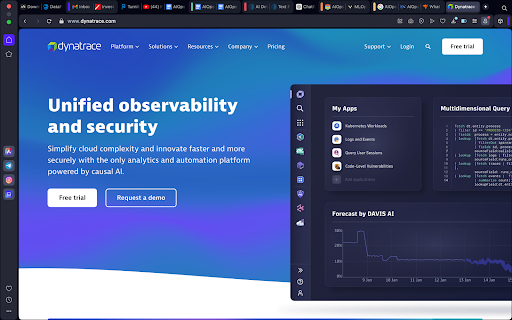
Dynatrace offers comprehensive network monitoring, anomaly detection, and automated problem resolution using AI insights

SolarWinds Network Performance Monitor (NPM)

SolarWinds

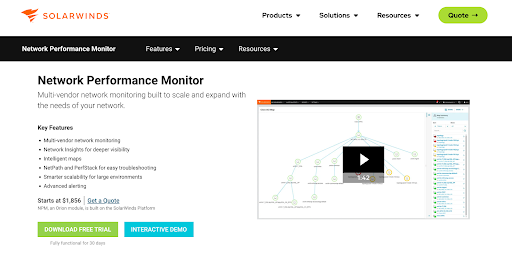
Solarwinds offers various software solutions for IT management and real time monitoring. They assist with network management, IT security, and their infrastructure.

Datadog

Datadog

Datadog is a comprehensive monitoring tool for cloud systems, logs and databases which can be used to display data from different sources and set up metrics. It uses ML to automate the analysis of the performance of systems and applications so that IT teams can be signaled when problems arise without having to manually set up alarms for every potential risk mode.

LogicMonitor

LogicMonitor

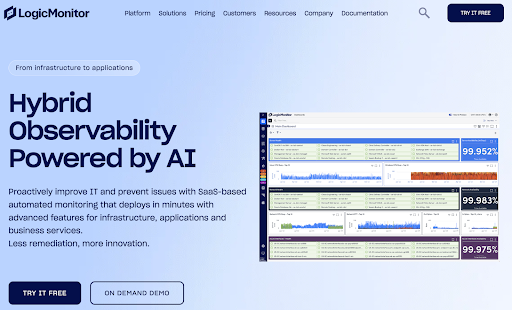
Similar to the other AIOps tools, LogicMonitor is capable of predictive monitoring which helps organizations to stay ahead of potential risks and maintain a good level of infrastructure performance. It provides an AI-powered and automatic alert mechanism, which makes it easy to reduce disruption while encouraging change with AIOps.

Sumo Logic

sumo logic

Sumo Logic offers AI-powered log management and analysis for proactive network monitoring and issue resolution.

Challenges of AIOps in Network Monitoring

While AI network monitoring can offer many benefits, there are obstacles that might hinder its effective deployment. Essentially, IT operations teams must surmount a learning curve in order to effectively utilize AI monitoring.

  • AIOps systems greatly depend on data to extract insights and make predictions. Handling extensive, intricate data sets can complicate and overwhelm AIOps systems 
  • Most companies have their working legacy systems. Integrating AIOps with these systems can be tricky and may need extra development.
  • AI models depend on accurate historical data; poor data can lead to incorrect predictions.
  • Managing AIOps requires specialized skills in AI and data science, which might not be readily available. Investment in skilled professionals or training will require money.
  • AIOps solutions can be expensive to buy and maintain, which may be a barrier for some organizations.
  • Handling sensitive data with AIOps needs strong security measures to prevent breaches.
  • Adopting AIOps can disrupt existing workflows and may face resistance from staff used to traditional methods.
  • As networks expand and develop, AIOps systems need to be able to scale accordingly as well. Ensuring the AI system can handle higher workloads and adapt to evolving network setups without losing performance is difficult.

Conclusion

AIOps is now a game-changing factor in network monitoring, providing sophisticated solutions for handling intricate and data-intensive environments. Through the use of AI and ML, AIOps tools facilitate proactive examination, live monitoring, and automated problem solving, greatly improving network performance and security. Despite the advantages of enhanced efficiency and decreased need for manual intervention, AIOps brings with it obstacles like integration issues, complex data management, and the necessity of specialized expertise. In spite of these obstacles, incorporating AIOps into network management is a major step forward, empowering organizations to proactively address issues and enhance their IT operations.

SD-WAN TECHNOLOGY

Software-Defined Wide Area Network (SD-WAN) emphasizes the idea of using current technologies to empower tomorrow, today. Recently, SD-WAN has brought about improvements in the field of networking and has enhanced connectivity. This is evident in its rate of growth lately. According to statista, global SD-WAN infrastructure revenues are predicted to surpass 13 billion U.S. dollars in 2023, showing a 31.8 percent CAGR from 2022 to 2027. SD-WAN creates a productive network layer that can connect various transport options like the multi-protocol label switching (MPLS)-a method used to speed up and shape traffic flows across wide area networks (WANs). This feature enhances traffic flow and ensures trust worthy connections based on application needs. It also provides a great user experience, improves efficiency, and may lower technology expenses.

How does SD-WAN work?

SD-WAN, similar to Software Defined Network (SDN) is a technology that allows users to direct and control traffic across a WAN with software-defined networking rather than with hardware such as control and servers. Instead of relying on physical controls and Virtual Private Networks (VPNs), SD-WAN uses clever software to manage and optimize network traffic. This new technique of optimizing network routing over multiple networks can reduce cost and improve resource usage, which will ensure everything runs smoothly no matter the location. Continue reading.

Implementation of SD-WAN

Careful planning and strategic execution are necessary when implementing SD-WAN to fully reap its benefits, helping businesses stay agile and competitive in today’s fast-paced digital environment. Continue reading.

Read also : Benefits of SD-WAN

Key Functionalities of SD-WAN

Centralized Management 

Traditional WANs can be too much to control because it requires individual layout and balancing for each device across geographically dispersed locations. In contrast, SD-WAN’s integrated management transforms this process. It acts as a single point of control, offering a dashboard view of your entire network. This central console simplifies layout and policy control, saving information technology teams significant time and effort. It reduces the risk of errors that can sneak in with manual layout.

The benefits extend beyond layout. Centralized control platforms provide real-time insights into a network’s health and performance. You can monitor the speed-rate per second usage, application performance, and identify potential issues before they affect users. These platforms can operate many routine tasks, such as provisioning new devices or applying security patches. This allows Information Technology (IT) staff to focus on more strategic initiatives, maximizing their impact on the business.

Flexible Connectivity 

SD-WAN is capable of holding multiple connections simultaneously, like MPLS. This multi-circuit bonding creates a vigorous network, drawing on the strengths of each connection type. SD-WAN also intelligently navigates traffic across these connections based on real-time factors like internet speed-rate per second and application priority. This vital path selection ensures that critical applications always have the resources they need for optimal performance.  Furthermore, SD-WAN utilizes virtual connections, allowing for easy ascension and relaying without being tied to physical hardware.  This flexibility empowers the building of a vital network that effortlessly adapts to business’s evolving needs, ultimately leading to improved performance, cost-effectiveness, and overall network resilience.

Application-Aware Routing

The sluggish performance of critical applications like video conferencing or cloud software is often caused by how traditional WAN treats all data the same. With SD-WAN, this problem becomes non-existent. SD-WAN identifies various types of application traffic, distinguishing voice calls from video conferences or cloud based software. With this basic understanding, it is able to fashion traffic for each application. SD-WAN simultaneously monitors network performance. It can dynamically choose the optimal path for each data flow after it has measured the latency, jitter, and packet loss, thereby providing real-time data on connection health. This application-aware routing prioritizes traffic based on importance, resulting in a smoother and more productive user experience.

Potential Challenges of SD-WAN

  • It can be challenging to install and integrate SD-WAN into your existing network and make everything align and function harmoniously.
  • SD-WAN can improve data protection, but it also brings about new security threats. Getting a new lock for your door is similar to ensuring all your windows are also secure.
  • Multiple businesses offer SD-WAN solutions for sale. Selecting the appropriate option is similar to picking out the most suitable car for your requirements. You must consider the characteristics, assistance, price, and scalability.
  • Installing SD-WAN may require significant upfront investment, despite yielding cost savings in the future. Just like purchasing solar panels; while they are expensive at first, they become cost-effective in the long run.
  • At times, SD-WAN may not perform as anticipated, especially when faced with high traffic or delays. 
  • Proper training is necessary for ensuring all employees in your company effectively utilize SD-WAN. In order to maximize its benefits, it is important for everyone to have a good grasp of how it operates.

Tips to choose your best SD-WAN technology

  • Understand your network needs. Know why you need SD-WAN, whether it is for better branch connections, cloud access, or supporting remote workers.
  • Carry out thorough research on vendors and check for reviews. See how long the vendor has been around and their experience with SD-WAN.
  • Choose a technology that is quick and easy to install and make sure it can manage delays and provide a smooth experience
  • Look for SD-WANs with integrated security features like firewalls and encryption.
  • Settle for a solution that works well in different network environments.
  • Lastly, but not the least, ensure there is a clear path for future upgrades.

Future Outlook

SD-WAN is decreasing the WAN solution’s total cost and bringing new flexibility and pace to the wide area network (WAN). Just like the world around it, SD-WAN is quickly moving towards a cloud inclined future as users in the enterprise have started to inculcate the addition of generative AI. This fits perfectly with the ever growing demands in credibility, security and manageability. The magnitude and theories around SD-WAN will change with time as new technologies emerge. SD-WAN powered by 5G will become essential in a few years and will be all about flow in the network and tighter security. While digital transformation is ongoing, with software at the initial front and cloud bringing it to life, SD-WAN will stand as a game changer by embracing the secure and software driven connectivity, then businesses can secure the advantages now and drive into the future.

Must Read: SD-WAN Solution 

        SD-WAN Security

Site logo

* Copyright © 2024 Insider Inc. All rights reserved.


Registration on or use of this site constitutes acceptance of our


Terms of services and Privacy Policy.