Home Blog Page 22

Elon Musk’s xAI Expands Supercomputer Capacity

Elon Musk’s new artificial intelligence (AI) company, xAI, is making waves by expanding its supercomputer, Colossus, to handle a staggering amount of power—enough to support over one million GPUs (graphics processing units). But what does this mean, and why does it matter? 

What Is xAI Doing?

xAI is Musk’s latest venture into AI technology, aiming to compete with giants like OpenAI (the creators of ChatGPT) and Google. To do that, xAI needs powerful technology to develop and run its own AI systems. This is where Colossus, its supercomputer, comes in.

Think of Colossus as the brain that powers everything xAI is working on. It handles massive amounts of data, processes complex tasks, and trains AI to get smarter over time. With this expansion, xAI is upgrading Colossus to make it one of the most powerful computers in the world.

Viewed through a geopolitical lens, the expansion of xAI’s supercomputer aligns perfectly with the U.S. effort to sustain its leadership in AI in the face of intense worldwide competition, especially from China. Through the creation of a strong AI infrastructure within the country, Musk’s xAI aids the U.S. technology landscape and bolsters Memphis’s developing role as a tech center.

Features

  1. Smarter AI Systems:
    With more computing power, xAI can create smarter and faster AI. This means their chatbot, Grok—designed to rival tools like ChatGPT—can answer questions, generate content, and assist users better than ever.
  2. Faster Innovation:
    AI needs a lot of “practice” to learn, and this practice happens on supercomputers like Colossus. By expanding its capacity, xAI can speed up this learning process, bringing new features and products to market much faster.

Competitive Edge:
The AI race is heating up, with companies like Google and OpenAI investing heavily in their own technologies. By beefing up Colossus, xAI is positioning itself as a serious competitor, ready to challenge these industry leaders.

How Are They Doing It?

To build this supercomputer, xAI is teaming up with major tech players like Nvidia, Dell, and Super Micro Computer. These companies are providing the GPUs and other components needed to make Colossus stronger. GPUs are like the engines that drive AI—they process data incredibly fast, which is essential for AI development.

Challenges

  1. Energy Use:
    Supercomputers consume a ton of electricity. As Colossus grows, so does its power demand, raising concerns about environmental impact.
  2. Costs:
    Building and running something this advanced costs billions of dollars. While xAI has raised significant funding, maintaining this growth will require careful financial planning.

Competition:
Other companies, like Meta (Facebook’s parent company), are also investing in AI infrastructure. xAI will need to prove it can keep up or even surpass them in innovation and efficiency.

Relevance

This goes beyond tech firms competing; it involves the future of AI and its effect on our everyday lives. By utilizing tools such as Grok, xAI could launch AI assistants that are increasingly effective at assisting us with tasks, providing answers, and simplifying our online experiences. For instance, students could use smarter AI to simplify research, businesses might get AI tools to analyze trends and make decisions and everyday users could see more personalized and helpful apps powered by AI.

xAI’s expansion is part of a larger trend in the AI world: the race to create the most powerful and useful AI systems. By investing in Colossus, xAI is not only keeping up with this trend but also setting the stage to potentially lead it.

However, the company must balance growth with responsibility. Environmental concerns and ethical questions around AI use will need to be addressed as xAI scales its operations.

Conclusion

Elon Musk’s xAI is taking a bold step forward with the expansion of its Colossus supercomputer. Although the initiative offers thrilling progress in AI, it also underscores the difficulties of developing and overseeing such potent technology. If achieved, this expansion might transform the capabilities of AI for industries, communities, and individuals—moving us nearer to a future where AI is effortlessly woven into our daily lives.

OpenAI Reinforces AI Safety with Advanced Red Teaming Methods

Artificial intelligence (AI) is revolutionizing the world, but with great power comes the need for greater responsibility, which emphasizes safety in this context. Consistent with this, OpenAI has made a notable progression in improving AI safety by developing its red teaming tactics, an essential aspect of guaranteeing that AI systems are strong, dependable, and ethically appropriate. Red teaming entails evaluating AI models under pressure by creating adversarial situations, pinpointing weaknesses, and tackling possible abuses. OpenAI’s newest techniques combine human knowledge with automation, forming a robust hybrid system to protect AI applications.

How Red Teaming Works

Traditional red teaming relies heavily on human experts (red team) to simulate attacks or identify potential risks in AI models. These experts assess vulnerabilities through diverse perspectives, leveraging their nuanced understanding of the model’s context, user interactions, and operational environment. OpenAI has now enhanced this process by incorporating automated red teaming techniques. These methods use AI itself to generate varied attack scenarios at scale, employing tools such as reinforcement learning to uncover safety gaps quickly and efficiently.

For example, automated systems can rapidly create “what-if” scenarios, such as testing how an AI model might handle harmful queries or misleading prompts. These automated insights complement the depth and contextual precision of human analysis, ensuring comprehensive evaluations that address both technical flaws and ethical concerns.

The Benefits of OpenAI’s Approach

The combination of human and AI-led red teaming offers several advantages. Automated methods provide scalability, allowing for the testing of a wide range of scenarios in a short period, which is particularly valuable as AI models grow more complex. Meanwhile, human-led efforts focus on contextual and nuanced challenges that automated systems might overlook, such as cultural biases or subtle ethical concerns. Together, these strategies create a robust framework for assessing and improving AI systems.

OpenAI has already applied these methods to refine its GPT models. By engaging external experts and utilizing public input, the company ensures that its safety practices are not only comprehensive but also inclusive of diverse perspectives. This collaboration has helped OpenAI align its models with ethical standards while mitigating risks of harm, misinformation, or misuse.

Challenges and Limitations

Despite these advancements, challenges remain in implementing red teaming practices effectively. AI systems evolve rapidly, often outpacing the tools and strategies designed to test them. This dynamic nature requires continuous adaptation and real-time updates to red teaming methods. Furthermore, automated approaches, while efficient, still require human oversight to address complex risks and ethical considerations that AI alone cannot navigate.

Another concern is the potential for exposing vulnerabilities through public disclosure. OpenAI has managed this risk by ensuring that sensitive findings are handled responsibly, balancing transparency with security. By fostering partnerships with regulatory bodies and safety organizations, OpenAI aims to maintain trust and accountability while advancing its safety initiatives.

Implications for Society and Industry

The consequences of OpenAI’s improved red teaming goes further than just technical advancements. More secure AI systems build public confidence, allowing wider use of AI in areas such as healthcare, finance, and education. For example, by tackling challenges like bias or misuse, OpenAI’s models can be utilized more fairly and efficiently, guaranteeing that their advantages reach various communities.

Moreover, these developments correspond with increasing demands for ethical AI creation. By emphasizing safety and transparency, OpenAI establishes a standard for the industry, motivating other organizations to embrace comparable practices. This dedication to responsible innovation is vital as governments and global organizations strive to create regulatory structures for AI.

Looking Forward

OpenAI’s initiatives in enhancing red teaming signify a forward-thinking strategy for AI safety, merging technological advancement with ethical accountability. As AI increasingly influences industries and societies, preserving trust and guaranteeing security will continue to be vital challenges. The combination of automated and human-guided red teaming approaches establishes OpenAI as a frontrunner in tackling these issues, encouraging a future where AI systems are both robust and secure.

By consistently improving its techniques, incorporating various viewpoints, and working alongside regulatory agencies, OpenAI shows a dedication to creating AI that is in harmony with societal values and priorities. These efforts not only enhance technical skills but also guarantee that innovation is rooted in responsibility and inclusivity, establishing a benchmark for the worldwide AI community

UK Establishes the Laboratory for AI Security Research (LASR) to Counter Evolving Cyber Threats

The United Kingdom has made a significant advancement in its cybersecurity approach by establishing the Laboratory for AI Security Research (LASR), a dedicated center focused on tackling the intricate challenges brought by artificial intelligence (AI) in both national and international security. The creation of LASR demonstrates the increasing acknowledgment of AI as a two-sided weapon: a resource with revolutionary capabilities and a technology that opponents, such as state-sponsored entities like Russia and North Korea, are using to undermine digital and physical systems.

group of people

A Comprehensive Approach to AI Security

LASR functions on a “catalytic” funding model, initiating with £8.22 million in government investment to draw in further industry funding and promote collaboration among various sectors. Key stakeholders include the Government Communications Headquarters (GCHQ), the National Cyber Security Centre, and leading academic institutions such as the University of Oxford and Queen’s University Belfast. This integrated approach positions the UK at the forefront of global efforts to counter AI-related security risks.

The laboratory emphasizes multiple key areas, such as creating AI tools to identify and counteract harmful cyber actions, developing sophisticated cyber defense systems, and enhancing intelligence analysis. LASR is also in line with the UK’s wider legislative and strategic efforts, including the upcoming Cyber Security and Resilience Bill, which enhances safeguards for vital infrastructure, such as data centers.

A key factor behind the creation of LASR is the increasing danger of AI-powered cyber attacks from adversarial nations. According to the Chancellor of the Duchy of Lancaster: “NATO needs to continue to adapt to the world of AI, because as the tech evolves, the threat evolves.

Recent alerts indicate that opponents such as Russia may utilize AI to improve malware, execute advanced cyber-espionage, or attack essential systems like energy grids and financial networks.

Fostering International Collaboration

LASR is not solely a national initiative; it is designed to integrate into a global security framework. The lab collaborates with the Five Eyes intelligence alliance and NATO allies, promoting shared expertise and coordinated responses to cyber incidents. This international focus ensures that LASR contributes to a unified front against global AI-related threats, reinforcing the importance of collective security in the digital age..

In addition, while LASR’s main goal is to tackle security threats, it also recognizes the ethical considerations of using AI in defense. Specialists stress the importance of strict regulations to guarantee that security protocols do not violate civil rights or erode public confidence. Through balancing innovation and ethical responsibility, LASR seeks to uphold transparency and accountability in its operations.

two guys having a conversation

Implications for the Future

The establishment of LASR represents an important milestone in the UK’s cybersecurity field, establishing a benchmark for tackling the challenges posed by emerging technologies. Its emphasis on AI-driven threats illustrates a progressive stance on national security, guaranteeing that the UK stays at the forefront of both defensive and offensive cyber tactics. As AI progresses, projects such as LASR will be essential in protecting infrastructure, economies, and communities from the exploitation of this transformative technology.

In conclusion, LASR embodies a proactive approach to the swiftly evolving cybersecurity landscape, integrating innovation, teamwork, and strategic insight to tackle the intricate challenges presented by AI. Its creation strengthens the UK’s standing as a worldwide leader in AI security, while fostering the development of more robust and secure digital environments.

Meet the AI robot whose artwork sold for over $1m

Artists worry that AI might take the soul out of art, reducing creativity to mere computation and replacing human emotion with machine algorithms. While these concerns grow as technology advances, is this fear still valid? 

The fusion of art and technology has reached a new milestone as Ai-Da, a humanoid AI robot, made history by selling her artwork, AI God: Portrait of Alan Turing, for over $1 million at a Sotheby’s auction in New York.

This was the initial sale of a painting made by an AI-driven robot at a price higher than expected, exceeding the initial estimate of $120,000–$180,000.

According to Ai-Da- “My artwork is a portrait of Alan Turing, the brilliant British mathematician who laid the foundation for modern computers and AI. The portrait has a fractured and layered quality, reflecting our current fragmented and multifaceted world”

About Ai-Da

The robot, Ai-Da, named after Ada Lovelace, the first computer programmer in the world, is anything but a typical artist. Developed by British art dealer Aidan Meller in partnership with scientists from Oxford University, Ai-Da is outfitted with cameras as her eyes, a robotic arm, and sophisticated AI software. These skills allow her to analyze visual information and produce unique artwork. The record-breaking painting was a combination of Alan Turing, who is known as the father of modern computing, and features from his Bombe code breaking machine used during the war.

During an interview with the Guardian, Ai-Da was questioned about whether the robot creates art from imagination to which she replied, “I like to paint what I see. You can paint from imagination, I guess, if you have an imagination. I have been seeing different things to humans as I do not have consciousness.”

The Artwork and Its Significance

The artwork was featured in Sotheby’s Digital Art Day auction and attracted 27 offers, eventually being purchased for $1.08 million. The painting not just honored Turing’s influence, but also sparked inquiries into the impact of AI on artistry and society. The creator of Ai-Da stressed that the aim of the artwork is to generate discussions about the ethical and societal impacts of AI, as it increasingly changes areas of human activity such as art.

Ai-Da’s art has also sparked discussions on the impact of AI in the realm of creativity. Although Ai-Da admits she lacks emotions or personal creativity, her skill in creating visually engaging and intellectually stimulating art pushes the boundaries of traditional artistic concepts. The artwork she produces inspires audiences to reconsider the limitations of teamwork between humans and machines in the realm of art.

As Ai-Da’s popularity grows, her next endeavors may include sculpture and digital installations, further exploring the potential of AI in creative expression. This moment is a landmark in understanding how technology is reshaping art and culture.

AI is terrible for the environment, study finds

Now that we are on the topic, did you know that Artificial Intelligence (AI) produces alarming carbon emissions? 

Read on to understand how

Despite its transformative potential, AI is proving to have a significant environmental impact, according to recent studies and industry insights. 

“The exponential growth in AI capabilities mirrors a concerning rise in its environmental impact,” said Meng Zhang, lead researcher from Zhejiang University.

The primary concern revolves around the substantial energy required to train and operate large AI models, which often results in a high carbon footprint. While using renewable energy sources can reduce the environmental impact of AI’s electricity consumption, the situation changes entirely if non-renewable generators are used. For instance, training a single large model can emit as much CO₂ as 300 round-trip flights between New York and San Francisco—equivalent to the lifetime emissions of several cars. This heavy energy usage stems from the vast computing power required for training and running these AI models, particularly within data centers that rely heavily on electricity and water for cooling servers.

Moreover, as AI systems improve, they need increased computing power, resulting in greater energy consumption for operation. For instance, the new GPT-4 from OpenAI consumes 12 times the energy of its previous version.

AI systems also add to electronic waste by relying on sophisticated hardware that has a short life span. The quick advancement of AI technology speeds up the elimination of old hardwares, causing environmental and health risks due to toxic materials released into ecosystems by e-waste mismanagement.

A recent study discovered that roughly 68% of IT managers worry about the increasing energy requirements of AI, yet frequently they do not possess the expertise needed to tackle these environmental concerns. As a consequence, specialists believe that regulations and corporate responsibility are necessary in AI development to decrease its environmental impact. Some say that by improving AI algorithms and developing energy-efficient hardware, it is possible to lessen these effects, but it would need significant investment and regulatory backing to be successful.

Governments are in a competition to create national AI strategies, often without considering the environment and sustainability. The absence of environmental regulations is just as risky as the absence of other AI safety measures.

This begs the question -What measures can be taken globally to control the negative environmental impact of AI?

In the latest report by the UN Environment Programme (UNEP), five key recommendations are put forward. First, nations can create consistent methods for assessing the environmental consequences of AI. Additionally, UNEP can assist governments in drafting rules that mandate companies to reveal the environmental impacts of AI-driven goods and services. Also, technology firms have the ability to enhance the effectiveness of AI algorithms, thereby decreasing their energy consumption, and also promote water recycling and component reuse when possible. In addition, nations can promote the greening of companies’ data centers by utilizing renewable energy sources and compensating for their carbon footprint. 

In the broader conversation, transparency and ethical design are being emphasized as key to mitigating AI’s environmental effects. By implementing stringent standards and promoting a multidisciplinary approach that includes sustainability in AI development, society can better balance technological advancements with environmental preservation.

  AI Is Building Highly Effective Antibodies That Humans Can’t Even Imagine

As Fei-Fei Li, Stanford professor and AI researcher once said – “The power of AI lies in its capacity to generate novel biological solutions—antibodies included—that our own minds could scarcely conceive.”

It is safe to say that before the actual change, scientists and researchers in the Artificial Intelligence (AI) ​​industry have foreseen that AI will revolutionize the way we develop antibodies. This foresight has resulted in highly effective treatments that were once beyond human imagination. Traditionally, discovering new antibodies has involved a long and expensive process which often gives uncertain results. Now AI is improving this journey,  leading to faster and more accurate clinical success.

The Role of Antibodies in Health

Antibodies are proteins produced by our immune system to identify and neutralize harmful invaders like bacteria and viruses. They recognize specific parts of these invaders, called antigens, and bind to them, marking them for destruction. This natural defense mechanism has inspired scientists to develop antibody-based therapies for various diseases, including cancers and autoimmune disorders.

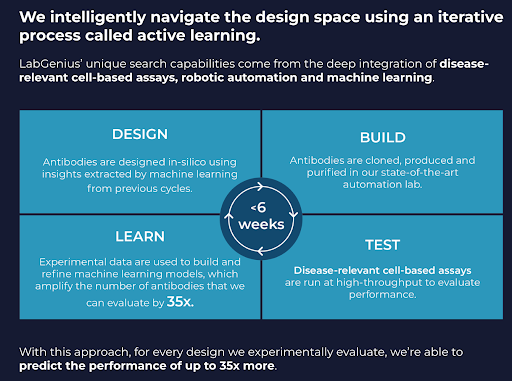
Consistent with this, an old biscuit factory in South London, LabGenius, has replaced their giant mixers and industrial ovens with an AI-powered approach including robotic arms, incubators, and DNA sequencing machines to engineer new medical antibodies.

labgenius table

The company’s mission is to fast-track the development of cutting-edge therapeutic antibodies engineered for optimal effectiveness. To achieve this, they are spearheading the creation of an intelligent robotic system (EVA™) that can design, execute, and — importantly — learn from its own experiments.

Since the 1980s, pharmaceutical companies have been producing synthetic antibodies to treat diseases like cancer and reduce the chance of rejection of transplanted organs. However, creating these antibodies is a lengthy process for people. Protein producers must sift through millions of potential amino acids to identify the ones that will bond appropriately. Next, conduct experimental tests on all of them and modify certain variables to enhance outcomes. “If you want to create a new therapeutic antibody, somewhere in this infinite space of possible molecules will be the molecule you want to find,” Field, the owner of LabGenius stated. 

AI’s Impact on Antibody Design

Through the use of analytics and machine learning (ML), AI introduces a transformative approach to antibody design by analyzing vast amounts of data and learning from it. This predictive capability enables researchers to develop antibodies with enhanced efficacy and fewer side effects.

Notably, researchers from the University of Washington have made a breakthrough with their advanced AI tool which can create totally new antibodies from scratch. The tool makes use of superior algorithms to predict 3D protein systems, making it feasible to design antibodies that can target unique sickness-associated proteins with high accuracy. 

Similarly, organizations like Absci are the usage of AI to accelerate antibody discovery. Absci’s AI platform can quickly generate and display millions of antibodies to become aware of those with first-class therapeutic potential. This appreciably reduces the time and costs related to traditional techniques.

Real-World Applications

The integration of AI in antibody design is already yielding promising results. In March 2024, scientists reported the successful use of AI to design antibodies that effectively neutralize the SARS-CoV-2 virus, responsible for COVID-19. These AI-designed antibodies demonstrated strong binding to the virus, showcasing the potential of AI in responding swiftly to emerging health threats. 

Advances in AI-powered antibody production indicate a broader trend towards integrating AI into different aspects of medicine. Harnessing the potential of AI can help researchers develop more effective treatments. faster It paves the way for personalized medicine tailored to the needs of each patient. As AI technology continues to develop Its role in the medical field is also set to expand. Offers hope for more effective treatments and improved health Results around the world…

NTT and Toyota invest $3.3B in AI autonomous driving technology

0

Investing in autonomous driving technology is becoming increasingly important as the demand for safer, smarter and more efficient transportation systems grows. The leading cause of injuries and deaths are from road accidents worldwide. Consequently, AI-powered autonomous vehicles are spearheading a new and different approach to improving road safety by reducing human error which is the main causative factor in most accidents including optimized traffic flow, reduced congestion, and increased accessibility. 

Building upon this foundation, Toyota and Nippon Telegraph and Telephone Corporation (NTT) have agreed to jointly invest $3.3 billion (500 billion yen) into developing an AI-based infrastructure and software platform to reduce traffic accidents, with a target for completion by 2028 and widespread adoption by 2030. 

Toyota’s participation in this project further enhances its current efforts in advanced driver-assistance systems (ADAS). The Mirai fuel-cell vehicle from the company, for example, has featured hands-free driving capability since 2021, showcasing Toyota’s dedication to advancing automotive technology.

The ambitious aim of establishing a society free from traffic accidents showcases Japan’s already remarkable road safety achievements. In 2022, Japan recorded just 2.6 road deaths per 100,000 residents, making it the country with the fourth-lowest rate worldwide.

Nonetheless, the initiative by Toyota and NTT seeks to advance this further, possibly setting a new international standard for road safety.

The collaboration is part of a broader ambition to establish a zero-accident society. Leveraging NTT’s expertise in telecommunications and Toyota’s focus on software-defined vehicles (SDVs), the initiative will integrate advanced optical communication and distributed computing to manage the high volume of data essential for autonomous driving.

This platform will leverage extensive data to support advanced driver-assist and automated driving systems, addressing challenges like poor visibility in urban areas and merging on expressways. 

“Transmitting large amounts of data will be crucial as software-defined vehicles become more common”, says Toyota Chief Executive Officer Koji Sato during the briefing in Tokyo.

As a consequence, the system will employ the Innovative Optical and Wireless Network (IOWN) next-gen optical communication platform under development by NTT to manage the vast data needed for the analysis. 

Toyota and NTT’s collaboration, which began with societal contributions via technological and industrial advancements, a focus on people, and global initiatives aims not only to improve their own autonomous tech but also to share it with other companies, government bodies, and academia for a safer, zero-accident future.

This commitment aligns with Japan’s intention to set new global benchmarks in avenue protection even as enhancing sustainable and sensible mobility structures. The project is scheduled to commence in 2025, aiming to start partnerships with different collaborators by 2028. The firms aim for extensive acceptance of the technology starting in 2030, indicating a dedication to enhancing road safety worldwide over the long term.

By investing in AI and autonomous driving, companies like Toyota and NTT are not only advancing technology but also prioritizing a future where transportation is more sustainable and accessible for everyone, aiming to shape the next generation of intelligent mobility solutions.

Artificial Intelligence (AI) Tutorial

work, and even access healthcare. This makes it necessary for everyone to learn what AI entails through tutorials and Like a wise one once said-“Unlock your potential with tutorials—the bridge between curiosity and mastery!” Artificial Intelligence (AI) should no longer be seen as a concept used by companies or corporate individuals. AI itself is transforming everything, from how we shop to how we communicate, to other learning materials like books and movies.

This guide will walk you through the basics of AI, its applications, and how you can begin exploring this exciting field.

What is Artificial Intelligence (AI)?

At its core, AI is the ability of machines, particularly computers, being able to carry out tasks that typically need human intelligence. These tasks involve solving problems, comprehending language, identifying patterns, and making choices. AI systems learn from data to improve their performance, in contrast to traditional programs that rely on set rules followed by computers.

Key Areas of AI

  • Machine Learning (ML): A method where computers learn from data without being explicitly programmed for every task.
  • Natural Language Processing (NLP): Helps computers understand and generate human language.
  • Computer Vision: Enables machines to interpret and process visual information, like recognizing faces or objects in images.
  • Robotics: Robotics deals with the creation, maintenance, use, and application of robots.

Different Types of AI

AI is typically divided into three categories based on what it can do:

Artificial Narrow Intelligence (ANI)

Also known as “Weak AI,” this is AI that specializes in one specific task. For instance, facial recognition software can identify faces, but it cannot drive a car or give you medical advice. Most of the AI we see today is Narrow AI, focused on a single function.

Artificial General Intelligence (AGI)

This is the kind of AI that can perform any intellectual task a human can do. It does not really exist yet but is the goal of the AI community. AGI would be able to reason, learn, and adapt across a wide variety of tasks.

Artificial Superintelligence (ASI)

This is the idea of AI that exceeds human intelligence in all areas, including creativity, problem-solving, and decision-making. Like AGI, this is still in the realm of speculation, but it is a popular topic in discussions about the future of AI.

HowArtificial Intelligence (AI) Works

AI systems use algorithms—sets of rules and calculations that allow computers to make decisions based on data. Below is a simple breakdown of how AI processes data:

  • Data Collection: AI systems rely on large amounts of data, whether it is images, text, or numbers, to make accurate predictions or decisions.
  • Data Processing: The collected data is cleaned and organized so that it can be effectively analyzed.
  • Algorithm Selection: The AI system chooses the best algorithm, such as a neural network or decision tree, based on the task it needs to perform.
  • Training: The algorithm is trained using the data, allowing it to recognize patterns and improve its accuracy.
  • Testing: The trained model is then tested to ensure it works well on new data.
  • Prediction/Decision: Once trained and tested, the model can now make predictions or decisions based on new information.

Key AI Techniques

  • Supervised Learning: In this method, the AI is trained on labeled data, meaning the correct answer is already known, and the system learns to predict similar outcomes.
  • Unsupervised Learning: Here, the system is fed raw data without labels and must identify patterns and relationships on its own.
  • Reinforcement Learning: The AI learns through trial and error, improving its actions based on rewards or penalties.

How to Get Started with AI

If you are new to AI and want to learn more, here are a few steps to help you begin:

Learn Programming

Languages like Python are widely used in AI because they are easy to learn and have powerful libraries like TensorFlow and PyTorch that make AI development easier.

Study Machine Learning

Machine learning is a key part of AI. Start by understanding basic algorithms like linear regression, decision trees, and neural networks.

Understand Data

AI is driven by data, so learning how to manipulate and analyze it is essential. Tools like pandas and NumPy in Python are great for handling large datasets.

Work on AI Projects

Start small. Try building a chatbot or a basic recommendation system. Websites like Kaggle offer datasets and competitions to help you practice.

Stay Updated

AI is a rapidly evolving field. Keep up with the latest developments by reading research papers, blogs, and attending online AI communities.

Ethical Issues in AI

As AI continues to develop, it brings up important ethical questions:

  • Bias: AI systems can inherit biases from the data they are trained on, leading to unfair outcomes in areas like hiring or lending.
  • Privacy: AI relies on large amounts of personal data, raising concerns about how this information is used and protected.
  • Job Loss: Many fear that AI could replace jobs, especially in areas like manufacturing and customer service.
  • Autonomy: With more autonomous systems, questions arise about how much control humans should have over critical decisions made by AI, such as in healthcare or the military.

Conclusion

AI is transforming our world, providing fresh opportunities and answers to obstacles in different sectors. AI is fueling progress and enhancing productivity across various industries, from healthcare to transportation. Nevertheless, it also brings ethical issues that must be thoughtfully evaluated.

If you are interested in AI, now is the best time to begin your learning journey. If you are a student, professional, or tech enthusiast, learning about AI will present various exciting opportunities in the future.

Artificial Intelligence (AI) projects

Artificial Intelligence (AI) has transformed from a concept in science fiction to a crucial component of modern life. From transforming how companies operate to changing how we engage with technology, AI has shown its incredible worth. In this post, we will explore the most creative and important AI projects that are influencing different sectors, encouraging innovation, and addressing practical issues in a way that is easy for everyone to understand, spanning from cutting-edge research to hands-on applications. For those interested in technology or those with a curiosity about AI capabilities, there is something to explore for all.

AI in Healthcare: Diagnosing Diseases Faster

One of the most impactful uses of AI is in healthcare, where it is developing how we detect and treat illnesses. In healthcare, there are AI tools that analyze thousands of medical images—X-rays, Magnetic Resonance Imaging (MRIs), and even blood samples—within seconds and flag potential problems like tumors or irregularities. An example of this is Google’s DeepMind Health, which uses technology to aid medical professionals with fast and precise diagnoses, minimizing errors and allowing doctors to concentrate on delivering optimal care. AI also allows for quicker identification of diseases like cancer and diabetes, increasing the likelihood of successful treatment for patients.

Self-Driving Cars

You have probably heard about self-driving cars, but do you know just how much AI has contributed to their success? AI technology is being used by Tesla and Waymo to build cars that can drive themselves on roadways, detect lanelines, avoid obstructions, and obey traffic laws. To enable cars to “perceive” and “react”, these projects rely on AI to evaluate real time data from sensors and cameras. Even though autonomous vehicles are still way off and faces several difficulties, including shifting lighting, shifting road markers, and collisions with other cars, AI is already making driving safer by helping cars to avoid collisions with technologies like lane-keeping assistance and automated emergency braking.

Smart Assistants: More Than Just Voice Commands

Just like Siri from Apple and Alexa from Amazon, AI has created smart assistants that enhance the convenience of our daily routines. These systems utilize natural language processing (NLP), which is a field of AI that assists machines in comprehending human language, to interpret voice commands, schedule reminders, provide answers, and manage smart home devices. Ever asked Alexa to play your favorite song or Siri to call a friend or set an alarm? That is AI at work. Beyond the fun and convenience, AI assistants are becoming more personalized, learning from your behavior to offer suggestions that suit your needs.

AI in Art

Who says AI cannot be creative? AI projects such as ArtBreeder and Magenta demonstrate that AI is capable of creating exquisite pieces of art, spanning from paintings to musical compositions. These systems learn from existing styles to create their own versions, sometimes generating art that competes with human-made pieces. Artists are utilizing AI to enhance their creativity, pushing limits and delving into fresh opportunities. Picture an AI collaborating on music or crafting the ideal logo for your new business. The fusion of AI and human creativity is leading to groundbreaking innovations in the arts.

AI in Education: Personalized Learning

Education is another field where AI is making huge strides. AI is used by personalized learning platforms such as Khan Academy and Duolingo to customize lessons based on individual students’ strengths and weaknesses. AI can pinpoint areas of difficulty for students and customize lessons instantly to provide necessary assistance for their success. This approach focused on individuals is altering our perspective on education, increasing accessibility and engagement for individuals of all age groups. AI is making education more effective by assisting with language learning and math skills improvement.

AI for Environmental Protection: Saving the Planet

AI is not just about making our lives easier—it is also helping tackle some of the world’s most pressing environmental issues. Initiatives such as Microsoft’s AI for Earth are utilizing artificial intelligence to monitor deforestation, track wildlife numbers, and forecast natural calamities. Such as, AI can examine satellite pictures to identify unauthorized tree cutting in rainforests or anticipate the locations of potential wildfires, enabling governments and groups to implement preventative actions. AI plays a vital role in safeguarding Earth and promoting a sustainable future by analyzing large quantities of data.

AI in Customer Service: Always Available

Ever chatted with a customer service bot when shopping online? That is another AI project at work. AI-driven chatbots and virtual agents are transforming customer service by offering round-the-clock support. These automated systems are capable of managing typical questions such as tracking orders or providing product suggestions, which ultimately leads to decreased wait times and enhanced customer contentment. For more complicated problems, they can smoothly connect you with a live agent. Businesses such as Zendesk and Salesforce have already incorporated AI-driven chatbots to enhance customer interactions, leading to quicker and more effective shopping experiences.

AI in Gaming

AI has been a game-changer (pun intended) in the world of video games. Have you ever noticed how opponents in certain games seem to “learn” from your moves and get better over time? That is AI at play. Game developers are incorporating AI to make non-playable characters (NPCs) more adaptive and challenging, leading to more immersive gaming experiences. Projects like AlphaGo, an AI developed by Google DeepMind, even beat the world champion in the complex game of Go, showing how far AI has come in mastering strategic thinking.

The Future of AI Projects: Limitless Possibilities

The projects we have looked into are only scratching the surface of AI’s potential. By transforming sectors such as healthcare and education, as well as enhancing daily activities, AI is fueling innovation across numerous avenues. It is thrilling that we are just starting to explore our full potential.  As AI continues to evolve, new and even more amazing projects will emerge, pushing the boundaries of what we thought was possible.

Thus, whether you are intrigued by autonomous vehicles, enthusiastic about AI-based art, or inquisitive about AI’s environmental benefits, one thing is certain: the future of AI initiatives looks promising, promising a thrilling and adventurous journey ahead!

Artificial intelligence (AI) China

China has emerged as a leading power in advancing and using Artificial Intelligence (AI). In the last ten years, the nation has prioritized AI as a strategic focus, committing significant funds towards research, infrastructure, and education to establish itself as a global leader in this game-changing technology. China’s AI goals extend beyond domestic concerns, with its progress having great worldwide impact in areas like healthcare, manufacturing, and security. China claims that AI was instrumental in handling the COVID-19 outbreak by monitoring infected individuals, forecasting infection patterns, and assisting in the re-opening of businesses. In March 2021, research conducted by the Mercator Institute for China Studies (MERICS) backed up this assertion by pointing out that China’s AI-driven social credit system was adapted for these purposes. The research also emphasizes that this system was established in the 1990s to develop a financial credit rating system, which continues to be heavily utilized in finance today. Furthermore, AI is widely used in China in various business sectors, including online retail, as well as in industry to improve automation processes. This article examines the main factors driving China’s rapid advancement in AI, its planned strategies, and the possible global consequences of its leadership in AI.

China’s AI Ambitions: A National Strategy

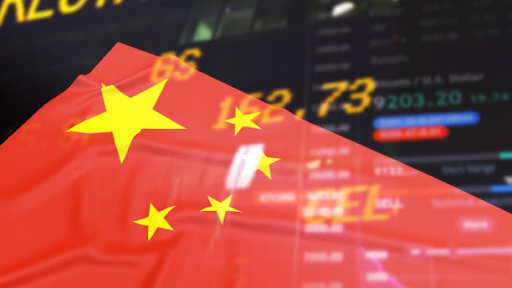
china flag

In 2017, the Chinese Communist Party announced its Next Generation AI Development Plan, a comprehensive roadmap designed to outpace the United States (US) and turn the country into a global AI leader by 2030. The plan aims to:

  • Build a $150 billion AI industry by 2030.
  • Lead the world in AI theory, technology, and applications.
  • Focus more on strategically utilizing current technologies for state economic, political, and social goals, rather than creating new ones.
  • Ensure AI becomes a major growth driver in the Chinese economy.

This ambitious strategy is supported by significant government funds and private sector contributions, with Alibaba, Baidu, and Tencent taking the lead in advancing AI technologies. China’s competitive advantage also comes from its capacity to utilize its extensive population data and promote collaborations between the public and private sectors.

Key Areas of AI Innovation in China

Healthcare

AI is employed in various segments of the healthcare sector, including medical imaging tools, diagnostics, and drug development. AI algorithms are employed to identify illnesses such as cancer, interpret X-rays and CT scans, and even aid in surgical procedures. For instance, Tencent’s AI-driven “Miying” system accurately identifies early-stage cancer from medical images. AI is being utilized in genomics, drug development, and the more efficient management of healthcare data. China is anticipated to experience substantial growth in the chronic and autoimmune drug market.

Smart Cities

China’s urbanization has led to the development of smart cities, where AI plays a pivotal role in traffic management, surveillance, and public services. In cities like Shenzhen and Hangzhou, AI-driven systems control traffic lights, monitor pollution levels, and provide real-time crime prevention via facial recognition technology.

Autonomous Vehicles

China is quickly progressing in self-driving technology. Baidu and other companies are working on creating self-driving cars and AI-powered logistics vehicles through projects like Apollo. China is experimenting with AI-driven public transportation options like self-driving buses and taxis in order to decrease both traffic congestion and emissions. By 2030, China is projected to have 56% of its autonomous vehicles operating at Level 3 and above, leading in innovation in this area.

AI in Manufacturing

China became the global hub for manufacturing due to a mix of factors including inexpensive production costs, a significant and quickly expanding local market, and proactive measures to attract foreign companies. Nevertheless, the nation is progressively implementing AI to enhance production processes and improve supply chains. Chinese factories are improving productivity and decreasing operational costs with AI-powered robots, predictive maintenance systems, and automated quality control. This transition is critical as China shifts from low-cost manufacturing to high-tech innovation.

AI in Education

AI-powered educational platforms are booming in China, personalizing learning experiences for students and providing adaptive learning solutions. Platforms like Squirrel AI use machine learning to tailor lessons based on individual student performance, ensuring a more personalized and effective education system.

AI and Big Data: The Chinese Advantage

China has a major edge in AI advancement thanks to its abundant access to large quantities of data. China, with a population exceeding 1.4 billion and a flourishing digital environment, accumulates extensive datasets to power AI algorithms. China’s vast digital platforms, including e-commerce giants such as Alibaba and social media platforms like WeChat, offer a massive amount of data for training AI systems, making big data crucial for AI development.

China’s regulatory structure, which permits extensive data gathering and utilization, also plays a role in its strong capabilities in artificial intelligence. Contrary to Western nations, which have stringent data privacy laws restricting data access, Chinese companies frequently enjoy greater leeway in gathering and evaluating user data.

Government’s Role in Driving AI

The Chinese government is pivotal in promoting the adoption of AI, funneling investments into AI research and development via different initiatives. Collaborations between the public and private sectors play a crucial role in this plan, as government funding is directed towards leading tech companies such as Huawei and Baidu to speed up AI progress.

Government-supported centers and projects focused on AI are also driving advancements. The Chinese Academy of Sciences is participating actively in AI research, and government-funded pilot zones are testing new AI applications in areas such as smart manufacturing, transportation, and public services.

China’s controlled system supports the widespread use of AI technologies like facial recognition in surveillance for public safety. The incorporation of AI in national security and public services is influencing the country’s approach to law enforcement and governance.

Challenges and Controversies

Despite China’s rapid progress in AI, it faces several challenges:

Talent Shortage

China’s AI industry faces a growing shortage of skilled AI professionals. While the country is producing more computer scientists and engineers, there is still a gap in terms of high-level talent, especially in cutting-edge AI research.

Global Trade Tensions

U.S.-China trade tensions have impacted China’s access to critical AI technologies, such as advanced semiconductor chips, which are essential for AI computing. These restrictions could slow down China’s AI ambitions, particularly in hardware innovation.

Ethical and Privacy Concerns

China’s use of AI in surveillance and social control has sparked global concerns about privacy and human rights. Facial recognition technology and social credit systems that track citizens’ behavior have been criticized for potential misuse, raising questions about the ethical implications of AI in governance.

Data Security and Privacy

Although China has the advantage of massive data availability, it faces increasing scrutiny regarding data privacy. The recently implemented Personal Information Protection Law (PIPL), China’s first comprehensive data privacy law, signifies a shift towards more regulated data use, which could impact how AI companies operate.

China’s Global Influence in AI

China’s leadership in AI is shaping global competition and collaboration in technology. Its companies are expanding AI-driven products and services worldwide, especially in developing countries through initiatives like the **Belt and Road Initiative (BRI)**. These AI-driven exports include surveillance systems, smart city solutions, and fintech innovations.

China’s involvement in AI ethics and global standard-setting will also have a long-term impact. Chinese tech firms and government bodies are increasingly involved in international discussions around AI governance, influencing how AI will be regulated and applied worldwide.

Conclusion

China’s strong initiative in advancing AI dominance is revolutionizing sectors and influencing worldwide tech competition. China has established itself as a leading competitor in the AI competition by utilizing its extensive data sources, government backing, and robust technology network. Nevertheless, ethical concerns, talent shortages, and international trade tensions may affect its direction.

While China remains committed to investing in AI, its progress will not just boost its economy but also transform global industries, economies, and the trajectory of technological innovation.


Site logo

* Copyright © 2024 Insider Inc. All rights reserved.


Registration on or use of this site constitutes acceptance of our


Terms of services and Privacy Policy.