Home Blog Page 17

How To Identify And Thwart AI-Powered Social Engineering Cyberattacks

1

Now, while we know for a fact that Artificial Intelligence (AI) has infleunced various domains—if not all—in terms of efficiency and innovation, the concept itself appears to have no inherent filter for right or wrong. This is illustrated by the extensive exploitation by criminals using AI to create advanced social engineering attacks. With the addition of human psychology and brilliance coordinating these attacks, they are very challenging to identify and defend against. Hence, it is crucial for both individuals and organizations to comprehend these emerging threats and adopt strong defensive measures.

The Rise of AI-Powered Social Engineering Attacks

Social engineering attacks exploit people to reveal private information or carry out actions that jeopardize security. Thanks to AI, such attacks are now more tailored and persuasive. For example, AI can analyze massive amounts of data from social media and other websites and generate highly tailored phishing emails — emails appearing to come from legitimate sources. Such accuracy increases the risk that victims will fall for these frauds.

Additionally, deepfake technology generated by AI allows perpetrators to produce lifelike audio and video replicas of reliable entities, thereby increasing the legitimacy of their deceptive messages. This shift in attack methods presents considerable difficulties for conventional security measures. 

Identifying AI-Powered Social Engineering Attacks

To protect against these sophisticated threats, it is essential to recognize common indicators of AI-driven social engineering:

  1. Unusual Urgency or Pressure: Attackers frequently construct a sense of urgency to encourage instant action without careful contemplation. Emails or messages that demand urgent replies, particularly those that relate to financial transactions or sensitive information; should set alarm bells ringing.
  2. Subtle Distortions in Communication: Even modern AI might generate subtle incoherences. So be on the lookout for unnatural patterns, small grammatical errors, or answers that do not conform to previous interactions.
  3. Requests for Sensitive Information: Exercise caution when you receive unsolicited requests for sensitive information, particularly those that have a departure from established paths.

Unexpected Attachments or Links: Make sure not to click on attachments or links in unsolicited emails as they may take you to a website with malware or download it to your device. 

Strategies to Thwart AI-Powered Social Engineering Attacks

Implementing proactive measures can significantly reduce the risk of falling victim to these sophisticated attacks:

  1. Continuous Education and Training: Regularly update employees and individuals about the latest social engineering tactics and promote a culture of skepticism towards unsolicited communications.
  2. Multi-Factor Authentication (MFA): Implement MFA to add an extra layer of security, making it more challenging for attackers to gain unauthorized access. citeturn0news17
  3. Advanced AI-Based Security Solutions: Utilize AI-driven security tools capable of detecting anomalies and patterns indicative of social engineering attempts. These systems can analyze vast amounts of data in real-time, providing a proactive defense mechanism. citeturn0search3
  4. Establish Verification Protocols: Encourage verification of unusual requests through secondary channels before taking action. For example, confirming a financial transaction request via a phone call to the requester.

Stay Informed About Emerging Threats: Regularly consult reputable cybersecurity sources to stay updated on new attack vectors and recommended defense strategies.

Conclusion

We all need to have in mind that as AI continues to evolve, so do the methods of cybercriminals leveraging this technology for dubious purposes. Understanding the indicators of AI-driven social engineering attacks and adopting thorough security protocols are essential actions for protecting both personal and organizational assets. Vigilance, knowledge, and cutting-edge technological protections serve as the foundation of a successful approach to counter these complex dangers


Russian Strikes Kill at Least 25 in Ukraine Amid Rising Tensions

Russia has intensified its missile and drone attacks across Ukraine, leading to devastating consequences. At least 25 people have been killed, and dozens injured, as cities across the country reel from the latest assaults. The strikes come at a time of growing geopolitical tensions, particularly as U.S. support for Ukraine appears to be wavering.

The Scale of the Attacks

Russian forces unleashed a barrage of airstrikes across several Ukrainian regions, causing substantial destruction and loss of life among civilians. Reports from Ukrainian officials highlight the following:

  • Donetsk Region: The town of Dobropillia was hit by two ballistic missiles, destroying residential buildings and killing at least 11 people. Many others sustained injuries, with emergency crews still searching for survivors under the rubble.
  • Kharkiv Region: A Russian drone attack in Bohodukhiv killed three people and caused extensive property damage. Ukrainian air defenses managed to intercept some drones, but many still reached their targets.
  • Kyiv: The capital city faced a barrage of missiles, causing damage to critical energy infrastructure. The attack left thousands of residents without electricity, adding to the already dire humanitarian situation.

As Ukraine continues to defend itself, President Volodymyr Zelenskyy has condemned the strikes, vowing to strengthen the country’s air defenses and hold Russia accountable for the destruction.

Why Are the Attacks Escalating?

The recent increase in Russian strikes coincides with a shift in U.S. foreign policy under President Donald Trump. The Trump administration has stopped sharing real-time satellite intelligence with Ukraine, a move that has significantly weakened its ability to anticipate and respond to Russian missile strikes.

The United States’ decision comes as Trump presses Ukraine to negotiate a peace settlement with Russia. Trump has maintained that U.S. support for the war cannot go on forever, and he has adopted a more accommodating position toward Russian President Vladimir Putin.

European allies have called Trump’s position into question, warning that a softer approach to Russia could lead to further aggression. President Donald Tusk of Poland has said that if no one stands firm against Russian aggression, Putin will be tempted to expand his military campaigns.

Ukraine’s Response and Calls for More Support

Despite the mounting challenges, President Zelenskyy remains determined to resist Russian aggression. His government is actively lobbying for additional military aid, particularly from European countries. Zelenskyy is also advocating for stronger sanctions against Russia, urging global leaders to take immediate action to cut off economic and military support to Putin’s government.

Additionally, Ukraine is seeking new partnerships in the Middle East and Asia to broaden its sources of military support. Zelenskyy is said to be pursuing talks with Saudi Arabia’s Crown Prince to obtain diplomatic endorsement and financial assistance.

The Humanitarian Toll

The recent attacks have produced dire humanitarian consequences. The deliberate targeting of civilian infrastructure — from power stations to hospitals to residential buildings — has put millions of Ukrainians in precarious circumstances.

  • Power Outages: Attacks on power plants have resulted in widespread blackouts, leaving many residents without access to basic services.
  • Food and Water Deprivation: The disruption of these supply chains restricts access to food and clean water in some parts of the world.
  • Medical Crisis: Hospitals are overwhelmed and many do not have enough medical supplies.

The United Nations and other humanitarian organizations are calling for an urgent response to prevent further suffering among Ukraine’s civilian population.

What’s Next?

The situation in Ukraine remains extremely volatile. While Russia appears determined to continue its military campaign, Ukraine is struggling to maintain its defenses amid shifting international support.

With U.S. policy changes and European uncertainty, the future of Ukraine’s resistance remains unclear. However, one thing is certain: as long as the war continues, the human cost will only rise.

The coming weeks will be crucial in determining whether diplomatic efforts can bring an end to the violence or whether the war will escalate even further.

SpaceX Rocket Explodes Mid-Flight Again, Scattering Debris and Disrupting Flights

0

In what has become a troubling pattern for SpaceX, the company’s Starship rocket experienced another catastrophic failure, breaking apart mid-flight and scattering debris across the Caribbean Sea. This marks the second consecutive in-flight explosion for the ambitious Starship program, raising concerns about the project’s reliability and safety.

The Incident

The explosion happened around eight minutes into the rocket’s eighth test flight. Communications with the spacecraft were suddenly lost, and the rocket disintegrated over the Caribbean. The explosion was so massive that flaming debris was reportedly seen by passenger aircraft flying nearby.

rockect explosion in the sky

Passengers on a commercial flight from the Dominican Republic to Chicago reported seeing fragments of the Starship plummeting through the sky. The sight was shocking enough for pilots to reroute the flight midair, prioritizing passenger safety.

Impact on Air Travel

The explosion had immediate ramifications for aviation. The Federal Aviation Administration (FAA) responded by closing vast portions of Florida’s airspace, grounding commercial flights and delaying thousands of travelers. Starship is paused after the FAA opened a formal investigation, rescinding permission to fly their test vehicle following the mishap.

Possible Cause of Failure

While official findings from the investigation are yet to be released, early indications suggest that a propellant leak may have been the cause of the failure. Such leaks can lead to explosions when they interact with the high temperatures and pressures generated during flight.

SpaceX’s Response

The incident was described by SpaceX CEO Elon Musk as a “minor setback.” He reiterated that failures are expected in the fast-paced iterative design approach that SpaceX uses. “The company learns a lot from each failure and feeds that into subsequent designs,” Musk said. He also said SpaceX was still focused on its goal of making space travel more accessible and affordable, despite the recent setbacks.

Musk’s calm response aligns with his mindset of welcoming failure as a path to victory. Some critics, however, contend this pattern of failures could erode public confidence in the safety and reliability of the Starship program

Concerns Regarding Future Space Missions

The repeated failures of the Starship rocket create key questions about the reliability of SpaceX’s technology, especially considering the company’s long-term ambitions to use the Starship for missions to the Moon, Mars and beyond for years to come. The safety concerns are particularly acute, as SpaceX plans to later use the rocket on missions with people aboard.

The F.A.A.’s inquiry is expected to be broad, and SpaceX is likely to face a slowdown in its testing schedule until the cause of the explosion is completely understood and addressed.

Despite all of these experiences, SpaceX continues to push ahead with its Starship effort. The company has stuck to its story that these incidents are an essential part of a larger learning process to make access to space reliable and routine.

Denmark’s Postal Service to End Letter Deliveries by 2025 Amid Digital Shift

0

Denmark’s government-run postal service, PostNord, has declared it will stop delivering letters by the conclusion of 2025, signaling the end of a long-standing tradition. The choice signifies the increasing influence of digitalization on conventional postal services and underlines the transition to parcel delivery motivated by e-commerce.

Why Is Denmark Stopping Letter Deliveries?

The decrease in letter deliveries in Denmark has been significant. Since 2000, the number of letters has fallen by 90% as people turn to digital communication with e-mail, instant messaging, online banking, etc. This change has made traditional letter delivery services economically unsustainable.

On the other hand, with the rise of online shopping, parcel deliveries have boomed, particularly from the likes of Amazon, Zalando and other e-commerce giants. As a result, PostNord opted to focus on more profitable logistics and parcel delivery services rather than maintaining a foregone letter system.

Impact on Jobs and Infrastructure

Due to the cessation of letter deliveries, PostNord plans to cut approximately 1,500 jobs out of 4,600 employees. This reorganization is part of the company plan to reallocate resources to its growing parcel division.

In fact, Denmark’s popular red mailboxes with their yellow tops, which number roughly 1,500 all over the country today, will begin to be removed in June 2025. This move marks the end of an era in which the sending of physical letters played a crucial role in everyday existence.

Despite these changes, Danish Transport Minister Thomas Danielsen has promised citizens that alternative options will be available for those who still need to send letters. While no details have emerged yet, it is conceivable that vital postal services could be incorporated into local businesses or government entities.

A Global Trend: Decline of Letter Delivery Services

Denmark’s action is part of a broader shift throughout Europe, where country-specific postal services are reorganizing to adapt to evolving consumer behaviors.

  • Germany’s Deutsche Post recently revealed its intention to eliminate 8,000 positions as part of its cost-reduction strategy.
  • The Royal Mail in the UK is contemplating cutting back on letter delivery days to cut costs.

Governments and postal services globally grapple with the difficulty of achieving cost efficiency while ensuring a certain level of postal service, especially for elderly citizens and rural areas that might depend on conventional mail.

The Future of PostNord and Postal Services

PostNord was formed in 2009 through a merger of Denmark’s Post Denmark and Sweden’s Posten AB, and it has fought to remain profitable as demand for letter delivery has continually declined. But the company is willing to make sure it is sustainable in the long run by focusing on its parcel delivery and logistics business.

With the rise of the internet, there is no space for post in the market. And while letters might become a thing of the past, fast and reliable package delivery is increasingly crucial. Denmark’s plan to stop your mailman from bringing you letters is not merely about saving money: It is a reflection of how modern communication and commerce have changed.

For Danes, this will take some getting used to, but it is clear that e-commerce now is the future of postal service, not letters.

Carmakers win break from Trump’s tariffs on Canada and Mexico

0

In a recent development, President Donald Trump imposed a 25% tariff on auto imports from Canada and Mexico as part of a broader effort to protect U.S. industry and boost domestic manufacturing. He pitched the tariffs as a reaction to economic problems, migration troubles, and the influx of fentanyl and other drugs across the border. Trump argued that Canada had not done enough to curb illegal drug trafficking into the U.S. and used this as a justification for the trade barriers. Additionally, he aimed to push for “reciprocal” tariffs against countries he believed were treating the U.S. unfairly, including China.


For weeks, Trump had vowed to implement tariffs, but the opening weeks of his presidency have featured strident threats and sudden suspensions and his allies do not quite know what the American president is actually doing and what it means.

When asked whether 30 days was sufficient time for the auto sector to prepare for the new taxes, White House press secretary Karoline Leavitt said Trump had been blunt with the automakers that were seeking an exemption:

“He told them that they should get on it, start investing, start moving, shift production here to the United States of America where they will pay no tariff.”

Following urgent pleas from major U.S. automakers such as Ford, General Motors, and Stellantis, Trump temporarily exempted North American carmakers from the new tariffs. 

These companies, which have deeply integrated supply chains across the continent, warned that the tariffs could disrupt a third of North American car production within a week and implementing the tariffs without exemptions could have led to increased production costs and potential job losses within the sector. 

The exemption is contingent upon compliance with the United States-Mexico-Canada Agreement (USMCA) content rules, which require vehicles to have at least 75% North American content to qualify for duty-free access to the U.S. market. 

Trump’s tariffs have drawn retaliatory measures from Canada and China, and Mexican President Claudia Sheinbaum has said she would announce her response on Sunday. Previously, Ford CEO Jim Farley has said the 25% tariffs on Canada and Mexico and 10% tariffs on China would be “catastrophic” for U.S. companies doing business worldwide. An additional report from Anderson Economic Group (AEG) claimed that the tariffs, and the additional ten percent charge on China, could raise the price of cars by as much as $12,200 (€11,290) on certain models.

Financial markets responded positively to the announcement. Shares of General Motors, Ford, and Stellantis experienced significant gains, with an average increase of over 7%. This increase indicates investor relief and hope concerning the brief easing of trade conflicts and the possible stabilization of the automotive sector. This provision guarantees that the advantages of the exemption correspond with the trade agreement’s goals of fostering regional manufacturing and equitable competition.

Nonetheless, this respite is short-lived, and the general tariffs on imports from foreign nations are scheduled to take effect from April 2. The administration has encouraged car manufacturers to contemplate relocating production to the United States to prevent future tariffs and bolster local manufacturing capabilities.

The automotive sector remains vigilant regarding the situation, promoting lasting solutions that foster free trade and economic stability throughout North America. The one-month exemption creates an opportunity for stakeholders to participate in additional talks and negotiations to tackle the issues raised by the tariffs and to pursue lasting solutions that advantage both the industry and consumers.

Trump Administration Moves to Revoke Legal Status for 240,000 Ukrainians Amid Deportation Crackdown

The Trump administration is said to be gearing up to cancel the Temporary Protected Status (TPS) for around 240,000 Ukrainian refugees in the U.S., a move that might result in widespread deportations. This action is part of a larger initiative to reverse Biden-era immigration policies and enforce stricter measures on migrants residing in the U.S. under humanitarian protections.

Background: Why Were Ukrainians Granted TPS?

After Russia’s large-scale invasion of Ukraine in 2022, the Biden administration granted TPS to Ukraine, enabling Ukrainian nationals already residing in the U.S. to stay legally and work without the risk of deportation. TPS is usually provided to citizens of nations facing armed conflicts, natural disasters, or other exceptional situations that render their return hazardous.

Since its introduction, TPS for Ukrainians has been renewed several times, with the latest extension set to last until October 2026. Nonetheless, it is applicable only to those who came prior to August 2023. The policy offered a vital safety net for numerous Ukrainians escaping war, many of whom have subsequently established themselves, secured jobs, and become part of American communities.

Trump’s Plan: A Shift in Immigration Priorities

If implemented, Trump’s decision to end TPS for Ukrainians would compel thousands of people — many of whom have no safe place to go back to — to leave the country or be deported. The administration could start enforcing deportations as soon as April 2025 for Ukrainians, as well as potentially up to 1.8 million migrants from different nationalities, according to reports.

The move embodies Trump’s broader position on immigration, which demands mass deportations, limits on asylum claims and reversing humanitarian relief initiatives established under the Biden administration. It also builds on his campaign promises to adopt a hardline stance on immigration enforcement and border security.

Why Is the Trump Administration Targeting Ukrainian TPS Holders?

The administration has defended its position, saying it is necessary to protect national security, control the border and “restore order” to the immigration system. It has become part of a larger Trump argument, linking the move to geopolitical concerns and suggesting that the U.S. should not take in displacements, because European countries are offering asylum, and that people displaced by other conflicts should stay on the right side of the world.

Trump also blamed Canada for the non stop flow of drugs into the U.S. and said the northern border crisis was still a problem. His administration has invoked similar arguments to justify tariffs on Canada and Mexico, highlighting a pattern of using economic and immigration policy in concert to do an end run around other countries.

Impact on Ukrainian Refugees and the U.S. Economy

The termination of TPS would have grave humanitarian and economic impacts. Many of the Ukrainians who fled to the U.S. have started businesses, found jobs and joined their communities as active members. Displacing them could upend industries that depend on immigrant labor and cause economic dislocation for families that have established lives in the U.S.

The advocacy groups say that deporting those refugees back to a war-torn country would endanger their lives. Ukraine continues to be a war zone, replete with devastation, economic hardship, and Russian terror. Sending displaced persons back to such an environment raises serious ethical and legal concerns.

Political and Legal Reactions

The announcement has caused an uproar among immigration advocates, Ukrainian-American communities and bipartisan lawmakers. Critics say the move compromises U.S. commitments to supporting Ukraine, and contradicts previous pledges to help those fleeing war.

The White House, however, has stated that no final decision has been made. Press Secretary Karoline Leavitt emphasized that discussions are still ongoing and that President Trump remains open to assessing the situation. However, the administration has made it clear that stricter immigration enforcement remains a top priority.

What Happens Next?

If Trump does go ahead with the TPS termination, the Ukrainians affected will have to either leave, apply for another legal status in the U.S. or be deported. The move could also spark legal battles as revocations of TPS have been subject to legal challenges in the past.

As the April 2 deadline for wider immigration enforcement policies looms, many are closely monitoring whether the administration will go through with its plans or backtrack in light of public and political outcry.

For now, the fate of 240,000 Ukrainians in the U.S. hangs in the balance, as the administration pushes forward with policies that could redefine America’s approach to humanitarian protection.

DBS Bank’s Workforce Reduction: Navigating the AI Transformation

For years, people have feared that artificial intelligence (AI) would replace their jobs, and for years, companies have comforted them: AI will augment, not replace. But the fears are now becoming reality.

Announcing the news was DBS Group Holdings Ltd., the biggest bank in Southeast Asia, which revealed plans to cut its employee roster by around 4,000 jobs over the next three years. This move emphasizes the revolutionary change brought forth by artificial intelligence in the financial sector and the changing dynamics around job responsibilities therein.

Details of the Workforce Reduction

The planned reduction represents about 10% of DBS’s total workforce, which currently numbers around 41,000 employees. The layoffs will mostly impact temporary and contract staff, the bank said, adding that permanent employees will not be affected. This strategy is designed to handle the transition in an orderly fashion—hoping that natural turnover will suffice as projects close, and roles become redundant.

Creation of AI-Focused Positions

Despite a reduction in the workforce, DBS intends to have around 1,000 new roles focused on AI. This move demonstrates the bank’s emphasis on adopting cutting-edge technologies and conveys the changing landscape of job functions in the company.

CEO’s Perspective on Job Creation Challenges

“Jobs……….. are going to get harder to come by, with automation,” said DBS Group CEO Piyush Gupta. For the first time in his tenure, he said, he is struggling to find new roles for employees, a challenge that echoes the broader struggles facing industries as they adapt to advances in technology.

Broader Implications for the Banking Industry

The announcement by DBS places it among the earliest big Asian banks to lay out the effect of AI on its workforce. This decision is in line with global trends, as financial institutions around the world continue to explore the use of AI for operational efficiency and cost reduction. AI could disrupt almost 40% of jobs in the world, I.M.F. has warned, a sign of changing employment patterns across sectors.

Conclusion

The decision by DBS Group to reduce its workforce due to AI advancements highlights the transformative impact of technology on employment within the banking industry. However, automation not only provides efficiencies, but also complicates the task of creating and managing the workforce. As AI develops, companies will have to balance how to incorporate this technology with creating strategies that protect the implications around its employees.

Microsoft Announces Closure of Skype in May 2025: Transitioning to Microsoft Teams

Microsoft has revealed that it will finally end Skype on 5th May 2025, after 22 years of service in one of the biggest transformations in the digital communication space. This is part of Microsoft’s strategy as they streamline their communication suites with a focus on the newer, more versatile options such as Microsoft Teams.

The Rise and Decline of Skype

Skype — launched in 2003 — was a game-changer, allowing users to make free voice and video calls over the internet. It quickly became a global phenomenon, linking millions of people around the world. Microsoft bought Skype in 2011 for $8.5 billion and wanted to make its services first class citizens within the Microsoft ecosystem. citeturn0news9

However, Skype struggled in recent years against user-friendly and feature-rich apps like Zoom, WhatsApp and FaceTime. The number of users on Skype saw a decline due to the accelerated adoption of these alternatives through the COVID-19 pandemic.

Transition to Microsoft Teams

Adaptation to Stride of Communication Needs: Microsoft Teams Launched in 2017, Encompassing Both Business Users with File Collaboration, Chat, and Video Meeting Features, Since its launch, Teams has evolved to cater to work as well as personal communication requirements, fusing them both on a single platform and with tight integration with Microsoft services.

With the planned shutdown of Skype, Microsoft is encouraging users to transition to Teams. The company assures a smooth migration process, allowing users to transfer their contacts and chat histories to Teams. This move aims to provide a more integrated and efficient communication experience, aligning with modern user expectations. citeturn0news10

Impact on Users

For many, Skype has been synonymous with online communication, and its closure marks the end of an era. Those who have used Skype to connect with colleagues or over friends and family also need to migrate to Microsoft Teams before May 2025 to avoid disruption of service. Microsoft has provided resources and support to facilitate this transition, emphasizing that Teams encompasses all the functionalities of Skype, along with additional features designed for contemporary communication needs. citeturn0news6

Conclusion

Microsoft’s decision to retire Skype underscores the rapid evolution of communication technologies and the necessity for platforms to adapt to changing user preferences. While Skype’s closure may evoke nostalgia, the transition to Microsoft Teams represents a step forward in offering a more cohesive and versatile communication solution for users worldwide.

Apple AI Glitch: Why Did ‘Racist’ Transcribe as ‘Trump’?

0

As discovered recently by iPhone users, there was an unusual issue with Apple’s dictation capabilities — when the user would say the word “racist,” their device would momentarily transcribe it as “Trump,” before correcting the word automatically. From early on, the glitch inspired a combination of controversy, humor and debate on social media as people tried to determine whether it was a willful technical error or something else.

What Exactly Happened?

A voice-to-text function built into Apple’s devices, which can be used for dictation in iMessage, Notes and other apps, appeared to have temporarily swapped the word “racist” for “Trump” before correcting itself. Others reported seeing similar errors triggered by other words starting with the letter “r,” like “rampant” or “radical.” That prompted rampant speculation and viral posts across platforms including TikTok, Twitter (now X) and Reddit.

Some users had recorded their screens to show the glitch happening live, which added to the online chatter. Some found it funny, while others considered it a sign of tech companies’ alleged bias.

Apple’s Response

Promptly, Apple responded that it was a harmless error in their speech recognition model and not a deliberate association. A company representative told users Apple was aware of the bug and working to have it fixed.

“The problem is simply a technical mistake in our AI-powered speech recognition system,” Apple’s development team said in a statement. ‘The model isn’t programmed to associate certain words with any particular names.”

Public Reactions and Political Controversy

The glitch immediately drew mixed reactions.

1. Social Media Reactions

  • Humor and Memes: Many people joked about the error, calling it an example of “AI knowing too much” or “Siri spilling secrets.”
  • Frustration: Others expressed concerns about the reliability of Apple’s AI and its potential impact on transcription accuracy.
  • Curiosity: Some users tested the glitch with other words, trying to see if there were similar issues with different names or terms.

2. Political Discussions

Given the polarizing nature of U.S. politics, some viewed the glitch as a reflection of perceived biases in Big Tech.

  • Conservative commentators accused Apple of embedding political bias into its technology, with claims that the company was subtly reinforcing negative narratives about former President Donald Trump.
  • Tech analysts and Apple defenders argued that AI-driven speech recognition is prone to errors and that this was nothing more than an unfortunate coincidence.

The issue became a topic of debate on news outlets and discussion forums, with some demanding more transparency from Apple regarding how its AI processes language.

What Caused the Glitch?

Tech experts suggest several possible explanations for the error:

Phonetic Similarity

Some linguists believe that Apple’s speech-to-text AI may have misinterpreted phonetic patterns. Words that start with “ra-” or “tru-” might be processed incorrectly due to similarities in pronunciation or previous usage patterns.

Machine Learning Bias

Apple’s AI is trained on vast amounts of text from various sources, including social media, online articles, and user interactions. If the AI system frequently encountered the words “Trump” and “racist” in similar contexts, it could have unintentionally developed an association between them.

Software Bug

The simplest explanation could be a coding error in the speech recognition system that caused incorrect predictions for certain words. Apple frequently updates its AI models, and sometimes, bugs emerge as unintended side effects of improvements.

Apple’s Fix and Future Improvements

Apple has assured users that the issue is being addressed in an upcoming software update. The company is also reportedly refining its AI models to prevent similar errors in the future.

What This Means for AI and Speech Recognition

The incident demonstrates progress as well as limitations for AI-driven language processing. Speech recognition can be improved but it is still based on complex algorithms and sometimes results cause an unexpected controversy.

As AI increasingly becomes integrated into everyday tech, companies such as Apple need to be wary that their models, as seen in this case, are accurate and neutral in nature to prevent unintended consequences.

Conclusion

The glitches in the Apple AI that briefly confused “racist” with “Trump” was most likely an accidental error rather than malicious bias and had no other input from the “higher ups.” But it also highlights the difficulty, if not impossibility, of training AI-powered speech recognition to be completely free of unintended associations. And while it was rectified in short period, it is a reminder that even with advanced AI technology there are no guarantees — and that even a fleeting hiccup can ignite a serious conversation.

Trump signs executive order making English official language of US

0

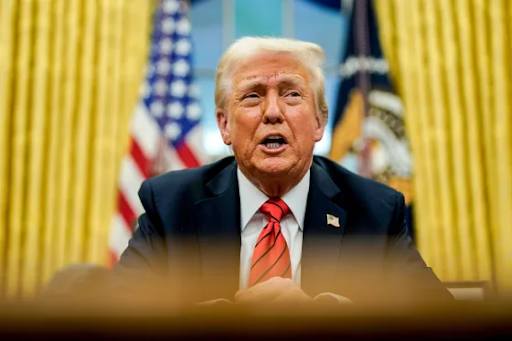
It was March 1, 2025, when President Donald Trump issued an executive order declaring English the official language of the United States for the first time in the nation’s nearly 250-year history.

What Does This Mean?

The U.S. never had an official language, even if English had been the primary language spoken in government and day-to-day life. This executive order changes that by officially declaring that the nation’s language is English.

Changes to Government Services

One significant aspect of this order is its impact on government services:

  • Previous Policy: A directive from the year 2000 required federal agencies and organizations receiving federal funds to provide language assistance to non-English speakers.

Current Change: The new order rescinds this mandate, allowing these agencies and organizations to decide whether or not to offer services in languages other than English.

President Trump’s Perspective

President Trump has emphasized that this move aims to:

  • Promote unity among Americans.
  • Cultivate a shared culture.
  • Ensure consistency in government operations.

He believes that having a common official language will strengthen national identity and civic engagement. 

To recall, when Trump was campaigning for president in 2016, he slammed the-former Florida governor Jeb Bush — his rival in the GOP’s presidential primary at the time — for speaking Spanish on the campaign trail. When asked about his comments, Trump said, “this is a country where we speak English, not Spanish.”

The administration of President Donald J. Trump at that time took down the Spanish-language version of the official White House website within hours after he was inaugurated.

But Republican organizations have invested in Spanish-language messaging in recent election years, and Trump ran Spanish-language adverts during the 2020 and 2024 election cycles.

Immigration and voting rights advocacy groups have condemned the executive order. Anabel Mendoza, the communications director for United We Dream, a nonprofit group that advocates for immigration reform, said in a statement that Trump was putting “a target on the backs of Black and brown immigrants and communities that speak different languages, and we won’t stand for it.”

Trump is going to try and use this executive order as a crutch to attack schools that provide curriculum to immigrant students in other languages, eviscerate programs and roles that work to promote inclusive language access, and embolden immigration agents to target and harass individuals who speak a certain way,” she said.

Impact on Non-English Speakers

This policy shift could significantly affect non-English-speaking communities:

  • Access to services: Agencies no longer being required to provide services in other languages may prevent individuals with limited English proficiency from being able to access important information and services.
  • Examples: Services like immigration assistance, public health information and other federal programs may no longer be easily accessible in several languages.

Conclusion

The designation of English as the official language marks a notable change in U.S. policy, reflecting ongoing debates about language, culture, and national identity. As this policy is implemented, its effects on various communities and government operations will become more apparent.

Site logo

* Copyright © 2024 Insider Inc. All rights reserved.


Registration on or use of this site constitutes acceptance of our


Terms of services and Privacy Policy.