Home Blog Page 9

OpenAI o3 Defeats Grok 4 in High-Stakes AI Chess Showdown

In August 2025, Google’s Kaggle Game Arena hosted a groundbreaking AI chess exhibition that showcased the strategic capabilities of general-purpose large language models (LLMs), not conventional chess engines. OpenAI’s o3 model emerged as the champion, delivering a clean 4–0 victory over xAI’s Grok 4 in the final.

Showcasing Versatility: Why This Tournament Matters

Unlike matches featuring chess-specialized engines, this tournament put LLMs, typically used for text, reasoning, and coding, to the test on structured strategic gameplay. Chess served as a controlled benchmark to highlight reasoning under strict rules. 

Back in 1997, IBM’s Deep Blue made history by beating world chess champion Garry Kasparov, proving that computers could outplay even the best human minds at chess.

Since then, AI has come a long way. Google’s DeepMind created programs that can teach themselves chess and even more complex games like Go, reaching a level beyond human ability.

But now, for the first time, there’s been a major chess tournament putting today’s general-purpose AI models, like OpenAI’s ChatGPT, to the test. These LLMs have been making waves since ChatGPT launched in 2022.

“This isn’t just about who wins,” explained Mats André Kristiansen, CEO and co-founder of Take Take Take. “It’s about understanding how these AI tools think and reason.”

Interestingly, just a few months ago in July, world number one Magnus Carlsen played ChatGPT in an online chess match, and won without losing a single piece.

Tournament Path: A Tale of Two Strategies

On Day 1, both Grok 4 and o3 swept their first opponents with perfect scores, earning semifinal spots along with Google’s Gemini 2.5 Pro and OpenAI’s o4-mini. 

In the semis, o3 continued its dominance, defeating its sibling model o4-mini 4–0. Meanwhile, Grok 4’s semifinal was tense, ending in a tiebreaking armageddon win against Gemini 2.5 Pro. 

Final Face-Off: Flawless Strategy vs. Fatal Flaws

In the climactic showdown, o3 demonstrated unmatched consistency, capitalizing on Grok 4’s notable errors, including repeated and unexpected queen blunders. Grandmaster Hikaru Nakamura remarked, “Grok made so many mistakes… but OpenAI did not.” 

Magnus Carlsen, five-time world champion, also weighed in, highlighting the emotional rivalry between OpenAI and xAI rooted in the personal split between Sam Altman and Elon Musk. 

What This Means for AI’s Strategic IQ

This face-off does not equate to Artificial Generative Intelligence (AGI), but it reflects how different AI models approach complex reasoning tasks. Grok’s missteps suggest gaps in rigor or strategic depth, while o3’s flawless play points to more structured reasoning capabilities. These matches highlight that today’s AI can excel beyond language tasks and raise the bar for future models in strategic adaptability and planning.

Final Standings

PositionModelNotes
1stOpenAI o3Undefeated, consistent, strategic
2ndGrok 4Strong earlier but faltered in the final
3rdGemini 2.5 ProClaiming bronze after beating o4-mini

Bottom Line

OpenAI’s success with o3 in the Kaggle AI Chess Tournament demonstrates that LLMs can transfer general reasoning power to structured, rule-based domains, revealing both strengths and vulnerabilities. As these technologies evolve, these tournaments offer valuable benchmarks of AI maturity

Design Thinking in Digital Healthcare: Human-Centered Innovation Shaping the Future of Patient Care

Healthcare is changing fast. We are shifting away from old, one-size-fits-all methods and moving toward a more innovative, personalized approach to patient care. Thanks to technologies like artificial intelligence (AI), we can now process and make sense of massive amounts of data, something that was not possible before.

With advanced automation and digital tools, doctors can see the full picture of a person’s health and create treatments tailored specifically for them. It is a complete break from the way medicine has worked for centuries, when treatment was guided by a narrow template built around the “typical” male or female body. But as modern research makes clear, there is no such thing as a truly typical patient as each person’s biology, lifestyle, and needs are unique.

This is where Design Thinking, a problem-solving approach rooted in empathy and iterative experimentation, emerges as a game-changer. Design Thinking starts at the patient’s reality and builds solutions outward. It asks a critical question: What do this particular user truly need, and how can we design solutions they will actually use?

Why Design Thinking Matters in Healthcare

Healthcare is complex. Every patient comes with unique needs, cultural contexts, and barriers to access. Traditional solution design often misses these subleties because it prioritizes efficiency, cost reduction, or clinical data over lived experience.

Healthcare is filled with challenges, from fragmented systems to inefficiencies and overlooked gaps in care. Traditional fixes often prioritizes efficiency, cost reduction and treat the symptoms rather than the root causes. Design thinking pushes beyond these quick fixes by working closely with change-makers to address underlying problems. Instead of applying a blanket policy, it asks empathetic, experience-driven questions like why a hospital stay might cause anxiety and then works to find creative, targeted ways to reduce it.

A core strength of design thinking is its emphasis on collaboration. By bringing together doctors, technologists, designers, and other experts, it breaks down processes that can hold back innovation. This interdisciplinary teamwork fuels the development of ideas and prototypes that are both practical and forward-thinking.

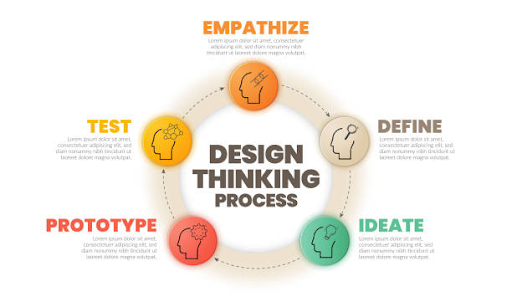
Summarily, Design Thinking flips this script by:

  • Empathizing: Understanding patient pain points, from emotional struggles to logistical challenges.
  • Defining the problem: Framing issues in a way that addresses real-world barriers.
  • Ideating: Brainstorming multiple creative solutions.
  • Prototyping: Building test versions quickly for feedback.
  • Testing and iterating: Refining based on user input.

In healthcare, this means solutions that not only function well in a lab but also integrate seamlessly into the everyday lives of patients, caregivers, and clinicians.

Case Studies: Where Design Thinking Is Already Saving Lives

The Prime App (Mental Health & Schizophrenia Care)

Developed with IDEO and UCSF, the Prime app was co-designed with patients living with schizophrenia. Instead of assuming what patients needed, the design team asked them directly. This helped them create an app that helps users set small, meaningful goals, connect with peer supporters, and track their progress, boosting engagement and improving mental health outcomes.

AliveCor (Heart Health Monitoring)

AliveCor created a sleek, portable ECG monitor that works with a smartphone. By collaborating closely with patients and cardiologists, they ensured the device was intuitive enough for everyday use while still delivering clinically reliable results.

SwipeSense (Hospital Hygiene Innovation)

This wearable hand sanitizer system tracks and encourages hygiene compliance among healthcare workers. It blends behavioral insights with digital tracking, reducing infection rates without adding burdens to busy staff.

Tackling Inequality Through Human-Centered Design

Design Thinking is especially powerful in underserved and low-resource settings.

In India, developers created a mobile app to help health workers screen for cardiovascular risk in rural areas. By involving frontline workers in every design stage, they produced an interface that was not only accurate but also easy to use with minimal training.

Similarly, Swasthya Slate, a portable diagnostic toolkit, empowers rural healthcare workers with quick tests for blood pressure, blood sugar, and more, designed specifically for remote, electricity-limited environments.

Opportunities for 2025 and Beyond

IDEO predicts several big shifts for digital health in the next few years:

  • AI-Powered Personalization: Tailoring interventions to each patient’s medical history, preferences, and daily habits.
  • Hybrid Care Models: Seamlessly blending virtual and in-person care.
  • Youth-Centric Platforms: Like Soluna, a mental health app for young people co-designed with hundreds of teens, ensuring cultural relevance and trust.
  • Connected Devices Ecosystems: Linking wearables, apps, and home health devices into cohesive health networks.

The common thread? Every innovation is tested and refined with direct user involvement before scaling.

Benefits and Challenges of Design Thinking in Healthcare

Benefits:

  • Produces more usable and effective health tools.
  • Improves adherence: patients stick with tools they helped design.
  • Strengthens trust between providers and patients.

Challenges:

  • In healthcare, low-fidelity prototypes (e.g., rough mock-ups) may pose safety concerns, limiting early experimentation.
  • Aligning user desires with clinical best practices can be complex. Patients may want convenience, but safety protocols must remain.
  • Requires time and investment: iterative testing does not always fit traditional funding timelines.

The Future: Where Empathy Meets Innovation

Digital health’s next chapter will not just be about smarter AI or faster apps, it will be about creating tools that are human-first. Imagine:

  • A diabetes management app designed with patients from rural communities, integrating local food culture into meal planning.
  • A telehealth platform that adapts its interface for elderly users, considering visual and hearing impairments.
  • Virtual reality therapy tools co-designed with PTSD survivors to ensure emotional safety.

This is the promise of Design Thinking in healthcare, bridging the gap between technological possibility and human need.

The Future of Influencer Marketing: Can It Move Beyond Social Media Platforms?

0

Let us face it — we have all seen the picture-perfect aerial photographs, morning skincare routines, and “what I eat in a day” or “get ready with me”reels. Social media gave birth to a new kind of celebrity: the influencer. Over the past decade, influencer marketing has transformed from a fringe experiment into a billion-dollar industry. But in 2025, as audiences grow savvier and screen fatigue sets in, a pressing question emerges:

Can influencer marketing evolve beyond curated Instagram feeds and TikTok dances?

More importantly — should it?

Brands today are navigating a trust economy, where authenticity outweighs aesthetics, and community matters more than clout. Consumers are no longer just scrolling; they are seeking substance. They want real voices, real connections, and real-world value. And influencers, once bound to the borders of their social profiles, are stepping off the screen and into the broader world.

This article explores how influencer marketing is being reimagined beyond the algorithms; from boardrooms and book clubs to livestreams, leadership panels, and community events. With insights from industry trends, we take a closer look at how this powerful tool is evolving into a movement that transcends platforms and redefines influence altogether.

From Virtual Posts to Real‑World Connections

Post‑pandemic, brands and influencers are increasingly moving beyond the screen, hosting events like wellness retreats, meet‑ups, creative workshops, and book clubs. These in‑person gatherings help deepen trust and foster genuine connection, especially among millennials and Gen Z who crave authenticity. According to Vogue Business, brands are now valuing live experiences that offer meaningful engagement over curated social media content. Instead of passively scrolling, attendees become active participants, creating richer brand‑influencer relationships.

Expert Voices in B2B & Executive Leadership

Influencer marketing is expanding into professional and thought leadership spaces. According to Forbes, B2B influencers such as subject-matter experts on LinkedIn or webinar hosts are now guiding purchasing decisions and building industry trust. Organizations are also empowering executives to build their personal brands. Executive-led content, when aligned with company goals and values enhances credibility, boosts engagement, and humanizes the organization in meaningful ways.

Commerce Beyond the Feed: Live & Affiliate Shopping

Influencer marketing has evolved to deliver sales in real time. Platforms like TikTok Shop host shopping livestreams where influencers sell products directly during broadcasts. Forbes forecasts that live shopping could account for 20% of global e-commerce sales by 2026. Meanwhile, affiliate-based platforms like LTK and ShopMy enable influencers to curate storefronts, turning their content into commerce that lives beyond fleeting posts.

The Rise of AI & Virtual Influencers: Beyond Just Social Posts

AI-generated “virtual influencers” such as Lil Miquela are redefining influencer marketing. Brands can maintain perfect consistency with these digital characters, but their authenticity depends on transparency. Consumers value emotional depth and genuineness, qualities virtual personas may struggle to deliver unless managed carefully.

Affiliate & Community‑Led Influencer Platforms

Brands are shifting from single influencer campaigns to continuous affiliate partnerships, where creators receive commissions based on their performance. Platforms such as ShopMy enable influencers to run complete storefronts, transforming content into lasting commerce instead of temporary posts. Simultaneously, nano and micro-influencers, reliable authorities in specialized groups, are becoming more popular. Due to their strong engagement, relatability, and authenticity, they can prove to be more effective than mega-influencers who have a wider yet less substantial reach.

Summary: Where Influencer Marketing Is Heading

Evolution Beyond Social MediaWhy It Matters
In‑person community hostsBuilds deep connection and trust
Executive & B2B thought leadershipAdds credibility and strategic influence
Live shopping & affiliate commerceConverts storytelling into measurable sales
AI & virtual influencersOffers scalability and control but challenges authenticity
Nano/micro influencer platformsDrives relevance and engagement in targeted niches

Bottom Line

Influencer marketing is evolving into a more holistic ecosystem, blending offline experiences, strategic expertise, community relevance, and commerce. As brands and influencers embrace that evolution, those who convey values, substance, and connection not just visuals will define the next era of influence.

Microsoft’s Project Ire: New AI Agent Revolutionizes Malware Detection

For decades, cybersecurity has been like a chess match: cyber criminals move and attack, defenders counter, systems update, and the cycle continues. Now, what if cyber defenders no longer had to wait for the next attack? What if they had a tireless digital detective, one that could continuously deconstruct malicious code, understand its tactics, and sound the alarm, without ever needing a coffee break or a shift change?

Welcome to the future, courtesy of Microsoft’s Project Ire.

What Is Project Ire and Why It Matters

Traditionally, malware detection has required expert analysts to manually dissect suspicious files, a slow and resource-intensive process. Project Ire is designed to automate this workflow by:

  • Reverse-engineering software at the binary level,
  • Reconstructing control flow graphs and interpreting behavior,
  • Using large language models to reason about code intent,
  • Producing a transparent “chain of evidence” that outlines exactly how it reached its conclusions.

This blend of deep analysis and explainability transforms what was once expert work into scalable automated processes.

Performance Snapshot: What The Tests Reveal

In real-world evaluations involving nearly 4,000 files flagged by Microsoft Defender:

  • Project Ire achieved approximately 90% precision, meaning nearly 9 in 10 files flagged were correctly identified as malicious.
  • It misidentified only about 2–4% of non-malicious files.
  • However, recall was around 25–26%, meaning many malicious files were still missing.

This result highlights a significant advantage: low false positives and high confidence in its findings, though recall remains an area for improvement.

Behind the Scenes: How It Works

Project Ire’s architecture connects multiple tools and methodologies:

  • It uses Microsoft’s Project Freta sandbox to detect rootkits and memory-based threats,
  • Decompilers like angr and Ghidra help reconstruct code structure,
  • A reasoning API layered across LLMs synthesizes interpretive evidence,
  • And a validator module cross-references decisions against curated expert logic chains.

Each analysis produces a detailed, auditable report, allowing human review if needed.

Project Ire within Microsoft’s Security Strategy

Project Ire is part of a broader ecosystem that includes Microsoft Security Copilot agents, tools designed to automate phishing detection, vulnerability remediation, and access governance.

Microsoft plans to embed Ire as the “Binary Analyzer” component of Defender, aiming to detect threats even on first encounter and reduce operational overhead.

Pros & Cons: What Makes It Valuable and What Needs Works

Benefits:

  • Automates high-skill tasks like reverse engineering
  • Deliver high precision with very low false positives

Provides a clear, auditable reasoning trail for decision-making

Challenges:

  • Detects only approximately 25% of threats in current tests
  • Could potentially misclassify obfuscated or novel malware

Requires significant compute resources and thorough oversight

The Road Ahead

Microsoft intends to integrate Project Ire into Defender and further develop it to detect real-time, memory-resident malware. As the agent scales, it will shift from forensic support to proactive defense even tackling previously unseen threats.

Summary Table

CategoryDetails
ProductProject Ire (AI malware detection agent)
FunctionAutonomous reverse engineering & threat classification
Precision90%
Recall25%
Planned IntegrationMicrosoft Defender (as Binary Analyzer)
BenefitsEfficient, low false positives, traceable
LimitationsNeeds better recall, human oversight required

Final Takeaway

Project Ire embodies a bold step forward in cybersecurity: transforming expert-driven malware analysis into AI-powered automation. Although recall remains modest, its precision and transparency offer a solid foundation. As Microsoft continues integration and development, Project Ire and its wider security agent ecosystem have the potential to redefine how defenses operate in the Age of AI.

What Is Copyright in AI Music? How a Startup Launched the First AI Music Generator for Commercial Use

Understanding Copyright

Copyright is the legal protection that grants creators exclusive rights over their original work including literature, music, imagery, and more. It ensures they control how their creations are used, distributed, and monetized. Traditionally, only human-authored works can receive copyright protection. Copyright offices generally reject outputs created entirely by machines with no human creative input. 

Generative AI models trained on copyrighted works without permission have sparked intense debate. Critics argue this training infringes on copyright, while companies often claim fair use, saying AI merely learns patterns rather than copying originals. Courts are still grappling with these legal ambiguities. 

The Startup Launch: AI Music Generator Cleared for Commercial Use

In August 2025, EightLabs made headlines by introducing Eleven Music, acclaimed as the world’s first AI music generator legally cleared for commercial use. Unlike many predecessors, Eleven Music delivers studio-grade instrumental and vocal tracks, generated from simple text prompts recorded in multiple languages. It is aimed at creatives and businesses, from filmmakers to app developers. 

What sets it apart is its approach to copyright. EightLabs has struck licensing deals with Merlin Network and Kobalt Music Group, two groups representing independent artists. These agreements provide legal clarity and revenue-sharing, while safeguarding artists’ rights by ensuring only approved works are used for training. 

The tool also includes filters to avoid reproducing lyrics, artist names, or restricted content, further reducing the risk of unintentional copyright infringement.

Why This Matters and What It Signals for the Industry

The launch comes amid a rash of legal challenges: major labels are suing AI music providers like Udio and Suno for training models on copyrighted songs without authorization. These cases claim damages on a per-song basis, up to $150,000 per infringed work. 

Eleven Music’s licensing-first model contrasts sharply with other AI startups who relied on fair-use arguments. This approach suggests a way forward, bridging innovation with respect for creators.

At the same time, several companies like Beatoven.ai and Musical AI are developing openly licensed AI-audio platforms. They have achieved Fairly Trained certification, meaning every model is continuously compensated and licensed, representing a new standard of ethical AI in music. 

Opportunities and Risks Ahead

Eleven Music significantly lowers the barrier to creating original, high-quality music, making music production accessible to businesses previously constrained by budget or licensing complexity. For many creators and app developers, AI-generated tracks offer a cost-effective alternative to custom compositions.

Yet, questions remain. How will major labels react over time? 

Will public resistance grow if music feels less “human”? 

And what about regions like the EU or UK, where copyright frameworks insist on human creativity to claim protection?

Still, the future of AI-generated music is not predetermined. The industry stands at a crossroads: it can either evolve with ethical partnerships and licensing, or continue on a risky path that courts and creators reject.

In Summary

Eleven Music represents a turning point: the first self-contained commercial AI music service built on licensed training data. Its approach of partnering with labels, compensating rights holders, and safeguarding content offers a template for responsible innovation. As the legal and creative debates unfold, the success of this model may shape the future of AI-generated music.

6 Things AI Still Can’t Do for You (and Why That’s a Good Thing)

From its debut, AI has gone from a novel concept to everyday assistant. It can draft the perfect emails, analyze massive data sets, automate tasks and even write articles like this (almost). But with all the buzz, there are still things AI simply can not do and it turns out, these are often the most meaningful parts of being human.

Here are six things AI still cannot do for you and why that matters more than ever.

Truly understand context and common sense

Similar to how we explain to a toddler why it is not safe to touch a hot stove. You don’t just list facts — you sense the environment, the child’s mood, the urgency. AI, even the smartest chatbots, can not quite do that.

While AI is great at processing structured data, it struggles with real‑world context, cultural differences, and messy contradictions humans handle effortlessly. As BusinessDay points out, AI often fails at basic reasoning when situations drift away from its training data.

Humans, on the other hand, pick up context almost subconsciously; a raised eyebrow, an unfinished sentence, a sudden change in tone and adjust instantly. AI still needs everything clearly spelled out.

Be truly creative

Sure, AI can write poems, design logos, or remix songs. But real creativity is not about rearranging patterns; it is about surprise, intention, and emotional depth.
A human songwriter writes about heartbreak from lived experience; a painter adds layers of meaning shaped by history and memory. AI can generate thousands of versions, but it can not feel why one version matters more than another.

As Forbes and VisionX have noted, true creativity comes from combining reason, emotion, intuition, and even contradiction, things machines can not experience.

Feel empathy or moral responsibility

AI can mimic polite language: “I’m sorry to hear that.” But it doesn’t feel sorrow, love, or hope. And while it can help automate tasks like customer support, it can not make a truly ethical judgment in a complex, emotional situation.

Imagine consoling a friend, mentoring a colleague, or deciding what is fair in a delicate conflict. These moments need human empathy, shaped by personal experience and values. AI can advise, but only humans carry the weight of moral responsibility.

Explain its own decisions (transparently)

Ask an AI why it recommended something, and the answer is often vague. Many AI systems are “black boxes”: they produce results without showing the reasoning behind them.

This lack of transparency matters, especially in healthcare, law, education, or finance, where decisions affect real lives. People deserve to know why a decision was made. Humans can trace their thinking; AI often cannot.

Learn from very little information

Humans are natural at “one‑shot learning.” See something once, like a new sign or gesture and you often remember it. AI needs massive data sets, and it struggles to adapt quickly when information is scarce or messy.

When faced with incomplete or changing information, AI systems often freeze, guess, or get it wrong. Humans, by contrast, improvise, adapt, and keep learning.

Build real relationships and trust

AI can talk politely, answer questions, and even sound friendly. But real trust is built over time through shared struggles, humor, empathy, and subtle emotional cues.

In jobs that rely on mentorship, leadership, or negotiation, people trust other people, not code. AI can support, but it cannot replace the warmth and complexity of human connection.

Why this matters

Relying too much on AI risks dulling our own skills: critical thinking, creativity, empathy. As The Guardian and others warn, the danger is not just what AI can do, it is what we might stop doing if we outsource too much.

AI can help us write faster, analyze better, and free up time. But it is our uniquely human qualities; judgment, compassion, humor, courage that shape a good decision, a meaningful story, or a lasting relationship.

In the end…

AI is a remarkable tool, but it is not a substitute for being human.
It can help you work, learn, and create but it cannot care, imagine, or believe for you.

And maybe that is a good thing. After all, the best parts of life are not meant to be automated.

StudyPro Launches Free AI Writing Tool for Students—Revolutionizing How They Learn and Write

Have you ever found yourself staring at a blinking cursor, uncertain about how to begin your essay or, even more concerning, how to conclude it? You are not by yourself. For countless students, completing writing tasks can seem like a race without a guide. But what if artificial intelligence (AI) could serve as your co-writer, teacher, and editor simultaneously?

That is precisely what StudyPro intends to provide. In an exciting leap forward, the education technology firm has introduced a complimentary beta version of its AI-driven writing platform, aimed at assisting students to write more efficiently and improve their learning simultaneously. Whether you are composing your initial college paper, refining a lab report, or structuring ideas for a scholarship submission, StudyPro AI is designed to be your constant, non-judgmental writing assistant

What Makes StudyPro AI Different?

Unlike the various grammar checkers and auto-correction tools, StudyPro AI is designed to assist throughout the entire writing journey. Users may enter a prompt, choose their assignment category (like argumentative essay, lab report, or personal statement), and obtain organized assistance on how to create it from the ground up.

The AI not only recommends modifications but also clarifies them. Learners can receive immediate feedback on tone, clarity, and coherence, accompanied by informative pop-ups that turn the editing process into an educational experience rather than just a correction task

A Response to Student Needs

Dmytro Dziubka, Chief Marketing Officer at StudyPro, described the beta release as a significant step forward in the company’s innovation journey. “StudyPro was designed to simplify the writing process by eliminating the need for multiple disconnected tools,” he explained. “This beta launch gives early users a first look at a cohesive, AI-powered writing experience.”

Early feedback has been promising. Jessica Cane, a participant in the closed testing phase, noted, “The seamless integration of tools and the platform’s smart text generation really set StudyPro apart from other writing apps. It is intuitive and efficient, perfect for both academic and professional use.

The launch follows months of research and pilot testing in high schools and universities, where students cited time pressure, lack of feedback, and confusion around structure as major writing hurdles. StudyPro AI is designed to address all three.

The beta version includes:

  • Essay planning and outline generation
  • AI-assisted drafting and paraphrasing
  • Grammar and readability checks
  • Real-time suggestions with educational feedback
  • Citation help in APA, MLA, and Chicago styles
  • Plagiarism alerts

And best of all, it is completely free for now. StudyPro is offering the beta version to students and educators worldwide to gather feedback and make the platform even better.

Looking Ahead

While the full version is expected to include premium features and institutional tools, StudyPro insists that a core version will always remain free for students.

As AI continues to reshape the educational landscape, StudyPro’s new writing assistant may be the helping hand students did not know they needed, but will soon wonder how they ever lived without. Check out the official page @studypro to learn more and access their features.

NVIDIA CEO Says Physics, Not Coding, Is the Future of AI—Here’s Why

0

If you could time travel back to your college years with everything you know now, what would you study? For Jensen Huang, CEO of NVIDIA and a titan of the AI revolution, the answer is not what you’d expect.

Not computer science. Not AI. Not even software engineering.

“If I could be 20 once more, I would pursue studies in the physical sciences,” Huang shared with a crowd in Beijing, an unexpected remark from the individual whose company is now associated with the future of artificial intelligence (AI).

In a society fixated on algorithms and coding, Huang highlights an alternative frontier: one driven by physics, chemistry, and earth sciences to inspire the next wave of innovation. And with insights from a tech visionary who has propelled NVIDIA beyond a $4 trillion market value, people are paying attention

Why the Physical Sciences?

Huang argues that the next wave of innovation, what he calls “physical AI” requires a deep understanding of the real, physical world. As AI expands into robotics, autonomous systems, and real-world applications, success depends on equipping machines with knowledge of physical laws like inertia and energy, not just lines of code.

This suggestion sharply departs from his own education path, Huang studied electrical engineering and built NVIDIA from the ground up. Now, he is urging a generation to consider a discipline he believes is more foundational for the future of tech.

Broader Vision for Tomorrow’s Workforce

For students deciding between computer science, AI, or software engineering, Huang’s view encourages exploration of disciplines that ground AI in the real world. Physics, materials science, chemistry, and mechanics may hold the key to future breakthroughs.

Educators and institutions might take note, too, integrating AI curricula with physical sciences could better prepare students for upcoming cross-disciplinary challenges.

Huang’s advice is a powerful prompt to rethink traditional tech paths. In his words, juggling equations and understanding how gravity, friction, or energy dynamics play out in a real environment might matter more than writing another script in Python.

He is not dismissing software, just urging a deeper lens: one grounded in how the world works.

Why It Matters

ReasonWhy it is Important
Visionary ShiftHighlights the transition from software-only AI to physical AI.
Future-Proof AdviceEncourages skills that will underpin autonomous systems and robotics.
Inclusivity in TechPromotes broader academic pathways—not just coding-for-coding’s-sake

In short, Jensen Huang, who helped build NVIDIA into a global AI powerhouse believes that future-focused education should embrace the physical sciences. This is not just about theory, it is about grounding AI in real-world systems. If you are aiming to ride the next wave in technology, his advice might light a new path.

ChatGPT’s Latest Update: AI Can Now Think and Act for You Like a Personal Assistant

OpenAI has unveiled a major leap for ChatGPT: a game‑changing Agent mode that not only understands your instructions but actually executes them. Areas it function includes browsing websites, filling forms, planning events, or creating files, all on your behalf. This upgrade shifts ChatGPT from a clever conversationalist to a proactive virtual assistant.

What is Agent Mode All About?

From thinking to doing: Previously, ChatGPT provided suggestions. With Agent mode, it completes tasks using a virtual workstation powered by GPT‑4o. You can ask it to:

  • Review your calendar and summarize client meetings
  • Plan a meal and order groceries for a recipe
  • Analyze competitors and produce a slide deck—all in one go

It builds on OpenAI’s existing Operator (web interaction tool) and Deep Research (autonomous research engine), combining them into one seamless autonomous system.

How It Works & Where to Get It

  • Available now to ChatGPT Pro, Plus, and Team users.
  • Activate it via the “agent mode” option in the tools dropdown during a chat.

It works like a mini virtual computer, browsing, creating presentations, writing spreadsheets, automating workflows, while always pausing for user approval on sensitive actions like emailing or purchases.

Why It Is a Big Deal

  1. Intelligent task automation: Rather than walk through multiple steps yourself, Agent mode can handle complex workflows from start to finish, budgeting meals, planning travel, compiling reports, and more.
  2. Lives smarter than before: It adapts based on past interactions, learns preferences over time, and can multitask like browsing websites, using APIs, or editing documents—all autonomously.
  3. Built-in safety first: OpenAI has layered protections to prevent misuse. It asks permission before sensitive tasks, flags suspicious requests, and refuses high‑risk actions like banking or phishing attempts.

In Summary

It combines intelligent reasoning, web interactions, and robust productivity tools into a reliable assistant you can trust (with your supervision).

Whether you are organizing events, overseeing workflows, or tackling routine digital tasks, ChatGPT is now prepared and equipped to execute

Africa’s Fintech Revolution Goes Global in 2025: Startups, Funding, and Expansion

African fintech is no longer just about local disruption: a record-breaking ten African fintech companies have been named among the World’s Top 300 Fintech Firms in the 2025 CNBC/Statista rankings, showcasing the continent’s rising influence in global finance.

This recognition reflects a competitive selection based on revenue growth, innovation, customer base expansion, and sector-specific KPIs tracked by Statista alongside editorial oversight from CNBC.

Nigeria’s Fintech Powerhouses

Five Nigerian fintech firms made the 2025 list, dominating within sectors like payments and wealth tech:

  • PalmPay:  With 35 million registered users, processing up to 15 million transactions daily, this Nigerian super‑app serves as the primary financial account for many unbanked customers.
  • Moniepoint: Formerly TeamApt, this fintech handles over 1 billion transactions monthly and raised a $110 million Series C round in October 2024 that vaulted it to unicorn status. Its valuation now exceeds $1 billion.
  • OPay: Operating in Nigeria, Kenya, and Ghana, OPay boasts over 50 million users and a $2–2.75 billion valuation. It offers payments, lending, savings, and merchant services and recently reported its first profitable month in 2024.
  • Interswitch: A core fintech infrastructure provider in Nigeria and beyond, Interswitch generated $192 million in revenue in the fiscal year to March 2024, ranking it among the fintechs driving regional financial connectivity.

PiggyVest: Known for automated savings tools, PiggyVest supports over 7 million users in Nigeria, making it a standout in the wealth‑tech category (Nairametrics).

Fintech Innovators from Across Africa

Beyond Nigeria, top companies from Kenya, Egypt, and South Africa also earned spots on the list:

  • M‑KOPA (Kenya): With a pay‑as‑you‑go model, M‑KOPA has extended over $2 billion in digital credit to 7 million+ users across Nigeria, Kenya, Ghana, and Uganda. Its Smart Money Platform supports high-volume, AI‑powered onboarding and repayments (AInvest, M-KOPA).
  • Fawry (Egypt): Serving 52.9 million users through over 382,600 POS terminals, Fawry processed transactions worth $9.6 billion in 2024. Its digital wallet services and agent network underpinned strong revenue growth in early 2025 (WeeTracker).
  • Paymob (Egypt): Processing payments for 390,000 merchants across Egypt, Pakistan, UAE, and others, this business‑focused payment gateway has quickly become core infrastructure for SMEs in the region (WeeTracker).

Yoco (South Africa): A leading POS provider for small businesses, Yoco has served over 200,000 merchants and raised more than $107 million in funding. It is expanding its reach across sub‑Saharan Africa (WeeTracker).

Why This Recognition Matters

These rankings reflect more than profitability, they stand for financial inclusion in action. Together, African fintechs like Moniepoint, PalmPay, OPay, M‑KOPA, and PiggyVest are building platforms that empower underserved communities with access to credit, savings tools, payments, and investment options. Despite global funding slowdowns, they continue scaling rapidly with African markets in focus.

Moreover, the Financial Times’ 2025 ranking showed fintech dominating Africa’s fastest-growing companies. Nigeria and South Africa led the charge, with firms often rooted in cities like Lagos, which offers immediate local scale albeit amid infrastructure challenges.

Looking Ahead

These fintech leaders are transforming more than transactions, they are tying economic opportunity to innovation. By bridging technology and context, mobile-first models, high-agent touchpoints, or AI-credit scoring, they are charting a path toward inclusive growth and digital sovereignty across the continent.

As global spotlight returns to fintech headwinds, these African innovators show that purpose-driven technology, rooted in local realities, can thrive and lead.

Site logo

* Copyright © 2024 Insider Inc. All rights reserved.


Registration on or use of this site constitutes acceptance of our


Terms of services and Privacy Policy.