Home Blog Page 29

MANAGED SD-WAN

When a network is “managed,” it means that someone is actively taking care of it. In this context, managed Software Defined Wide Area Network (SD-WAN) is a concept that offers end-to-end ready to use network solutions that can be implemented on an existing network infrastructure by organizations or branch offices quickly and easily. It functions as an ever changing structure to multiple connections for a better bandwidth. However, in addition to Managed SD-WAN, there is another approach, which is the do it yourself (DIY) SD-WAN. Through this post, we will give a detailed explanation of both methods and considerations to take note of.

DIY SD-WAN vs Managed SD-WAN

A Do it yourself (DIY) SD-WAN just like the name implies is an enterprise that will require a hardworking and committed team to install, control and look after the SD-WAN solution by itself.  A managed service provider (MSP) on the other hand is a service provider that installs, controls and looks after an SD-WAN solution for an organization, while the IT staff can focus on other valuable projects. In essence, DIY SD-WAN is an in-built solution that requires enterprises to purchase, install and maintain their own hardware and software while Managed SD -WAN deploys and manages WAN enterprise to a third-party service provider..

DIY SD-WAN has full power and control over all aspects of the service since it operates in the enterprise itself. However, It has slower integration of new sites, time to market and upgrade as juxtaposed to Managed SD-WAN which has less control over all aspects of the service. It is also distinguished with faster integration to new sites, time to market and upgrade.

Comparison between DIY SD-WAN vs Managed SD-WAN

DIY SD-WANManaged SD-WAN
CostRequires significant in-house networking and IT expertise to design, implement, and manage.Less in-house expertise required as the service provider manages the network.
SetupMay take longer to implement due to the need for in-house setup and configuration.Faster implementation as service providers use standardized processes.
PerformanceIn-house teams must continuously monitor and optimize network performance.Service providers offer continuous monitoring and optimization as part of their service.
SecuritySecurity is managed internally, requiring dedicated resources to stay updated on threats.Service providers typically include advanced security features and regular updates as part of their service.
Technology UpdatesOrganizations need to stay updated with the latest technologies and implement them.Service providers manage technology updates and ensure the network uses the latest advancements.
CustomisationOrganizations can fully manage the deployment and tailor configurations to fit their specific requirements. Service providers manage the implementation by providing pre-defined settings and minimal customization options.

Most preferred installation method

Businesses frequently opt for managed SD-WAN as it streamlines network administration by delegating it to skilled service providers. This enables businesses to concentrate on fundamental tasks instead of overseeing the intricate network infrastructure, which they lack the required expertise for. Managed SD-WAN provides expert knowledge, ensuring fast problem-solving and access to updated technologies. While the initial expense may be greater, it results in cost savings in the long run by decreasing the requirement for internal IT personnel. Furthermore, it offers improved security, ongoing performance optimization, and the ability to scale with business expansion. Quick implementation, consistent technology upgrades, streamlined operational processes, and assurance of reliability via service level agreements (SLAs) also contribute to the appeal of managed SD-WAN for businesses.

Considerations for choosing SD-WAN services

Innovation 

WANs function differently from other data center networks. SD-WAN service providers understand how they operate. Consider choosing a SD-WAN service that has mitigated network issues like latency or packet loss and have adequate plans for future digital changes. Choose an SD-WAN service provider that has secure plans for the future because SD-WAN technology is structured to evolve over the years

Cost

Cost effectiveness of SD-WAN is crucial for businesses. It is important to choose a SD-WAN service provider that supports different types of connections in order to optimize SD-WAN usage and cost. Make sure that the cost usage is as it should be and never pay high for a poor performance.

Security 

One of the most important things when choosing a SD-WAN service is the matter of security and it is important to give it considerable thought. While SD-WANs comes with some features like the data encryption to protect against possible threats, it would be wise to choose a service that has integrated some solutions like; next-generation firewalls, anti-malware, intrusion prevention system (IPS) and so on for a tighter security

Flexibility

When selecting SD-WAN and struggling to make do with little resources, choose an SD-WAN service provider that uses a dynamic path to ensure the distribution of the network across various branches. Choose a network path that does the work you require while also having a variety of options to pick from.

Bandwidth 

Network bandwidth determines the data transfer capacity of a network, which is why it is important to consider the bandwidth of the SD-WAN service provider you want to choose— against now and in the future. The bandwidth will go a long way in measuring the efficiency of an organization, both on-site and remotely, therefore be careful in selecting which service providers will work best for you.

The Future of Managed SD-WAN

There is strong evidence that SD-WAN is necessary as cyberattacks continue to grow rapidly. MPLS is gradually becoming obsolete, and without an SD-WAN solution, the rise in data flow from devices is likely to decline. However, the future of managed SD-WAN is promising. Replacing traditional WAN with SD-WAN will improve performance for organizations. Additionally, government agencies and organizations are increasingly focusing on preventing cybercrime, which continues to evolve. With the growing demand for security, next-generation SD-WAN will depend on supporting technologies.


SD-WAN Providers

The advancement in technology in this digital era, makes businesses source more effective network solutions than they had in previous years. Software-Defined Wide Area Network (SDWAN) is a competent solution that has shown its efficiency to provide a more efficient network. SD-WAN makes use of the modernized method to connect networks through software and makes use of different network carrier options, which helps to reduce its dependency on certain hardware.

For organizations seeking to improve their network structure, choosing the correct SD-WAN provider is of utmost importance. Different SD-WAN providers come up with a different solution that differs in structure, features, management, and compatibility with the already laid down infrastructure. While some SD-WAN companies set out to offer certain features, and some provide comprehensive solutions. This work is out to explain SD-WAN and some of the important factors to keep in mind when selecting SD-WAN service providers, its advantages and some of its challenges.

What is SD-WAN?

SD-WAN, or Software-Defined Wide Area Network is a Wide Area Network (WAN) architecture with enhanced scalability that can make use of various hardware platforms and connectivity choices.Read on.

Criteria for selecting an SD-WAN Provider

In selecting an SD-WAN provider, several important factors must be considered to ensure the solution aligns with businesses’ needs and intentions.

It is crucial to assess the provider’s capacity to maintain minimal delay and maximum data transfer speed in order to guarantee optimal performance of essential applications. Scalability and security are also crucial factors, as the selected provider must have the capability to adjust the solution accordingly to the company’s expansion and changing needs in a secure manner.

Assessment of integration and compatibility with current infrastructure is also necessary. The SD-WAN solution needs to smoothly blend with the current network setup and work well with the existing hardware and software. This guarantees a more seamless transition and decreases the probability of interruptions during implementation.

Effective management and monitoring features from the SD-WAN provider are crucial for preserving network performance and security. An intuitive management interface that provides live monitoring and analytics can assist IT teams in promptly detecting and solving problems, enhancing network performance, and guaranteeing adherence to security policies.

Another important factor is the cost. It is crucial to assess both the initial deployment costs and the continuous operational expenses. A cost-efficient option should offer a good mix of affordability and effectiveness, delivering a strong ROI.

Finally, having customer support and SLAs in place is crucial to guaranteeing dependable and timely assistance for any problems that may arise. A provider that has a proven history of outstanding customer service and well-defined SLAs can offer reassurance and guarantee quick resolution of any issues.

SD-WAN Service Providers

Aruba EdgeConnect SD-WAN

Aruba’s EdgeConnect SD-WAN provides a modern and easy-to-use solution for connecting employees securely over the network, no matter the size of the business or the devices and locations being used. This SD-WAN uses zero-trust principles to maintain network security and offer centralized and streamlined control. Users can manage and enforce policies centrally and enhance network performance as necessary. This SD-WAN solution is user-friendly and guarantees that businesses of any size or expertise level benefit from SD-WAN implementation.

Aryaka SmartConnect

Aryaka provides a completely managed private network necessary for dependable, uniform, secure, and effortless connectivity among various cloud networks and locations. Operating out of San Mateo, Aryaka has been overseeing the Secure Access Service Storage (SASE) and SD-WAN industry for over a decade now. The automation and orchestration features provide valuable control and analysis of WAN performance and simplify the implementation of network-wide changes. Aryaka SD-WAN is suggested for organizations with various sites that want a simple solution, providing a secure and effective network while reducing administrative tasks… Continue Reading.

Benefits of using SD-WAN Providers

One main benefit is that it makes the network more flexible. This means businesses can quickly and easily change their network settings to fit new needs or expand as they grow. This is especially helpful for companies with many branch offices or remote locations because it makes managing the network simpler and less complicated.

Another important advantage is saving money. SD-WAN can reduce the need for expensive traditional network connections by using cheaper internet connections without sacrificing performance. This can lead to significant cost savings, allowing businesses to spend money on other important projects.

SD-WAN comes up with the flexibility to tailor its features and include additional security or monitoring devices which helps to provide customized networks for certain needs. It prevents latency and   congestion by adequately routing traffic through different connections like cellular, MPLS and broadband. This enhances faster bandwidth, reduces latency and improves network experience for users.

SD-WAN enhances cloud firewalls to offer added security for cloud-based applications. Also, traditional networks often send data back to headquarters for security checks, SD-WAN eliminates this by enabling direct and secure connections to the cloud from any branch. This feature simplifies security and saves time by managing security for all locations from a single platform. 

Administering the network is simplified with SD-WAN and it makes It possible for IT teams to control and monitor the network from a central location, which in turn, allows for faster recognition and resolution of issues with more effective policy enforcement. This helps the IT staff to reduce their workload and concentrate on tasks that are more important.

Finally, SD-WAN enhances overall business efficiency. Employees can gain entry into important applications and services effortlessly by keeping the network performance dependable and well-structured, which in turn leads to better work efficiency and participation.

Challenges

While it is safe to say SD-WAN providers offer various benefits, there are still numerous challenges that businesses may face. One of the major challenges is cost-effectiveness, which can be huge, especially for small-scale enterprises. Also, including SD-WAN with existing network structures can be hard and might require enough time and resources.

Another major challenge is the ongoing operation and preservation of the SD-WAN solution. Even though all areas of the SD-WAN network management are simplified, it still requires constant monitoring and troubleshooting from skilled personnel for any issue that might arise. This might mean more work for the organization and the IT staff.

SD-WAN can prove to be defenseless if not properly designed and managed, which makes security another major concern. Ensuring that the SD-WAN solution is in line with the organization’s objectives and regulations is important to protect sensitive data.

Furthermore, there might be the issue of vendor lock-in which is a major challenge for businesses, and switching service providers can be hard and expensive because of exclusive technologies and dependencies. Lastly, network performance can vary and can affect the overall functioning of the SD-WAN solution, depending on the dependency of the underlying internet connections.

SD-WAN SOLUTION

Software Defined Wide Area Network (SD-WAN) needs no further introduction. It is a modern approach for connecting various transport services simultaneously. Unlike the traditional WAN connections which are expensive and complex, SD-WAN is cost effective and easy to integrate.

SD-WAN Solution Explained

Traditional WANs are similar to the outdated, fixed railway networks—dependable yet inflexible. They rely extensively on physical routers and hardware appliances, needing manual, time-consuming setups for every device. This system is expensive because it depends on pricey MPLS circuits and dedicated hardware, and it does not have the ability to quickly adjust to changing business requirements. Expanding a traditional WAN is similar to building new railway tracks – it is difficult and costly.

On the flip side, SD-WAN is the efficient, up-to-date pathway for managing networks. It encapsulates network management at a software level, making use of different transport options, thereby lessening reliance on particular hardware.. Continue reading.

key Features SD-WAN Solution

There are various SD-WAN solutions available which make the selection for the best one for a business requirement careful consideration. however, take note of the points below as they should be prioritized when selecting an SD-WAN solution include the following: 

  • Ease of Use: Be patient to search for a solution that is easy to control, applied and integrated into the existing system, both new and old.
  • Security Features: Place more importance on the SD-WAN solution that has an in-built security feature to reduce cost of risk. This should include all the advanced malfunction system detection, a strong system that prevents infiltration and a whole lot more.
  • Visibility: scout for an SD-WAN solution that would give information on users activity and involvement at an endpoint. This allows data to be proactive for incident management and prevents actions. 
  • Efficiency: Source for an SD-WAN solution that can utilize a multi linking technology to bring different connections together without having to involve external routers. This brings about a better pair and ultimately reduces the cost of SD-WAN. 
  • Scalability and Flexibility: Settle for an SD-WAN solution that permits the combination of capabilities, naturally supporting the idea of hardware and software combination with at least four nodes. This gives room for flexibility and allows growth as network demands evolve. 
  • Standardized Features: Make sure the chosen SD-WAN solution comes with the needed and essential features of application routing, link load balancing, and it should also be a consistent control for WAN.

Top Five (5) SD-WAN Solutions 

Aruba EdgeConnect SD-WAN

Aruba’s EdgeConnect SD-WAN provides a modern and easy-to-use solution for connecting employees securely over the network, no matter the size of the business or the devices and locations being used. This SD-WAN uses zero-trust principles to maintain network security and offer centralized and streamlined control. Users can manage and enforce policies centrally and enhance network performance as necessary. This SD-WAN solution is user-friendly and guarantees that businesses of any size or expertise level benefit from SD-WAN implementation.

Aryaka SmartConnect

Aryaka provides a completely managed private network necessary for dependable, uniform, secure, and effortless connectivity among various cloud networks and locations. Operating out of San Mateo, Aryaka has been overseeing the Secure Access Service Storage (SASE) and SD-WAN industry for over a decade now. The automation and orchestration features provide valuable control and analysis of WAN performance and simplify the implementation of network-wide changes. Aryaka SD-WAN is suggested for organizations with various sites that want a simple solution, providing a secure and effective network while reducing administrative tasks.

Cisco Viptela

Cisco Viptela provides two different options: Cisco Meraki and Cisco SD-WAN. Both of these options are simple to put into practice. The main target of Cisco Meraki is small to medium-sized businesses. It promotes a strong failover system that guarantees network resilience, dependable support for Wi-Fi and security cameras, and the ability to scale up. Cisco SD-WAN is designed for bigger businesses, offering additional features, improved automation for tasks like software installation and upgrades, and the capability to manage larger, more intricate networks. In general, Cisco Viptela is tasked with creating a range of top-secret solutions for connecting and protecting corporate networks of organizations. This improved solution aims to ensure the organization has a streamlined and fruitful experience.

Fortinet Secure SD-WAN

As the name suggests, Fortinet Secure SD-WAN provides top-notch security features built into its system. Fortinet secure SD-WAN offers a high-level next-generation firewall and routing for robust security, along with an application-specific integrated circuit (ASIC) for seamless scalability without impacting performance. Fortinet’s FortiGate firewall SD-WAN is a reliable and versatile solution trusted by organizations for its strong reputation. Fortinet secure SD-WAN guarantees seamless operation while expanding to accommodate increasing requirements.

Versa SD-WAN

Versa Network, a SASE provider based in California, boasts of offering superb scalability, deployment, flexibility, and security. Versa asserts that it is the sole SD-WAN solution that integrates SD-WAN, network security, advanced routing, and secure access into one software platform. Their SD-WAN solution includes features for reducing latency and implementing encryption overlays. It is created to be used for a variety of purposes while ensuring consistent efficiency and strong security, and is relied upon by organizations.

What is SD-WAN?

SD-WAN, or Software-Defined Wide Area Network is a Wide Area Network (WAN) architecture with increased flexibility that can utilize various hardware platforms and connectivity choices. To properly understand this concept, we should first understand what a Wide Area Network (WAN) is. A WAN is a network that links Local Area Networks (LANs) over large distances. Major corporations commonly utilize a WAN to link their different branch offices and sites to the main corporate network. A WAN becomes Software Defined (SD), when it transcends the reliance on physical routers and switches to manage and direct traffic. It is compatible with all types of networking hardware. SD-WAN utilizes various transport services like Multiprotocol Label Switching (MPLS), Long Term Evolution (LTE), and broadband internet to intelligently direct traffic for improved performance and security. It transforms how businesses link users to apps. An organization can establish an SD-WAN by using generic hardware instead of specialized hardware. This makes them more cost-effective, versatile, and adaptable compared to traditional WANs.

How SD-WAN Differs from Traditional WAN

Traditional WANs are similar to the outdated, fixed railway networks—dependable yet inflexible. They rely extensively on physical routers and hardware appliances, needing manual, time-consuming setups for every device. This system is expensive because it depends on pricey MPLS circuits and dedicated hardware, and it does not have the ability to quickly adjust to changing business requirements. Expanding a traditional WAN is similar to building new railway tracks – it is difficult and costly.

On the flip side, SD-WAN is the efficient, up-to-date pathway for managing networks. It encapsulates network management at a software level, making use of different transport options, thereby lessening reliance on particular hardware. Centralized management streamlines the process of automated configuration and updates throughout the network, allowing for enhanced flexibility and adaptability. SD-WAN is a cheaper option, making use of low-cost internet connections and maximizing current resources. In essence, SD-WAN is not just a new concept; it is a revolution in network management. It offers unparalleled efficiency, cost savings, and adaptability, making traditional WAN systems look like relics of a bygone era. Welcome to the future of connectivity with SD-WAN.

Use cases of SD-WAN

Branch Connectivity

SD-WAN effectively links several branch offices to the main headquarters, guaranteeing reliable performance and consistency. It makes network traffic management easier and seamlessly integrates with cloud applications.

Cloud Optimization

Literally all companies nowadays benefit from SD-WAN’s ability to prioritize and improve traffic to the cloud, given that most businesses now prioritize cloud services. It ensures important apps receive enough bandwidth and performance to reduce latency and improve user experience.

Remote Workforce Support

As a consequence of the rise in remote work, SD-WAN offers secure and reliable connections for remote employees. It allows employees to have the same strong level of network performance and security as they do in the office.

Application Performance

SD-WAN is able to adjust traffic routing in response to current conditions, guaranteeing that priority is given to essential applications such as VoIP, video conferencing, and ERP systems. This leads to improved efficiency and dependability.

Business Continuity 

SD-WAN automatically converts to backup connections in the case of a network outage to minimize downtime and guarantee uninterrupted company operations.

Healthcare Sector

Healthcare organizations can rapidly set up new locations using zero-touch deployment methods. Once the SD-WAN edges in primary and remote locations are connected to the Internet, they will automatically authenticate, connect, and receive configuration instructions from the centralized management portal. SD-WAN also allows for secure transfer of confidential patient information across clinics and offices. It backs telemedicine programs and guarantees adherence to healthcare regulations.

Manufacturing and IoT

SD WAN is capable of offering a clear, precise, and uninterrupted connection of Internet of Things (IoT) devices in a company’s network allowing network administrators to constantly monitor network traffic, enabling them to promptly identify any issues and maintain the organization’s network performance at optimal levels.

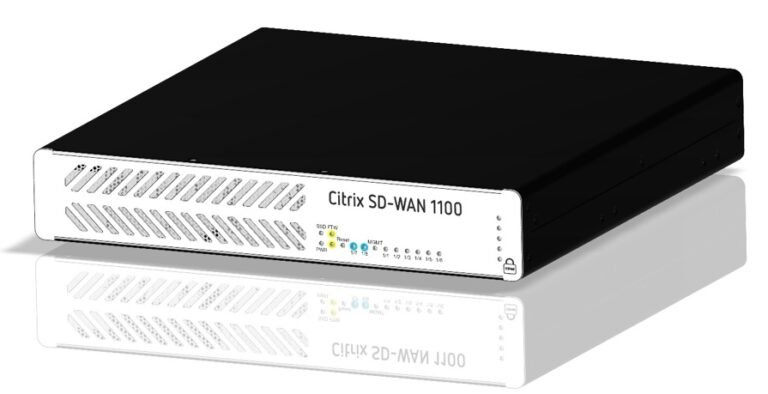
SD-WAN Appliance

SD-WAN appliances, whether as hardware devices or software platforms, are designed to control and enhance data transmission over wide-area networks. SD-WAN appliances use software to manage traffic routing, offering increased flexibility and intelligence compared to traditional networking solutions. These devices are usually physical or virtual controllers situated either on-site or in the cloud, serving as the foundation of an SD-WAN network.

How SD-WAN Appliances work

SD-WAN appliances are mainly used to tackle the challenge of providing fast and safe connectivity for all. The normal wide area network (WAN) operates on a centralized framework where all traffic passes through a central data center. This model creates excessive delay that eventually slows down communication and access to information, reducing productivity and worsening the user experience. In addition, traditional WANs use costly connections that are difficult to set up and manage, hindering organizations from growing easily and economically. SD-WAN solves these problems by creating a virtual network layer that makes managing connections easier. This allows companies to use cheaper internet services to add backup options and be more flexible in adapting to changes. SD-WAN technology allows organizations to move away from the traditional model, establishing direct connections to the cloud that enhance the performance of cloud applications and enhance user experiences. SD-WAN appliances come in by analyzing WAN connections to decide the optimal traffic route according to set policies. SD-WAN devices constantly observe the performance of every WAN connection and modify traffic paths accordingly. 

Key Features of SD-WAN Appliances

  1. SD-WAN appliances use advanced  computations to determine the most optimal route for networks. This guarantees peak efficiency for required tasks in organizations.
  2. Security is paramount in all network solutions and organizations, and SD-WAN devices are largely embedded with well-built security features. They usually are equipped with VPN tunneling protocols, IP security (IPsec), encryption and integrated firewalls to help protect data while it is being transferred through various networks. Some of the devices are also created with built-in features to locate and react to threats.
  3. Handling a conventional WAN may require a lot of time and be complicated. SD-WAN devices make this process easier by offering centralized control via one management interface. Network administrators have the capability to efficiently set up, oversee, and control all devices from a centralized site, ultimately lowering operational costs and enhancing flexibility.
  4. SD-WAN appliances are specifically created to identify and give importance to various kinds of traffic according to the specific requirements of the applications being utilized. One possibility is to prioritize real-time communications such as VoIP and video conferencing, guaranteeing that these applications get the essential bandwidth and minimal latency they need.
  5. As companies expand, their requirements for networking also increase. SD-WAN appliances are built to scale easily, allowing businesses and organizations to extend to new locations and online or offline users with ease and without any alteration to the network structure. The scalability of SD-WAN appliances also makes it a perfect fit for businesses of all sizes.

Why Businesses should use SD-WAN Appliances

  • SD-WAN appliances assist organizations and businesses in maximizing the cost of their WAN expenditures.
  • With the embedded features of intelligent path selection and application-aware routing, SD-WAN appliances make sure that important application gets the reduced latency and bandwidth it requires. This allows for better performance and improved user experience.
  • SD-WAN appliances have built-in flexibility which allows for the easy adaptation of businesses’ changing needs.
  • SD-WAN appliances’ integrated security features help to defend businesses from data violations and cyber threats

SD-WAN Monitoring

Watching over our networks is similar to supervising a bustling highway: it aids us in ensuring that traffic moves efficiently without any congestion (improving performance). By recognizing all hurdles or breaks in the network, we can take action in advance to guarantee seamless operations and reduce disruptions for users. Monitoring allows us to anticipate future needs for extra lanes through capacity planning and guarantees compliance with traffic regulations.

Monitoring of Software Defined Wide Area Network (SD-WAN) operates in a comparable fashion. It is essential for maintaining peak performance, security, and efficiency of the current corporate networks. It adopts a reiterative process of ongoing monitoring and evaluation of network traffic, application effectiveness, and security data at multiple sites.

Components of SD-WAN Monitoring

  • SD-WAN monitoring has performance metrics that serve as health check-ups for your network. They assess variables like data quantity (bandwidth), rate of information delivery (latency), and existence of any interruptions (jitter and packet loss). By keeping track of these measurements, we can make sure that your network remains fast and reliable, giving all users a positive experience.
  • Similar to securing your home by locking your doors, SD-WAN monitoring security component protects your network from online threats. It monitors for any questionable behavior—such as an individual attempting to retrieve your information without authorization. By identifying these risks at an early stage, we can prevent any damage they may cause and protect your information.
  • There is also the real-time component. Picture having a dashboard that displays the real-time performance of your network, this component works like that. Real-time monitoring continuously examines your network to ensure that everything is functioning properly. It is similar to having a real-time update on your network’s status, informing you of potential problems such as sluggish connections or excessive traffic.

SD-WAN Monitoring Tools

Cisco Meraki Dashboard

The Cisco Meraki dashboard functions as a centralized tool for overseeing and managing all network equipment, like routers and access points. It is like having a universal remote for your entire network, enabling you to easily oversee performance, set rules, and tackle issues.

VMware VeloCloud Orchestrator

This tool functions as a conductor for your network symphony. It manages all your SD-WAN devices, making sure they operate seamlessly in unison. It keeps track of traffic, automatically tweaks settings for optimal performance, and offers insights on your network’s performance.

Silver Peak Unity Orchestrator 

Think of this tool as a traffic controller for your network highways. It manages how data flows across your network, optimizing routes to avoid congestion and delays. It also monitors performance metrics like bandwidth usage and application performance in real-time.

Fortinet FortiManager

FortiManager assists in the management and monitoring of security policies throughout your SD-WAN infrastructure. It recognizes and reacts to security risks, guaranteeing that your network remains safeguarded against cyber threats.

Citrix SD-WAN Center

This tool acts like a navigator for your network journeys. It provides visibility into your SD-WAN environment, helping you understand traffic patterns, application performance, and user behavior. It also offers analytics and reporting to optimize network resources.

Benefits of SD-WAN Monitoring

  • With SD-WAN monitoring, users can actively detect and solve network problems to reduce downtime and enhance application performance.
  • SD-WAN monitoring allows users to observe questionable behaviors and implement security protocols to safeguard against online dangers.
  • It increases operational efficiency by optimizing troubleshooting processes and resource allocation, resulting in cost savings and enhanced IT management.
  • SD-WAN monitoring assures optimal application performance
  • SD-WAN monitoring brings about Increased agility of both your business and network

Artificial Intelligence Engineering Jobs

The future is being shaped by the integration of both engineering and artificial intelligence (AI). AI engineering roles are sitting at the forefront of revolutionary change in this digital era, providing individuals with unmatched chances to develop ground-breaking solutions and expand the realm of possibilities. In lieu of this, there has been a trend towards hiring qualified AI engineers. A trend observed not only in engineering but across other sectors as well, including healthcare, finance, and many others. This suggests a plethora of prospects in the field of artificial intelligence for engineers.

In this article, the jobs and opportunities available will be explored, as well as the competencies required to thrive in this exciting and leading edge sector.

Job Opportunities

Artificial intelligence (AI) has become a driver of change in engineering by creating immense employment opportunities for engineers working in various spheres. However, to tap into these opportunities, individuals and engineers have to be adept with the appropriate engineering expertise. 

Machine Learning

Among the roles in AI engineering that are most sought-after is machine learning. An industry anticipated to be at the top of the list in the next 4 years. Engineers specialising in machine learning create, construct, and implement models capable of analysing large volumes of data while carrying out evaluations and system optimisations based on the inferences drawn. In order to be eligible for this role, aspirants are required to be sound in mathematics and computer science. Having a decent background in programming and statistics is also essential.

Data Scientist

The next occupation is that of a data scientist, whose role is similar to that of a machine learning engineer. One of the key roles played by data scientists is to gather, analyse, and interpret/visualise large volumes of data, which helps business leaders make sound decisions. It should be known that data science is one of the most saturated fields in the world today. Hence, to be able to make waves and remain relevant in this role, it is essential to be proficient in statistics, machine learning algorithms, and data visualisation techniques. Major programming languages like SQL and Python should also be part of your skill set.

Software Engineering

Next is software engineering. Software engineering is different from the others in the sense that it has what seems like a symbiotic relationship with AI. In the creation and maintenance of AI systems, software developers are essential. At the same time, AI helps automate certain tasks that software engineers traditionally complete. Hence, competencies associated with this role are unlike others, as SE is all encompassing. Aspirants are required to be adept in a number of programming languages, such as Python, Java, or C++, for algorithm development and software implementation. A thorough understanding of machine and deep learning is also imperative, followed by data processing and structuring, mathematics, and statistics.

AI Scientist

The members of scientific teams on artificial intelligence constitute another significant group of specialists in the AI engineering field. These scientists are always in search of new algorithms and techniques to upgrade and refine the existing AI tools. Skills needed for this role include a robust foundation in computer science, math, and machine learning, as well as experience with programming languages such as Java C++ and MATLAB.

In addition, there are expert roles in robotics, computer vision, and natural language processing (NLP) for AI engineers. NLP engineers develop the methods and systems that let computers comprehend, interpret, and produce human language. These roles call for proficiency with NLP libraries (such as NLTK and spaCy), mastery of machine learning methods for text processing, and an understanding of linguistics and language theory.

As regards robotics, the role of engineers is to create and develop robotic systems that use AI for sensing, control, and decision making. Competencies include mastery of robotics frameworks (e.g., ROS), experience with sensor fusion and localization techniques, and knowledge of AI algorithms for robotic perception and control.

Artificial intelligence engineering is much more diversified as a career than people imagine. Keeping up with the latest developments in AI technology, upskilling, and developing a fierce competitiveness in this opportunity-rich industry is of paramount importance.

How to get an AI engineering job

Aside the skills and competencies listed for the jobs discussed, there are other critical things to take into consideration;

  1. Obtain btain a degree or certification in a particular field of interest.
  2. Be familar and achieve competency in the various skills required
  3. Build a strong portfolio. This is done by showcasing personal projects on a portfolio website or GitHub to present skills and expertise. This serves as evidence to potential clients.
  4. Seek internships, co-op opportunities, or entry-level positions in AI-related fields to gain hands-on experience.
  5. Attend networking events, career fairs, and conferences to expand professional networks and explore job opportunities. Ensure these networking events align with preferred role, as they provide opportunities to meet industry professionals.
  6. Finally, the job search can start. Resumes and cover letters should be tailored to the preferred area of interest. 

Highlights

AI Engineering RolesAverage Annual Salary 
Machine Learning Engineer$162,740
Data Scientist$124,000
Software Engineer$120,112
AI Scientist$123,000
NLP Engineers$128,400
Robotics Engineers$85,936

Amazon At 30: What’s Next For The Everything Company

Frequently seen as the largest internet retailer globally, Amazon is a US cloud service and online shopping platform established by Jeff Bezos on July 5, 1994. The company’s main office is situated in Seattle and provides a variety of products including books, music, furniture, clothing, beauty supplies, electronics, and more. Products on Amazon are sold at a low price, thereby, transforming shopping for its customers. Amazon partners with a lot of brands in order to offer a variety of products for its customers to select. 

The company with its humble beginning which can be traced to the founder’s garage, has now grown into a multitude of service categories which is how it got its byname, “the Everything Store”. Its ultimate aim according to Security and Exchange Commission (SEC) filings is to “improve all aspects of the customer experience, including lowering prices, improving availability, offering faster delivery times, increasing selection, expanding product information, improving ease of use, and earning customer trust.”

In 1990 when the company just started, Jeff Bezos registered it as Cadabra but was eventually changed to Amazon as it depicted the purpose of its creation more and gave it more importance. In the 2000s, Amazon offered two-day shipping within the US for its members in the year 2005. Moving forward in 2006, it launched its first Amazon Web Series (AWS) that provides services for websites and customer side applications, and also Unbox—a cloud computing and video-on-demand service. Fast forward to 2007, it launched Kindle e-reader, which helped shape the way people read the books they buy. From 2010 till date, Amazon has launched a lot of other services that have helped widen the scope of the company in line with its purpose. The Amazon Fire TV Stick (2011), Amazon Art marketplace for fine art( 2013), also the popular in-home assistant —Alexa— in 2016, with a whole lot of other things.

Over the last three decades, the global retail company has created more jobs and invested over $530 billion in the US. It has gone as far as supporting millions of jobs in different fields like construction and hospitality and has also helped the community largely by responding to the urgent need of helping to reduce homelessness, and hunger and investing in the citizens, especially in the educational sector for children and young adults. Apart from these major contributions and achievements, Amazon, as an organization has won a lot of awards to indicate its selfless services to its customers. Some of the awards include the following just to name a few; #5 Fast Company World’s Most Innovative Companies, 2017-2018; Fast Company’s Best Workplaces for Innovators, 2019-2020; #4 Forbes World’s Most Valuable Brands, 2019-2020; Careers and the Disabled Magazine Top 50 Employers, 2020; TIME Magazine’s TIME100 Most Influential Companies, 2021; #5 Most Trusted Brands Globally by Morning Consult, 2021; Italy, Spain, France, Poland Top Employer 2022; Trustworthy Brand title in Poland in 2023; Amazon named as a “Top Employer 2023” in Europe. 

The story of Amazon has been that of immense expansion and reinvention. Now after over 30 years since its humble beginning and the extent of growth, there is only one question in the mind of the populace; What’s next for the Everything company? Is this the end of the expansion or is there more to come? 

However, all the expansion and inventions can only make us try to guess what is in the mind of Jeff Bezos for his company in years to come. Some of the future predictions of Amazon are;

  • With its continued innovation that could probably lead to new products and services, Amazon’s commerce revenue in years to come would possibly be in thousands or hundreds of dollars.
  • Amazon is expected to be a gigantic eBay-like marketplace with good management and functionality.
  • Amazon is expected to be one of the biggest cloud-computing companies as it is already the biggest provider of certain types of cloud-computing and likes to give excellent voluminous execution at a cheap rate.
  • Some of Amazon’s services and products made us realize that Amazon embraces disruption, which makes it possible for Amazon to go into Shapeways which can build and ship 3D printing designs, even when 3D printing is Amazon’s threat at the moment.
  • There is a huge possibility that Amazon will sell digital media even if some of the efforts (music and video) to do so at the moment have not been possible but some have ( kindle).

To sum up, Amazon as a global organization has a bright future as it is expanding into new markets around the world and has a strong brand that is recognized by people around the world with good services convincing enough to retain existing customers and gain thousands of new customers, which typically means growth.

NNPC no longer owns 20% of Dangote’s refinery

0

During a press briefing on Sunday, it was made known by Aliko Dangote, the chief executive officer (CEO) of Dangote refinery and richest man in Africa that the Nigerian National Petroleum Company (NNPC) does not own 20% of the refinery’s stake any more.

Launched in May 2023 at the Lekki Free Zone near Lagos, Nigeria, Dangote Refinery which is one of Dangote’s Group Subsidiary is expected to produce about 650,000 barrels per day. In a year, they aim to produce million tonnes of gasoline, diesel, jet fuel, polypropylene, propane and carbon black feed. Being Africa’s biggest oil refinery and the world’s biggest facility that uses only one crude distillation unit (CDU)— a single-train facility, it was set to be the change Nigeria’s economy needed by helping to end the country’s issues of fuel imports.

The refinery was established with the contribution of Dangote with a 50% worth investment and 50% loan from Nigeria domestic banks and foreign banks. The Nigerian government used the NNPC Limited to own a 20% right of possession in the refinery worth $2.7bn. The government per agreement is to give the refinery an initial 300,000 barrels of crude oil per day. Additionally, according to Mele Kyari —the corporation’s chief executive officer— in August 2022, NNPC Limited has the right of first refusal to supply crude to the refinery.

Aliko Dangote the Chief Executive Officer (CEO) of Dangote Refinery in a press briefing on Sunday made it known that NNPC does not own up to 20% stake in Dangote Refinery as they used to when the refinery was inaugurated . He stated that the company now owns only 7.2% stake due to their inability to fulfill its obligation by providing the promised funds which was due last month, June.

In his words, “The agreement was actually 20% which we had with NNPC and they did not pay the balance of the money up till last year and then we gave them another extension up till June (2024) and they said that they would remain where they have already paid which is 7.2%. So NNPC, the government owns only 7.2% not 20%”. This announcement shocked most Nigerians who had believed that NNPC owned up to 20% stake out of the refinery

The NNPC attested to this fact in a statement late Sunday through the company’s spokesman, “NNPC Limited periodically assesses its investment portfolio to ensure alignment with the company’s strategic goals”.

Nairametrics had reported at the beginning of the year that the audited financial status of Nigeria National Petroleum Company (NNPC) Limited showed that the company had bought the 20% stake in the refinery for $2.76 billion. A transaction that Mele Kyari, the Nigerian state Oil company Managing Director, had in 2021 stated that the decision was a result of the profit potential of the refinery business. The NNPC 2022 audited financial statements reads as follows:

“In September 2021, the NNPC entered into a forward sale agreement with Lekki Refinery Funding Limited, to supply 35,000 barrels of crude oil per day for the settlement of the $1.036 billion (N426.2 billion) funding already received for the financing of the investment in Dangote refinery.

“The interest rate for the facility is a three-month London Interbank Offer Rate (LIBOR) plus 6.125 per cent. The arrangement has been scheduled to commence on August 30, 2023. Project Bison has been transferred to NNPC Limited.

Service Design Thinking

Understanding how to bridge the gap between a consumer and a product is the goal in the trading sector now. With recent advances in technology and strategies employed in business, the lines between a service, a product, and the users themselves are gradually blurring. Transcending this stage and grasping the ultimate formula is the dream of most businesses in the trading sector. This brings us to the concept of service design thinking, a concept capable of meticulously crafting every service to consumer delight and surprise. This is the essence of service design thinking – a philosophy that goes beyond mere transactions to create moments of magic that resonate with hearts and minds.

Principles of Service Design Thinking

  1. Service design thinking should start by understanding and focusing on what matters most to the users of the service, in order to create solutions that genuinely make a positive difference in their lives.
  2. Like Hellen Keller said- “Alone, we can do so little; together, we can do so much.” Working together is essential to service design thinking. Organisations are able to generate more innovative ideas and solutions that benefit all parties when they bring together individuals with diverse backgrounds, viewpoints, and skill sets.
  3. Failures and messy situations occur often in service thinking. Rather than yelling and fuming on instances like this, organisations should be open to different situations as they can bring about new opportunities and better solutions. Afterall, penicillin, one of the notable breakthroughs in medicine, was created by mistake.
  4. Service design thinking should be approached with the mindset of bettering the lives of the masses. Organisations can improve the world for everyone by creating services that benefit both users and the environment.
  5. In the end, service design thinking aims to simplify and enhance people’s experiences. Organisations can establish trust and loyalty with their users by prioritizing the creation of positive experiences.

Service design process

Research and Discovery

The first step in a service design process is to understand the users. Organisations can conduct user research using interviews, surveys and similar approaches to gain insights into what the users want. The information derived in this step will enable organisations to come up with a user research journey map. A map that shows the various touchpoints and interactions users have with the service.

Ideation and Concept Development

Next step is ideate, envision and brainstorm ideas based on insights gathered during the research phase. Various tools can be used to assist in brainstorming sessions. These tools include figma and miro where organsational teams can meet to share insights and concepts. Concepts conceived can be mapped out on these softwares in the form of sketches and wireframes.

Prototyping and Testing

Naturally, once a problem has been discussed and a solution has been created, the next stage is to test these solutions. This stage is referred to as prototyping in service design thinking. Teams must engage in usability testing and collect user feedback to pinpoint the strengths, weaknesses, and opportunities for enhancement in their proposed solution. The feedback received will act as a guide for improvement.

Implementation and Deployment

The next step is to come up with a plan for implementing the refined service solutions.For a successful implementation, it is recommended to work closely with teams with different functions to ensure the new service is smoothly integrated with current processes and systems. Nevertheless, in the case of a complicated new service, it is necessary to provide in-house training for the employees and stakeholders regarding the new service.

Evaluation and Optimization

The final stage involves tracking the effectiveness of the service solutions that have been put into place by utilising key performance indicators (KPIs) and metrics. Insights can also be gathered for evaluation and optimisation following usage by the consumers and stakeholders.

Continuous Improvement

Organisations should adopt a culture centered on constant improvement, utilising feedback and insights from users and stakeholders to shape upcoming versions of the service. They should also stay current and foster in-house collaboration and knowledge sharing. 

Benefits of adopting the Service Design Process

For any institution, adopting the service design thinking process heralds numerous benefits;

  1. The service design process ensures that experiences are intuitive, smooth, and enjoyable for users.
  2. Service design promotes creativity and innovation by questioning assumptions and discovering fresh ways to provide value to users.
  3. Service design can improve operational efficiency and lead to cost savings and better allocation of resources by simplifying processes and minimizing obstacles.
  4. Including stakeholders in the design process increases the likelihood of effective execution and acceptance by fostering teamwork, establishing agreement, and gaining support for the recommended solutions.
  5. By creating environmentally sustainable, socially responsible, and financially viable solutions, service design promotes sustainability by considering the long-term effects of solutions on people and the environment.
  6. Businesses that concentrate on service design can differentiate themselves from competitors by offering unique and memorable experiences that resonate with clients and encourage adherence.
  7. Service design involves creating and testing prototypes early on in the design phase to uncover and address risks, ultimately minimizing potential errors and failures when fully implemented.
  8. Service design encourages an environment of constant enhancement, utilizing feedback and input from users and stakeholders to continuously fine-tune and improve solutions, ultimately ensuring their continued relevance and effectiveness.
Site logo

* Copyright © 2024 Insider Inc. All rights reserved.


Registration on or use of this site constitutes acceptance of our


Terms of services and Privacy Policy.