Home Blog Page 25

IBM Design Thinking Certification

0

Unleash your creativity with design thinking and acquire the knowledge to use a structured, user-centered way of solving almost any problem. International Business Machine (IBM) will take you through the major phases of Design Thinking with its certification-from basic fundamentals to actually working on a comprehensive case study. You will emerge with the ability to design truly innovative solutions for the needs of your target audience.

What is IBM Design Thinking Certification?

The IBM Design Thinking approach drives human-centered innovation through profound understanding, creative envisioning of solutions, and iterative prototyping/test. Being conversant with the IBM Design Thinking process will make organizations more innovative in improving customer satisfaction and hence gaining greater competitive advantage. This way, organizations can develop truly user-centered products and services that are efficient and able to adapt to the changing market conditions.  With these being said, obtaining certification in Design Thinking becomes essential. The curriculum reinforces learners’ knowledge and competencies, equipping them with all that is needed to apply Design Thinking principles and methodologies effectively in their work.

Benefits of Getting IBM Design Thinking Certification

Enhanced problem-solving skills 

IBM Design Thinking Certification provides both the technological expertise and the qualifications needed to integrate a more structured, human-centered approach into problem-solving efforts. The certification process teaches individuals how to empathize with users, generate creative ideas, and rapidly prototype and test solutions that address root causes, foster innovative solutions, and reduce flaws in potential solutions early in the process. Overall, this certification serves as a valuable toolkit for those looking to enhance their problem-solving abilities.

Improved collaboration

The IBM Design Thinking Certification fosters collaboration by teaching individuals to work in multidisciplinary teams, combining diverse skills and perspectives. It encourages empathy by helping team members understand user needs deeply, promoting shared insights. The certification modules emphasize collaborative brainstorming sessions, where different ideas are openly discussed and built upon. Additionally, it advocates for iterative prototyping and testing, where feedback from various team members is crucial. This structured, team-based approach strengthens communication, ensures everyone is aligned, and drives creative problem-solving through collective effort.

Increased innovation

IBM Design Thinking Certification provides individuals with the capability to drive innovation and develop truly creative solutions. By focusing on the needs of the user, creative ideation, and rapid prototyping and testing of ideas, one can create products and services that meet the actual needs of customers. The iterative nature of design thinking encourages continuous experimentation and refinement for more innovative and effective results. Overall, the certification provides a valuable framework for fostering creativity and driving innovation.

Career advancement

IBM Design Thinking Certification can significantly improve career prospects and advancement. As organizations increasingly recognize the value of human-centered design, demand for these skills is persistently rising. It demonstrates competency in this area and is therefore highly sought after by employers. This certification can open doors to better job prospects, increased salaries, and greater flexibility in career choices. The skills learned from IBM Design Thinking are applicable across industries, giving individuals with these skills a competitive advantage in the job market

Types of IBM Design Thinking Certifications

IBM provides a number of design thinking certification programs based on the learning style and career goal of an individual. Here are the main types:

IBM Design Thinking Practitioner

This is an entry-level certification that covers everything about design thinking principles and methodologies.

IBM Design Thinking Coach

This certification course is aimed at enhancing an individual’s professional development by facilitating and guiding design thinking projects or teams. This fosters the competency needed to create an enabling and collaborative environment for design thinking activities.

IBM Design Thinking Specialist

This certification enables one to go in-depth in other specialized areas, such as user experience design, service design, or innovation management, for those who would wish to have a deep understanding of those areas.

IBM Design Thinking Leader

Targeted at the top management and leadership that looks forward to implementing design thinking into their organizations at a strategic level; focuses on creating the design thinking culture, alignment of design thinking with business objectives, and measures for the value of design thinking initiatives.

IBM Design Thinking for Educators

This is a specialization aimed at educators who would like to introduce design thinking into the classroom. It gives instructions on how one would apply design thinking principles in the classroom to developing students’ creativity while learning.

By providing multiple types of certifications, IBM ensures that there is a relevant program available for individuals and organizations at various levels, taking into consideration differences in interest.

Conclusion

IBM Design Thinking Certification validates competency in human-centered problem-solving skills, enhances problem-solving capabilities, opens career opportunities, fosters collaboration, drives innovation, and offers global recognition. It equips individuals with the tools and techniques to excel in areas such as product design, UX/UI design, and innovation management. Several interesting trends are anticipated for design thinking certification programs. Specialized certifications, such as those in healthcare or technology, are likely to see increased demand. Online and hybrid learning models are expected to grow, providing broader access to these certifications. Design thinking programs may also integrate with other high-demand skills, such as data analysis or AI.

Additionally, design thinking certification could incorporate global standards and accreditation bodies to ensure quality and consistency. This would enhance its credibility and international recognition. Overall, the future of design thinking certification appears promising, as it prepares professionals with valuable skills to drive innovation and solve complex problems.

What is one of the tools associated with Design Thinking

0

Tools are very important in design thinking as they assist whoever is using the approach, like organizations and manufacturers in understanding their consumers, knowing what the problem is, generating ideas, creating prototypes, and testing their designs. Important components of design thinking consist of empathy tools such as interviews and observations, define tools like mind maps and user personas, ideate tools such as brainstorming and storytelling, prototype tools like wireframes and mockups, and testing tools including usability testing and surveys. By using these tools, designers can carry out comprehensive research, come up with creative solutions, and design products or services that successfully meet their target audience’s needs. This post will discuss empathy design thinking tools.

Empathy as a tool associated with Design Thinking

Empathy is the ability to understand and share the feelings of another person. It requires one to place themselves into someone else’s shoes and view the world from their perspective. This skill is vital for building strong relationships, resolving conflicts, and fostering understanding. 

In design thinking, empathy is crucial for developing products and services that genuinely connect with users. By grasping their needs, desires, and experiences, designers can craft solutions that are both meaningful and satisfying. Empathy enhances user-centered design, boosts innovation, improves the user experience, mitigates risk, and encourages collaboration.

The Role of Empathy in Design Thinking

  • Understanding user needs and motivations
  • Identifying unmet needs
  • Gaining insights into user behaviors
  • Creating solutions that resonate with users
  • Building trust and emotional connection between designers and users
  • Improved problem solving
  • Encourages continuous learning from users, allowing for iterative improvements based on real-world feedback and experiences.

Empathy Tools

Personas

personas

Personas are made-up figures that portray various sorts of individuals that could potentially utilize a product or service. Consider them as intricate descriptions of your average clientele. Designers develop personas using actual user data, including their objectives, actions, and obstacles. The goal is to assist designers in empathizing with these individuals in order to comprehend their needs and create a suitable design. It involves picturing a particular individual during the design process to ensure the product is suitable for someone similar to them.

Surveys and Interviews

Surveys and Interviews

Surveys and interviews are methods utilized for obtaining information straight from users. A survey is similar to a questionnaire that is distributed to numerous individuals in order to collect their opinions, requirements, and choices. It assists in gaining a comprehensive understanding of the opinions of many individuals. An interview is more personal, where you sit down and ask a person questions in detail. This helps you get deeper insights into their experiences and problems. Both methods help designers learn what users want and need, so they can create products that fit their expectations.

Visualization

Visualization charts

This is one of the most effective techniques for building empathy in design thinking. By visualizing or presenting the user’s experiences, designers gain a deeper understanding of their perspectives, emotions, and motivations. Key benefits of visualization include perspective-taking, emotional connection, storytelling, and improved communication. Techniques such as mind maps, customer journey maps, storyboards, and personas help designers develop a holistic view of the user experience, enabling them to create solutions that are better aligned with user needs.

Journey map

Journey map

A journey map visually represents a user’s experience with a product or service, offering a detailed view of their interactions, emotions, and key touchpoints. As a tool for empathy, journey maps help designers understand the user’s perspective and identify painpoints or areas for improvement. By creating and analyzing journey maps, designers gain deeper insights into the user’s experience, enabling them to develop solutions that align more closely with the user’s needs and expectations.

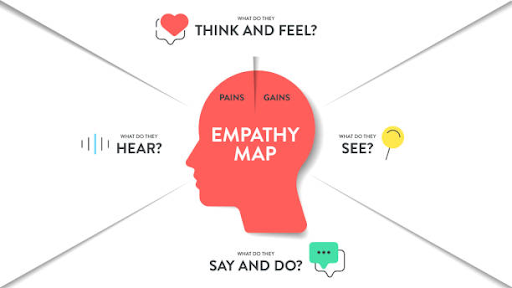
Empathy maps

think and feel

Empathy maps are visual tools that represent a user’s thoughts, feelings, and actions in a specific situation. They allow designers to gain deeper insights into the user’s experiences and empathize with their perspective.

These maps, when analyzed, further define what a user feels, thinks, does, and says at each touchpoint. The information extracted can then be developed into real solutions that meet the needs and expectations of an end-user.

Conclusion

Empathy is arguably the most important skill a designer can possess. Understanding users’ needs, perspectives, and emotions enables designers to create functional solutions that resonate emotionally with them. This approach fosters innovation, enhances user experience, and reduces the risk of developing products that miss the mark.

Moreover, empathy promotes a collaborative and inclusive design process. Through participatory methods, users are actively involved, offering valuable insights that ensure the final product meets their specific needs. This not only enhances the value of design but also strengthens the relationship between designers and users.

Prototyping in Design Thinking

1

Developing a new product requires a structured process. Many would prematurely skip the process and jump to the testing phase directly which often leads to errors and undermines the chances of success. One essential step is creating a prototype. Prototyping allows you to visualize your ideas and test their feasibility before fully committing to development, helping you identify potential issues and refine your concept early on.

What is Prototyping?

Prototyping is an essential step in the design thinking process, which converts concepts into physical models for testing and improvement. It enables designers to collect feedback, detect flaws, and make needed changes prior to investing substantial resources.

The Role of Prototyping in Design Thinking

  • It tests and validates the solution
  • It identifies and mitigates possible problems early, by the designer, in the process of development.
  • It helps designers to gather valuable user feedback by involving the users in the testing process.
  • It aids in the reduction of possible risks, if tested early which also minimizes the chances of a deadly mistake.
  • It helps to fill the gap that exists between mere ideas and tangible realities which helps to transform complicated concepts into a visualized and interactive one that is easier to comprehend.
  • It allows stakeholders to make certain suggestions as it provides concrete ground for feedback.
  • It also imbibes a sense of commitment and ownership to projects when teammates work together to effectively mitigate design challenges.
  • It helps to make sure that everyone is on the same page and working effectively towards a common goal, as the prototype is used to align the objectives of various stakeholders.
  • it can be used to generate support and agreement among members and stakeholders.
  • It helps to identify limitations or flaws embedded in a design that might not be obvious from ideas or theoretical models.
  • It also helps designers to test-run how designs will be effective in the real world, which can help to pinpoint and prevent unexpected consequences.
  • It also provides the real model of an idea which can help to minimize uncertainty and make it easier to comprehend and visualize.

Types of Prototypes

Low-fidelity Prototypes

This aspect of product design focuses on creating simple and cost-effective structures. Low-fidelity prototypes are simple to create and easily changeable, making them perfect for brainstorming innovative concepts for web page designs, user experience, and error detection. They are especially valuable during the initial phases of design with limited resources and for testing fundamental features. Designers can use low-fidelity prototypes to examine concepts, collect input, and create products that fulfill user requirements. These prototypes are valuable tools throughout the design process.

High-Fidelity Prototypes 

High-fidelity prototypes are detailed, polished, and interactive versions of a product, closely resembling the final version. They are useful for testing a more realistic user experience and reducing development risks. These prototypes include visual designs, animations, and interactions to demonstrate how the end product will look and function. High-fidelity prototypes are particularly valuable in the later stages of design when key concepts are fully developed and usability testing is essential. By using this type of prototype, designers can create a product with a finished appearance and a smooth user experience.

Incremental Prototypes

Incremental prototyping involves developing multiple prototypes, each representing a refined version of the previous one, gradually building toward the final product. This approach allows for continuous testing and improvement until the product fully meets user needs. It helps minimize risks and improves user satisfaction. Incremental prototyping is especially useful for complex projects and those requiring frequent user feedback. By using this method, designers can create effective and efficient products that align with user expectations.

The Prototyping Process

Define the Purpose

The first step in the prototyping process is to define the purpose, which involves clearly outlining the product’s aims and goals. This guides the development process, ensuring the product supports decision-making and meets user demands. In order for the purpose to be properly defined, certain wh-questions need to be asked like : what is the desired user experience? What are the constraints? Who are the target users? and host of others. A user-centered approach and a high chance of developing a successful product is enhanced by a well-defined purpose.

Choose the Right Type of Prototype 

Another crucial step in the design process is selecting the right prototype. The choice depends on factors such as the project stage, level of detail required, and overall project goals. Prototypes can range from high and low fidelity to incremental models. Choosing the appropriate prototype helps effectively communicate the design, enhance user experience, and reduce risks. When a prototype aligns with these key factors, designers can successfully create products that meet user needs.

Create the Prototype 

This process involves turning the design concept into a tangible model (prototype). When creating a prototype, it is important to take into account usability, fidelity, and interactivity as crucial elements. Choosing the right techniques and instruments, like wireframing, coding, and sketching, is crucial. An effectively created prototype allows for feedback in the early stages, ensures maximum usability, and reduces risks. When a prototype satisfies these criteria and utilizes appropriate tools, designers can successfully develop a prototype that aids in the development process and results in a successful product.

Test and Gather Feedback

Another crucial aspect of prototyping involves watching how users engage with the prototype, as well as administering surveys and interviews. This process enhances user experience, boosts user happiness, assists in decision-making, and reduces risks. Having user representation, observing behavior, gathering feedback, and analyzing results are all crucial for effective testing. Taking these factors into careful consideration allows designers to create products that are easy to use for their intended audience.

Iterate and Refine 

This ongoing process in prototyping involves regularly evaluating the prototype, analyzing feedback, and making design adjustments. It improves usability, enhances user satisfaction, maximizes product potential, and reduces risks. For effective iteration, it’s crucial to prioritize changes, conduct frequent testing, collaborate with stakeholders, and maintain flexibility. By continuously refining the prototype, designers can create products that are enjoyable, user-friendly, and successful.

Benefits of Prototyping

  • Prototyping improves user experience by helping designers detect problems early and adjust the design to meet user requirements, resulting in smooth interaction and less cognitive strain.
  • Prototyping promotes creativity through quick adjustments, minimizes uncertainties, and promotes teamwork, resulting in the development of cutting-edge products that prioritize user needs.
  • Prototyping assists in decreasing expenses and enhancing the effectiveness of the product development procedure through early risk identification and teamwork promotion in businesses.
  • Prototyping also promotes collaboration, resulting in more robust cross-functional teams, cultivating a shared understanding, and enhancing communication.

In conclusion, prototyping is a very important tool in design thinking, as it helps designers to model their solution before implementing with all the resources. 

Steps in Design Thinking

Processes and steps in a concept are crucial because they provide a structured approach to problem-solving, ensuring that each stage is thoughtfully executed. This organized methodology helps maintain clarity, consistency, and effectiveness throughout the development of a concept. Design thinking is no different. Studies reveal that design thinking boosts ideation and leads to a rise in a collaboratively working culture within a firm. For this to happen, there are several steps to follow. This guide will discuss the five key stages of the design thinking process and why they are important.

The Five Stages of Design Thinking

Stage 1: Empathize

The Empathize stage is the first and most crucial step in the design thinking process. 

This simply means understanding them on a deeper level. Here, you meet with some of your users and relate to them, you can even carry out various interviews and explore with them to gain a deeper understanding of what the problem is. It is similar to putting yourself in another person’s position to understand situations from their viewpoint. Key activities during this stage include research, perspective-taking, listening, observing, and storytelling, all of which help designers step into the users’ shoes and grasp their challenges and goals.

Unlike most people, empathy is essential for creating solutions that are both useful and relevant. It ensures that design is not constrained by preconceived notions, guesses or imaginations and focuses on the users’ perspectives. By prioritizing empathy, designers can develop offerings that enhance user experience, reduce the risk of misalignment with user needs, and foster a more participatory and inclusive design process.

Stage 2: Define

Following the empathize stage, the Define stage comes next in the design thinking process. It is the stage in which the problem that needs to be solved is articulated, and what the design is intended for is specified. This step gives the necessary direction and concentration needed by the designing team. Some of the key activities conducted by designers in the defining stage includes writing a problem statement, user needs assessment, definition of design objectives, taking into consideration limitations, and user personas creation. In partaking in these activities, designers are likely to understand the problem much better and also be able to map out the design procedure clearly. This stage is crucial because a clear articulation of the problem and a consensus on design objectives empower the design team, improving both the speed and accuracy of the process while preventing deviations. By thoroughly describing the problem and defining design objectives, teams can avoid misunderstandings, reduce errors, and increase the likelihood of developing solutions that are truly user-oriented.

Stage 3: Ideate

Following the define stage, you begin to Ideate, which focuses on finding solutions from the many ideas for a problem. It is a flexible and collaborative process that encourages trying new things and learning from your mistakes.  Benefits of ideation include fostering creativity, exploring diverse solutions, generating numerous ideas, and managing risks. It exposes designers to various possibilities, often revealing solutions they hadn’t initially considered.

Creativity tools used in ideation include brainstorming, mind mapping, SCAMPER, and forced connections. These techniques stimulate creative thinking and encourage team members to explore innovative ideas. Ideation is crucial for ensuring that the design process remains open to new possibilities and is not constrained by predetermined biases or conformity to group opinions. It helps designers develop solutions that are both relevant to users and valuable to the organization.

Stage 4: Prototype

In the design thinking process, the prototype stage is crucial as it transforms solutions into tangible forms. Prototypes can take various forms, including physical models, sketches, wireframes, or fully functional models. By developing and testing these prototypes, designers can evaluate their ideas, gather feedback, and identify potential problems and challenges. This iterative process of convergence and divergence allows designers to refine their designs and make necessary adjustments while efficiently managing resources.

Risk reduction is another advantage of prototyping since it allows one to understand and fix the problem in a timely manner. Furthermore, the models help teams and other stakeholders to have a point of reference and thus work cohesively during the developmental process. Through the use of the prototypes, designers not only create but get to prove that the solutions they work on are fit for use and that they meet the users’ needs and expectations.

Stage 5: Test 

The Test phase is the final stage in the design thinking process, involving user testing of the designs. This stage is crucial for identifying areas that need refinement to ensure the designs meet users’ needs effectively. Key activities in the Test phase include usability testing, collecting feedback, observing user interactions, conducting successive tests, analyzing results, and making revisions. These activities provide valuable insights into how users interact with the designs and help identify any difficulties.

The importance of the Test phase cannot be overstated. By using prototypes, designers can engage users directly, leading to improved concepts and designs that are user-friendly. Testing helps minimize errors by detecting issues early in the design process, allowing for timely corrections. It fosters organizational learning by requiring designers to incorporate user feedback into their designs, leading to products or services that are more meaningful and satisfying.

Conclusion

When addressing users’ needs through problem definition, idea creation, prototype development, and feedback, involving users directly enhances the outcomes and ensures that design outputs align with their expectations. This iterative nature of the design process fosters innovation and leads to more user-friendly concepts. Following the design thinking steps is essential as it enables designers to create solutions that are both meaningful to users and impactful to the business. By understanding and meeting users’ needs and expectations, designers can achieve higher levels of user satisfaction, successful product implementation, and reduced development costs. Moreover, it generates new ideas and contributes to organizational effectiveness. 

Benefits of Design Thinking

What comes to mind when we hear the term “design thinking”? Creativity? problem-solving? collaboration? or perhaps just another abstract concept? The benefits of design thinking have been the subject of much debate, but for organizations, its value is undeniable. Despite this, many still view it solely as a method for solving problems. This post aims to dispel that misconception. Read on as we delve into the benefits of design thinking and why it is essential for fostering innovation and growth.

Key Benefits of Design Thinking

Improved User Experience

Design thinking is focused on comprehending the user’s point of view to solve problems effectively. It allows organizations to achieve a harmony between functionality, enjoyment, and user satisfaction by matching products and services with user needs, preferences, and behaviors.

Design thinking greatly improves user experience (UX) by emphasizing intuitive design, emotional engagement, cognitive ease, and accessibility. When these factors are given priority by organizations, they can create products that are not just practical but also tailored, emotionally engaging, and simple to use. This user-centered approach ultimately results in increased satisfaction and loyalty, enhancing the overall performance of the organization. 

Increased Innovation Output

Design thinking enables the creation of unique insights and ideas that drive the development of innovative and outstanding products and services within organizations. By exploring multiple options, brainstorming with colleagues, refining findings, and focusing on user needs, organizations can develop effective and creative solutions.

As such, design thinking proves to be a very successful method for improving innovation. By promoting originality, enhancing interaction, and prioritizing users, companies can create novel concepts that drive business achievements.

Reduced Risk

A major benefit of design thinking is its capacity to decrease risks commonly linked with product development. Design thinking assists organizations in saving time and money by tackling potential problems early on. Continuous testing and refinement throughout the iterative process guarantees that the final product will meet user expectations.

Furthermore, design thinking reduces uncertainty, improving the chances of success by enhancing assessment, choice, and adaptability. This makes it an invaluable tool for organizations aiming to create innovative and effective products.

Creativity

One of its key principles is divergent thinking, which encourages brainstorming without immediate criticism, allowing for a wide range of ideas. By working in teams, organizations benefit from diverse viewpoints and ideas that an individual may not generate alone. This enhances creativity. Working in teams allows ideas to build on one another, preventing groupthink and ensuring varied perspectives are considered.

Iteration also plays a crucial role in fostering creativity. Through continuous practice and testing of new concepts, people refine their approach, leading to more innovative solutions over time.

Resource Cutdown

Organizations aiming to reduce costs and increase productivity can greatly benefit from embracing design thinking. By focusing on user needs and making design adjustments early in the development process, design thinking helps minimize waste. This proactive approach allows organizations to identify potential issues before significant resources are invested, avoiding costly rework and delays, particularly in projects like construction.

Design thinking also aids in efficient resource allocation by highlighting the most critical aspects of a project. It prevents the development of unnecessary features or functionalities by centering designs around user input. This iterative process ensures that resources are only used to create features that are truly valuable to the end user.

Additionally, design thinking enhances decision-making by providing leadership with deeper insights into users’ needs and preferences. This, in turn, improves resource allocation, increases efficiency, and reduces overall costs.

Conclusion

Design thinking results in innovation, solutions focused on users, better decision-making, decreased risks, heightened efficiency, enhanced collaboration, and an improved user experience. It results in increased customer satisfaction and gives a competitive edge. Organizations can create successful, future-oriented solutions by meeting users’ needs and involving them in a creative, iterative approach.

Genuine solutions come from problem-solving that focuses on humans. By focusing on the needs and experiences of users, companies can create and provide products and services that are both relevant and satisfying, as well as innovative and socially beneficial. This method encourages teamwork, reduces risk, and improves the overall user experience.

Human Centered Design Thinking

0

Solving problems becomes significantly easier when problem solvers have a deep understanding of the issue at hand. Just as restaurants strive for publicity and patronage, understanding the obstacles disrupting their business makes addressing the problem more manageable. This approach mirrors how design thinking operates, focusing on thoroughly understanding the challenge before crafting solutions.

In order to be successful, one needs to identify through due diligence a certain need in the marketplace that is yet unmet and propose a value proposition that is desired. It involves interfacing with your potential customers very early in the design process. You will be able to use human-centered design to create lots of products and services that finally resonate with the marketplace.

Human centered Design Thinking

Human-centered design thinking like its name suggests is an approach to solving problems that places humans (consumers) at the center of the processes of design. It aims to comprehend and solve an issue right from the root, as it understands that though everything is complicated, it still has interconnected parts. It enables the creation of a product to suit the needs of the audience. This technique is of the belief that the best way to solve a problem is to involve all the users through the design process. By including the users in the process, designers will be able to understand the view and experiences in order to develop a product that will meet the needs of the users.

Key Principles of Human-Centered Design Thinking

Empathy 

Empathy can be said to be the core of the human-centered design thinking approach as it enables designers to comprehend the desires, experiences and needs of the users from their point of view. With this, designers can develop products that actually align with the users. For businesses, apart from creating a user centered solution, empathy also aids in improving innovation and fostering good user-experience, as well as mitigating risks and encouraging collaborations. 

Define

This stage is the first step in the human-centered design thinking process as it includes the identification of the issue that needs to be resolved and stating certain objectives. It helps to make sure that the processes involved in the design are effective and focused on the users needs. Designers can guide the team and make sure that there is an alignment in the decision process, as well as the identification of the possible issue early. This helps to guarantee a successful and user focused solution.

Ideate 

This process is about brainstorming possible solutions for the defined or identified problem from the previous stage. It also encourages designers to collaborate to think critically and creatively, which brings about new ideas. When different ideas are being generated, there will be various leads for an effective solution. This stage ensures that the process involved in design is not limited to a single idea.

Prototype 

After a suitable idea has been decided upon, the next thing is to come up with a model of the idea (solution) so it can be properly tested. This helps to validate, as well as, invalidate the assumptions of design by making sure that said idea, the solution, aligns with the needs of the users. It allows for a repeated design process, which will enable designers to refine and improve on the product based on the responses received from stakeholders.

Test

This is the final and an equally important stage of human-centered design thinking. This is the stage where evaluation is made on the solution as it will be put to use by actual users to gain necessary insight. The insights gained from this process will equip designers with the required information to validate, identify and make necessary checks to ensure that the finished product reflects the needs of the users.

The Iterative Nature of Human-Centered Design

Human-centered design thinking is inherently an iterative process, allowing for continuous learning and foresight throughout the design journey. It emphasizes ongoing improvement, as designers repeatedly test, learn, and refine their products. This cyclical approach ensures that products evolve to better meet user needs. By collecting feedback and identifying areas for improvement at each stage of the process, designers can make necessary adjustments. Adopting this iterative method not only leads to user-centered products but also reduces the risk of significant errors, fostering flexibility in adapting to innovation and design needs.

Importance of Human-Centered Design Thinking

  • It can lead to increased satisfaction and loyalty of users due to the alignment of the designed product with the needs of users.
  • It aids the boost in product success as it helps to develop products that satisfy the needs of the users.
  • It aids in the reduction of possible risks, if tested early which also minimizes the chances of a deadly mistake.
  • It also brings about innovative solutions that help to solve the problems of the users.
  • It leads to improved sales, profitability and market shares for businesses.

To learn about the benefits of design thinking, visit here.

To sum up, human-centered design thinking brings about a successful, user-friendly and creative problem solving experience. The main principles of human centered design including empathy, collaboration, experimentation and iteration can help designers to develop products and services that align with the needs of their users.

Artificial Intelligence (AI) Pros and Cons

From a concept in science fiction to a meaningful reality, ravaging different aspects of our lives, Artificial intelligence (AI) has greatly revolutionize and become indispensable today. While AI presents unmatched opportunities for improvement in sectors such as healthcare, transportation, and education, it also comes with significant challenges and ethical considerations. This article will discuss the pros and cons of artificial intelligence and ways of balancing it.

Pros of Artificial Intelligence (AI)

Enhanced Efficiency and Productivity 

AI increases efficiency across different industries as it is equipped with the ability and capability to do so. By automatically operating tasks, AI allows employees to actively focus on more important and complex activities. Additionally, AI-generated virtual assistants (VA) can offer personalized help to staff, reducing workflows and enhancing efficiency. This everyday learning and enhanced capabilities of AI models can lead to increased efficiency and output over time.

Improved Decision Making

Through the analysis of a great amount of data, AI can bring to light hidden structures and strategies that humans might not notice. These insights driven by data allow organizations to make more reasonable and strategic decisions. Additionally, AI’s predictive abilities enable the prediction of future trends and outcomes. This enables organizations to foresee challenges and opportunities, allowing them to make relevant decisions before threats arise thereby reducing risks. AI can also maximize the allocation of resources and pinpoint errors and weaknesses in business processes, leading to improved productivity.

Advancements in Healthcare 

AI-powered tools are improving and enabling accurate diagnosis through the analysis of medical images and the provision of personalized treatment plans based on the data provided by individual patients. AI also enhances patient outcomes by allowing for the detection of disease early, monitoring of patients remotely, and bringing about efficient administration. It automates  routines tasks, which enables healthcare staff to concentrate on patient care, allowing an improved quality of care and minimized errors.

Economic Growth

AI fosters growth in the economic sector. Through automatic task routing and maximized processes, AI can enhance productivity and efficiency. Consistent with this, AI provides great foresight into market trends and behavior of consumers which allows policymakers to make more strategic economic related decisions and effectively allocate resources. AI also helps to create new job opportunities and industries which contribute to economic development and give countries a competitive edge in the global economy.

Accessibility

AI-generated assistive technologies provide personalized support, and their adaptive interfaces can be designed to tend to individual needs. These tools can also provide real-time subtitles and good audio, making content accessible to people with hearing or visual impairments. With these tools in place, AI actively contributes to an environment that is more inclusive by promoting global layout principles and eradicating barriers for individuals with disabilities. 

Cons of Artificial Intelligence (AI)

  • Job Displacement: There is a threat of job displacement in sectors where there can be automation of tasks. AI actively provides automation, which can lead to unemployment and economic disparities. 
  • Bias and Discrimination: AI systems can infiltrate biases that can be found in the data they are equipped with. In aspects such as lending, hiring and criminal justice, it can cause discriminatory results. 
  • Privacy Concerns: AI models collect and make use of a wide range of data that can bring about privacy concerns. There is a threat of data infringement and misuse of information that is personal.
  • Autonomous Weapons: The growth of autonomous weapons causes ethical concerns about their capabilities or potential unintended consequences, and the loss of human control in warfare.
  • Existential Risk: Experts have argued that if the growth of AI were to become unmanageable or difficult, could pose an existential risk to humans.

Balancing the Pros and Cons

For the benefits of AI to be utilized while reducing its risks, it is important to make use of a reliable approach. This includes:

  • Ensure that AI is used for a clear objective by creating a clear moral procedure for the creation and use of AI to avoid harmful outcomes 
  • Invest in education and training agendas that can help to equip the staff for the AI dynamics and make sure that people are equipped with the required skills to adapt to the ever-changing technology 
  • Encourage transparency and responsibility in the growth and use of AI to enhance the facilitation of trust and deal with issues about bias and discrimination.
  • Put in place powerful privacy protections that can help to protect personal information and tackle the misuse of data.

To conclude, with a strategic consideration of the possible risks and advantages, and by making use of responsible and ethical procedures, we can maximize the power of AI to create a better future for all.

Artificial Intelligence (AI) and Cybersecurity 

Artificial Intelligence (AI) has surfaced as a dynamic and essential technology, changing different sectors and restructuring the way we live and work. Its applications go from healthcare and finance to transportation to entertainment and essentially all facets of human lives. One key area where AI is making an important effect is cybersecurity. As cyber threats become increasingly complicated, AI renders a powerful tool to protect against these threats.

Artificial Intelligence (AI) and Cybersecurity Defined 

AI is a broad field in computer science that aims to create a system that has the capability to reason, learn and solve problems as well as perceive issues. AI systems can be grouped into two main subtypes, which are narrow AI, which is created to execute specific tasks, and general AI, which is infused with human-level intelligence.

Cybersecurity is the practice of defending computer models, systems and data from unsupported access, use, disclosure, disturbance, changes or eradication. Cyber risks can be caused by different reasons, ranging from different sources that include scheming users, cyber-pirates, and natural disasters.

The Intersection of AI and Cybersecurity 

The integration of AI and cybersecurity brings about a unique chance to improve security measures and protect important assets. Some important aspects where AI is making a change include:

1. Threat Detection and Prevention: 

AI has grown to become an important instrument in cybersecurity. The analysis of large amounts of data makes it possible for AI to detect irregularities and pinpoint threats more precisely than other systems. AI can also automatically work on tasks in security operations centers which will improve productivity and response times. Through the use of AI, organizations can improve on how they detect threats, their prevention abilities and protect their important data from a large number of cyber threats. AI-generated solutions can enhance accuracy, speed up response times, and improve to meet the demands of complicated threat areas.

2. Incident Response and Investigation: 

By automatically working on tasks and analysis of data, AI can pinpoint incidents faster, as well as identify root causes, and streamline response processes. AI-generated tools can also analyze threat intelligence to detect and prevent any future attacks. With the use of AI, organizations can improve their incident response and investigation capabilities, to improve their ability to detect and recover from security attacks. AI can speed up response times, enhance accuracy, and improve to meet the demands of difficult threat areas.

3. Vulnerability Assessment and Patch Management: 

AI is gradually changing vulnerability assessment and Patch management. Through automatic tasking and analysis of data, AI can identify weaknesses more precisely and place importance on them based on risk. AI can also automatically patch management processes, making sure that important patches are used promptly. Through the use of AI, organizations can improve the abilities of vulnerability assessment and patch management, reducing their subjection to security risks

4. Behavioral Analytics: 

This is a powerful AI-generated tool used for cybersecurity. Through the analysis of behavior patterns of users, AI can pinpoint anomalies that may indicate fraudulent activity, such as insider threats or fraud.  With the use of this tool, organizations can strengthen their threat detection, respond faster to risks and make security efforts based on risk more important. This allows organizations to strengthen their cybersecurity defenses and protect their important data from a large number of risks or threats.

5. AI-Powered Security Tools: 

These tools are important in modern cybersecurity. These tools make use of AI for the analysis of data and identification of risks more precisely than traditional techniques. They can also be used for automatic tasking, allowing human resources to be free and allowing faster response times. By effectively making use of AI-powered security tools, organizations can improve on their detection of threats and prevention of capabilities, reducing their exposure to security threats and enhancing their overall cybersecurity stance.

Challenges and Considerations

AI has proven to offer great benefits for cybersecurity, but these benefits also present certain challenges:

Data Quality and Bias: These are predominant challenges in AI and cybersecurity. Low-quality or biased data can lead to ineffective results and breached security. To combat these issues, there is a need for careful data monitoring and bias mitigation techniques.  Ensuring data quality and reducing bias is of utmost importance for the dependence and efficiency of AI systems, especially in the area of cybersecurity. In the process of clearing out these challenges, organizations can enhance the accuracy of threat detection and also lower the risk of false positives and negatives.

Explainability: This is another challenge in AI and cybersecurity. Knowing the operation of AI systems and how they conclude on decisions is important for compliance decision-making, and trust. However, many AI systems, especially deep neural networks, are complicated and hard to interpret.  To address explainability, the development of more interpretable models is required and techniques to explain their decisions. By improving explainability, organizations can improve transparency, accountability, and the effectiveness of their AI models in cybersecurity.

Adversarial Attacks: This imposes a great risk on AI and cybersecurity. Fraudulent people can manipulate AI systems by tampering with data, avoiding detection, or stealing systems. These attacks can breach security, lead to false positives or negatives, and underestimate the dependency of AI-powered models. To proffer solutions to adversarial attacks, organizations must create a robust AI system, equip them with adversarial examples, and keep them up-to-date with security patches. By addressing these risks, organizations can protect their AI models and reduce the threats associated with adversarial attacks.

Ethical Considerations: Ethics are very important in AI and cybersecurity. AI systems can become very harmful to humans and the world itself in the wrong hands. A good framework is required for AI usage, as well as clarity, human supervision and inclusive development. By proactively taking care of ethical concerns, organizations can make sure that AI is created and deployed responsibly, helping society while reducing risks.

Conclusion 

In conclusion, AI and cybersecurity are inherently linked. AI offers great tools to protect against the ever-growing cyber threats, while also detecting challenges that must be addressed. As AI continues to revolutionize, its work in cybersecurity will become even more essential. AI will be ready to anticipate cyber risks in the future and take proactive measures to prevent the threats. It will integrate AI which will lead to significant improvements in cybersecurity, such as sorting coded algorithms and detecting hidden risks. By using AI responsibly and addressing its weaknesses, organizations can significantly improve their cybersecurity stance and protect their important assets.

Artificial Intelligence (AI) Degree

A degree is evidence of skill acquisition and has always been a way to better the way of living. It gives access to gain employment in a respectable sector, acquiring this skill can also improve your confidence and interpersonal relations. The growth in artificial intelligence (AI) is also increasing the need for trained personnel in AI skills. Obtaining an AI degree can equip a person with the knowledge and skills to contribute to this ever-growing technology and shape the future.

AI Degrees Explained

AI degrees offer an in-depth understanding of the principles, techniques, and applications of artificial intelligence. They deal with the hypothetical  aspect of AI while also emphasizing empirical skills and the ability to solve problems. These programs are developed to train students to possess the necessary tools needed to develop intelligent models that can learn, reason, and make decisions independently. An AI degree generally deals with a vast range of topics, including:

Machine Learning (ML) 

Machine Learning (ML) mainly creates formulas that make systems assess data without being specifically programmed. Students will be given the chance to attempt methods such as supervised learning, unsupervised learning, and reinforcement learning.

Deep Learning (DL)

Deep Learning (DL) is an integral part of ML. DL  equips artificial neural networks with numerous layers to identify routines and extract components from complicated data. Students can take courses like neural networks and network architectures. 

Natural Language Processing (NLP)

Human language is understood by systems with the help of natural language processing (NLP) as a field of AI. Here, learners will examine methods for tasks like the classification of text, translation and analysis of sentiment.

Computer Vision

This field was established to develop the algorithms that allow systems to analyze and understand visual data from images and videos. Students can take computer vision courses such as theory and project in Python, computer vision, neural networks, and the application of machine learning methods to data visualization.

Robotics

Artificial intelligence is an important aspect of robotics as it allows systems to integrate with their environment and automatically execute tasks. Students are allowed to take courses like robotics, path planning, and combination of sensors.

Ethics and Societal Impact

As AI gets increasingly integrated into the society, it is important to reflect upon the moral implications and possible societal effects. Courses such as ethics, bias, and responsible AI development are often available for AI degree

Popular AI Degree Programs

Career Opportunities

Getting an AI degree gives you access to a good number of career opportunities in the field. A qualified degree holder can gain employment in different fields, including:

  • Data science
  • Machine learning (ML)
  • AI research 
  • Product Management
  • AI Ethics
  • Natural Language Processing (NLP)
  • Computer Vision and many more

Choosing the Right AI Degree

When deciding on an AI degree program, you should consider the following factors:

Program Specialization

This is a very important factor to put into consideration when selecting an AI program. It can have a significant effect on your career growth and help to align your studies with your aims and objectives. Machine learning, healthcare AI, computer vision, deep learning, and so on are all popular disciplines to consider. When selecting a discipline, put your interests, career goals, job market, program offerings, and faculty expertise into consideration. With proper consideration of these factors, you can select an AI program that equips you with the needed skills and also aligns with your career objectives and personal goals.

Curriculum

Curriculum is an important point to take note of when choosing a career path in AI. Assess the curriculum to make sure they are relevant to your program of choice, and include practical aspects. A good curriculum can assure you of a successful career in the sector.

Faculty Expertise

When selecting an AI degree it is important to carefully consider the faculty’s expertise. A good faculty houses professionals who can significantly boost your learning experience, offer invaluable guidance, and give access to good networking opportunities. By choosing a course with an outstanding AI faculty, you can be rest assured to have a high-quality education and a thriving career in the field.

Networking Opportunities

Lastly, it is important to consider a program that offers good networking opportunities like strong alumni networks, industry partnerships, student organizations, research collaborations, and conference opportunities. All of these can help to build an invaluable connection, acquire practical experience, and boost your chances of success in this sector.

Conclusion

Getting an AI degree is a strategic choice in this tech savvy age as it offers a strong basis for a successful and fulfilling career. As AI gains more exposure, trained experts with a profound knowledge of AI will be in great demand. By obtaining an AI degree, you can place yourself in a favorable spot to solving some of the most pressing issues of our time.

Artificial Intelligence (AI) Career

Artificial intelligence (AI) is gradually growing into a compelling,  unprecedented and remarkable technology, impacting several enterprises. In light of this, AI careers have become the most sought-after, and have great opportunities for people with a passion for technology. This article discusses the popular career paths in AI, the skills required to start an AI career and some educational pathways.

Popular AI Career Paths

Data Scientist

Data scientists are important in the AI sector  as they are in charge of generating essential information from large datasets. Their main function is to generate, analyze, explore and evaluate data, as well as designing models. Data scientists need to be well versed in certain skills like programming, data visualization, statistics and some other, in order to perform excellently in their role. 

Machine Learning Engineer

These are engineers in the field of data science responsible for the growth, deployment, and care of machine learning systems. They close the gap between data science and software engineering, making sure that  AI algorithms are effectively executed and applied in the real world. Machine learning engineers needs to be well versed in programming, machine learning algorithms, data engineering, and software engineering to be be able to perform excellently in their role. They also must be able to solve problems when needed and possess a deep understanding of different machine-learning techniques methods.

AI Research Scientist

AI research scientists are the pioneers of innovation in AI as they carry out research and bring about the utmost possibility with AI. AI research scientists need to be well versed in mathematics, programming, machine learning, and AI theory  in order to perform excellently in their role. They must be able to solve problems when needed, be creative and have a passion for the analysis of new ideas. 

AI Product Manager 

They are in charge of supervising the development and execution of AI projects, making sure that they meet business targets and deliver value. AI project managers need a strong footing in project management procedures, technical comprehension, communication abilities, leadership abilities, problem-solving skills, and business insight to succeed in this role.

AI Ethics Specialist

They are in charge of making sure that the development and deployment of AI systems correspond with the ethical doctrines and values. They take the forefront of minimizing potential biases, threats and negative societal effects associated with AI. AI ethics specialists need a strong communication skills, interpersonal skills and knowledge of ethics and philosophy to excel in this role. 

Robotics Engineer

Robotic engineers integrate engineering and AI, as their specialization is in the design, construction, and operation of robots.  Robotics engineers need a really good footing in mechanical engineering, electrical engineering, computer science, robotics, and AI to succeed in this role. 

Skills Required for AI Careers

A really good foundation is required in order to succeed in AI as a career path, some of the needed skills are:

Programming

Programming is an essential skill for a career in AI, as it allows the development, execution and supervision of AI models. Programming is needed for the development of systems, manipulation of data, integration of systems, and automation of tasks. AI personnel can effectively create and deploy AI models that propel innovation and solve difficult problems by learning programming.

Mathematics

Mathematics is another required skill for a career in AI. It offers a hypothetical framework and problem-solving abilities needed to comprehend and create AI algorithms. A good knowledge of statistics, linear algebra, calculus, discrete mathematics, and optimization is important for AI personnels to develop refined and practical AI systems

Machine Learning

This is also a necessary skill for a career in AI. It entails the development of algorithms that allow systems to learn from data and boost their productivity over time. Machine learning is important for data analysis, forecasting, decision making, natural language clarifying, and computer concepts.

Data Analysis

This is another important skill for a career in AI and it entails the examination and interpretation of data to extract significant information. AI professionals can make use of insights from data analysis to create and deploy intelligent models that bring about innovation and solve difficult problems by mastering data analysis.

Creativity

While AI itself is known for its logical and analytical procedures, creativity is important for specialists to generate new ideas, new algorithms, and practical features. Creativity is also important for tackling ethical issues and promoting interdisciplinary alliances. By fostering creativity, AI personnel can add to the creation of more creative and effective AI models.

Educational Pathways

It has already been established that there are different paths to an AI career, but it is equally important to know that a strong educational foundation is often beneficial. Here are some educational pathways to consider:

  • Computer Science Degree
  • Data Science Degree
  • AI or Machine Learning Specialization
  • Online Courses and Bootcamps

 As the AI sector continues to thrive, there will be continuous and high demand for trained personnel. Developing the necessary skills and acquiring the appropriate education will position you for a successful and fulfilling career in AI.

Site logo

* Copyright © 2024 Insider Inc. All rights reserved.


Registration on or use of this site constitutes acceptance of our


Terms of services and Privacy Policy.