Home Blog Page 21

Automatic Prompt Engineering

As artificial intelligence (AI) becomes more widespread, the ability to interact with AI systems using “prompts” has become a major skill. While the regular prompt engineering focuses on creating exact inputs to achieve desired outcomes, this novel idea—automatic prompt engineering—is becoming increasingly popular. This advancement streamlines user engagement with AI by automating the generation or enhancement of prompts, thus making AI easier to access for all.

What is Automatic Prompt Engineering?

Automatic prompt engineering (APE) is a process where AI systems generate, refine, or optimize prompts with little or no human input. Instead of requiring users to meticulously design prompts to achieve specific outcomes, APE uses algorithms to analyze context and automatically produce effective prompts.

For example, if a user wants an AI to generate a marketing campaign idea, the system can suggest or adjust the input question to improve the results. This saves time and ensures users receive more relevant outputs without having to master the art of prompt design.

How Does Automatic Prompt Engineering Work?

APE typically involves a combination of the following techniques:

  1. Natural Language Processing (NLP)
    AI uses NLP to understand the user’s intent and context, then generates prompts tailored to that input.
  2. Learning from Data
    By analyzing past interactions, AI can identify patterns and improve prompt suggestions over time.
  3. Feedback Loops
    As users engage with the AI, feedback on the quality of outputs is used to refine the system’s ability to design effective prompts.

Context Awareness
APE systems can consider factors like user preferences, industry standards, or task-specific requirements to make prompts more relevant.

Why Automatic Prompt Engineering Matters

The rise of APE addresses some of the challenges associated with traditional prompt engineering, such as:

  • Lowering the Barrier to Entry
    Users no longer need specialized knowledge to interact effectively with AI. Beginners can achieve professional-level results with minimal effort.
  • Saving Time
    APE eliminates the trial-and-error process of manually tweaking prompts, allowing users to focus on higher-level tasks.
  • Improved Accuracy
    By leveraging data and context, APE ensures prompts are precise, leading to more reliable and relevant AI outputs.

Scalability
Organizations can use APE to automate complex workflows involving AI, making it easier to scale operations without requiring extensive training for employees.

Applications of Automatic Prompt Engineering

APE has a wide range of applications across industries:

  1. Content Creation

AI systems can automatically suggest prompts for generating articles, social media posts, or marketing materials, streamlining creative processes.

  1. Customer Support
    Chatbots equipped with APE can refine user queries in real time, ensuring 

accurate and helpful responses.

  1. Education

Learning platforms can use APE to tailor instructional prompts for students, adapting to their unique learning needs.

  1. Healthcare

APE can help medical professionals interact with AI tools more efficiently, such as by generating prompts for diagnostic tools or research analysis.

  1. Software Development

Developers can use APE to create code snippets or debug programs by allowing the AI to refine ambiguous instructions.

The Future of Automatic Prompt Engineering

As APE continues to evolve, it holds the potential to redefine human-AI interaction in profound ways:

  • Personalization
    Future APE systems could learn individual preferences and generate prompts tailored to each user’s style or goals.
  • Cross-Domain Flexibility
    APE could enable seamless use of AI across multiple fields, adapting prompts to fit diverse applications.

Collaboration with Human Creativity
Rather than replacing manual prompt engineering, APE complements it, enabling human-AI collaboration at a higher level of sophistication.

Challenges to Consider

While APE offers significant advantages, it is not without its challenges:

  • Ethical Concerns
    Automating prompts raises questions about transparency and accountability, especially in sensitive areas like decision-making or data privacy.
  • Dependence on Data
    The effectiveness of APE relies on high-quality data. Poor data could lead to flawed or biased prompts.

Learning Curve for Advanced Users
Professionals accustomed to manual prompt engineering may need time to adapt to automated systems.

Conclusion

Automated prompt engineering is transforming our interaction with AI by enhancing the process to be more intuitive and effective. Through the automation of prompt generation, APE simplifies processes, conserves time, and improves accessibility. Its expanding influence across sectors indicates a transition toward a future where anyone, irrespective of skill level, can utilize the capabilities of AI.

As this technology develops, its ability to democratize AI access and enhance workflows positions it as a fundamental force in creating an AI-driven world.

Prompt Engineering Education

What is Prompt Engineering?

At its core, prompt engineering involves creating specific inputs that guide AI models to produce desired outputs. The process begins with understanding the objective—whether it is generating creative text, answering a question, or performing a specific task. Prompts must be carefully crafted to include relevant context and clear instructions, which help the Artificial Intelligence (AI) model comprehend and respond accurately. 

The Need for Prompt Engineering Education

AI systems, while highly advanced, are only as effective as the prompts they receive. Education in prompt engineering equips individuals with the ability to communicate clearly with AI, ensuring accurate, efficient, and relevant outputs. This skill is particularly crucial for professionals in fields such as education, marketing, software development, and healthcare, where AI can greatly enhance productivity and innovation.

Key aspects of prompt engineering education include:

  • Understanding AI Behavior: Learning how AI models interpret and respond to prompts helps users predict outcomes and refine inputs for better results.
  • Developing Precision: Educating individuals on the importance of clarity and detail in prompts ensures AI delivers useful, actionable outputs.
  • Fostering Creativity: Teaching how to explore multiple approaches to promoting allows users to unlock the full potential of AI, especially in creative industries.

Emerging Trends in Prompt Engineering Education

Recent developments are shaping the way prompt engineering is being taught and utilized:

Automation in Prompt Engineering

AI-driven tools are now being developed to assist users in crafting better prompts. These tools suggest refinements or alternatives to enhance interactions with AI models, reducing the trial-and-error process for users. For example, platforms like OpenAI have introduced features that analyze user inputs and recommend improvements.

Multimodal Prompting

As AI becomes capable of handling diverse data types (text, images, audio), prompt engineering education is evolving to include techniques for interacting with multimodal systems. This is particularly valuable in fields like design, where users may need AI assistance across multiple formats simultaneously.

Integration into Curricula

Educational institutions are increasingly incorporating prompt engineering into courses, especially in data science, programming, and digital marketing. Workshops and online platforms are also providing accessible resources to help learners across disciplines develop these skills. For example, a course at Boston University focuses on equipping students with hands-on experience in designing prompts for real-world applications.

Applications and Benefits of Prompt Engineering

Prompt engineering has far-reaching implications across industries:

Customer Service

Prompt engineering is crucial to improving AI-powered customer service platforms. Through the development of well-constructed prompts, businesses can produce chatbots and virtual assistants that offer precise responses tailored to specific situations. These AI systems are able to manage customer questions, solve problems, and provide customized suggestions, which enhances overall customer happiness and decreases the requirement for human involvement.

Content Creation

In content creation, prompt engineering enables AI to assist writers, marketers, and content creators. AI tools aid in producing drafts, essays, blog entries, posts for social media, and even works of fiction, all stemming from provided prompts. This feature not only accelerates content production but also aids in generating ideas and getting past creative obstacles.

Education and E-Learning

Educational platforms benefit from prompt engineering by creating intelligent tutoring systems. These systems can provide personalized learning experiences, answer student queries, and generate practice problems. AI-driven tutors can adapt to individual learning styles and paces, offering explanations and feedback tailored to each student’s needs.

Healthcare

In the field of healthcare, prompt engineering helps in creating AI systems that can support diagnosing patients, providing care, and conducting medical research. As an illustration, AI is able to create brief overviews of patient files, recommend potential diagnoses depending on symptoms, and offer details on available treatment choices. This app improves the effectiveness and precision of healthcare providers.

Business Intelligence and Data Analysis

Prompt engineering enables AI to assist in business intelligence by analyzing vast amounts of data and generating insightful reports. AI can identify trends, perform predictive analysis, and offer data-driven recommendations. This helps businesses make informed decisions and develop strategic plans.

Entertainment and Media

Prompt engineering is utilized in the entertainment sector to develop AI systems that are capable of producing scripts, song lyrics, and game scenarios. AI can customize content suggestions according to individual preferences, thus improving the user’s experience.

Research and Development

Researchers utilize prompt engineering to harness the power of AI in a range of areas, such as academia and scientific research, social sciences, and technology advancement. AI helps them with examining literature, coming up with hypotheses, and analyzing data, thereby speeding up the research and innovation process.

Marketing and Advertising

In marketing, prompt engineering helps create AI systems that generate ad copy, analyze consumer behavior, and personalize marketing campaigns. AI can suggest product recommendations, craft targeted advertisements, and optimize marketing strategies to increase engagement and sales.

Why Focus on Education Now?

With the rate at which AI is being adopted, a lack of understanding in prompt engineering can lead to missed opportunities, inefficiencies, and suboptimal use of AI tools. By embedding prompt engineering into formal education, training programs, and workplace development initiatives, individuals can:

  • Adapt to AI-driven workflows.
  • Innovate in their fields with the help of AI.
  • Bridge the gap between human creativity and machine efficiency.

Conclusion

Prompt engineering is transforming how individuals and organizations interact with AI. As a skill, it holds immense value in unlocking the potential of AI systems across diverse fields. The focus on prompt engineering education ensures that users are not only prepared to work with AI but can also lead the way in leveraging its capabilities for innovation and problem-solving.

Investing in prompt engineering education today equips learners and professionals to excel in an AI-driven future, making it an essential component of modern skill development.

Design Thinking Cycle

As things stand, you have probably become familiar with the design thinking method. Design Thinking transcends mere buzzword status in the innovation realm; it is a robust, human-centered approach that has changed how organizations tackle intricate challenges and develop impactful solutions. A growing number of sectors are utilizing it to improve their existing services and develop novel ideas that address their customers’ demands by investigating real user needs, generating potential solutions, and testing them with real users.

Regardless of whether you are creating a product, service, or experience, the Design Thinking cycle offers a structured method to address challenges by emphasizing empathy, ideation, and iteration.

In this article, we will dissect the Design Thinking cycle, analyze its main stages, and investigate how it is utilized in the fast-evolving business environment of today.

What is Design Thinking?

Design Thinking is a user-focused, innovative approach to problem-solving that emphasizes grasping the human needs tied to an issue, redefining the problem with a human-centered perspective, and subsequently developing prototypes for solutions. At its essence, Design Thinking focuses on empathy and teamwork, promoting a practical method for fostering innovation. The design consultancy IDEO popularized it, and companies such as Apple, Google, and Microsoft later embraced it to drive innovation in various industries.

The Design Thinking Cycle: 5 Key Stages

The Design Thinking process typically unfolds in five distinct stages, though it is important to remember that these stages are not always linear. They often overlap, and iterations may occur at any point in the cycle based on feedback or new insights.

Empathize: Understanding the Users and Their Needs

The Empathize stage is the first and most crucial step in the design thinking process. This simply means understanding them on a deeper level. Here, you meet with some of your users and relate to them, you can even carry out various interviews and explore with them to gain a deeper understanding of what the problem is. It is similar to putting yourself in another person’s position to understand situations from their viewpoint. Key activities during this stage include research, perspective-taking, listening, observing, and storytelling, all of which help designers step into the users’ shoes and grasp their challenges and goals.

Empathy is essential for creating solutions that are both useful and relevant. It ensures that design is not constrained by preconceived notions, guesses or imaginations and focuses on the users’ perspectives. By prioritizing empathy, designers can develop offerings that enhance user experience, reduce the risk of misalignment with user needs, and foster a more participatory and inclusive design process.

Define: Framing the Problem

Following the empathize stage, the Define stage comes next in the design thinking process. It is the stage in which the problem that needs to be solved is articulated, and what the design is intended for is specified. This step gives the necessary direction and concentration needed by the designing team. Some of the key activities conducted by designers in the defining stage includes writing a problem statement, user needs assessment, definition of design objectives, taking into consideration limitations, and user personas creation. In partaking in these activities, designers are likely to understand the problem much better and also be able to map out the design procedure clearly. This stage is crucial because a clear articulation of the problem and a consensus on design objectives empower the design team, improving both the speed and accuracy of the process while preventing deviations. By thoroughly describing the problem and defining design objectives, teams can avoid misunderstandings, reduce errors, and increase the likelihood of developing solutions that are truly user-oriented.

Ideate: Generating Ideas

Following the define stage, you begin to Ideate, which focuses on finding solutions from the many ideas for a problem. It is a flexible and collaborative process that encourages trying new things and learning from your mistakes.  Benefits of ideation include fostering creativity, exploring diverse solutions, generating numerous ideas, and managing risks. It exposes designers to various possibilities, often revealing solutions they had not initially considered.

Creativity tools used in ideation include brainstorming, mind mapping, SCAMPER, and forced connections. These techniques stimulate creative thinking and encourage team members to explore innovative ideas. Ideation is crucial for ensuring that the design process remains open to new possibilities and is not constrained by predetermined biases or conformity to group opinions. It helps designers develop solutions that are both relevant to users and valuable to the organization.

Prototype: Turning Ideas into Tangible Solutions

In the design thinking process, the prototype stage is crucial as it transforms solutions into tangible forms. Prototypes can take various forms, including physical models, sketches, wireframes, or fully functional models. By developing and testing these prototypes, designers can evaluate their ideas, gather feedback, and identify potential problems and challenges. This iterative process of convergence and divergence allows designers to refine their designs and make necessary adjustments while efficiently managing resources.

Risk reduction is another advantage of prototyping since it allows one to understand and fix the problem in a timely manner. Furthermore, the models help teams and other stakeholders to have a point of reference and thus work cohesively during the developmental process. Through the use of the prototypes, designers not only create but get to prove that the solutions they work on are fit for use and that they meet the users’ needs and expectations.

Test Refining the Solution

The Test phase is the final stage in the design thinking process, involving user testing of the designs. This stage is crucial for identifying areas that need refinement to ensure the designs meet users’ needs effectively. Key activities in the Test phase include usability testing, collecting feedback, observing user interactions, conducting successive tests, analyzing results, and making revisions. These activities provide valuable insights into how users interact with the designs and help identify any difficulties.

The importance of the Test phase cannot be overstated. By using prototypes, designers can engage users directly, leading to improved concepts and designs that are user-friendly. Testing helps minimize errors by detecting issues early in the design process, allowing for timely corrections. It fosters organizational learning by requiring designers to incorporate user feedback into their designs, leading to products or services that are more meaningful and satisfying.

Read more here.

Why is Design Thinking Relevant Today?

  • Customer-Oriented Approach: In an era of severe opposition, companies that concentrate on customer necessities have a better chance of thriving. Design Thinking allows companies to gain a profound understanding of their clients and create answers that resonates with them effectively.
  • Collaborative Problem Solving: Business problems nowadays demand various viewpoints, and Design Thinking promotes interdisciplinary teamwork. By engaging stakeholders from numerous fields—designers, engineers, entrepreneurs, and clients—teams can collaboratively develop improved solutions.
  • Agility and Iteration: Design Thinking promotes an agile mind-set, motivating teams to rapidly prototype and check answers, glean insights from screw ups, and refine their approaches. In hastily evolving sectors inclusive of technology and healthcare, this pliability is vital to keep a aggressive area.
  • Innovation and Distinction: Firms that efficaciously implement Design Thinking can set themselves apart by way of offering exclusive, user-centered services and products. It assists corporations in transitioning from merely addressing problems to discovering possibilities for groundbreaking innovations.

Real-World Applications of Design Thinking

1. Healthcare

An individual’s feelings and psychological well-being can greatly influence their everyday life, and healthcare systems can frequently seem overwhelming, puzzling, or lacking in personal touch. Human-Centered Design thinking addresses this by reimagining touchpoints to enhance the friendliness of interactions for patients. Continue Reading.

2. Education

The usual educational system frequently prioritizes rote learning, examinations, and adhering to the “correct answer.” However, let us be honest—the world is not like that. The obstacles we encounter today are complex and demand innovative, flexible solutions. That is where Design Thinking excels. Continue Reading

3. Tech and Product Development

Companies like Apple, Google, and Airbnb have all applied Design Thinking to enhance their products and services. Airbnb, for instance, used Design Thinking to understand user pain points in their booking process, leading to a complete redesign of their interface. The result? Airbnb became a trusted and popular platform, revolutionizing how people find unique travel accommodations worldwide. This story highlights how empathy and user-focused innovation can turn a struggling business into an industry leader. Continue Reading.

Conclusion

The Design Thinking process provides a robust approach to address intricate issues with innovation, understanding, and a focus on users. By progressing through the phases of Empathize, Define, Ideate, Prototype, and Test, organizations can develop creative solutions that truly address the requirements of their users. Regardless of whether you are involved in healthcare, education, technology, or any different sector, Design Thinking allows you to tackle challenges in an organized but adaptable manner, fostering significant change and providing value.

In a realm where customer expectations continuously change, the Design Thinking process is not merely a technique—it is a perspective.

Fine-Tuning vs. Prompt Engineering

During discussions about improving Artificial Intelligence (AI) performance, two frequently mentioned concepts related to AI and Natural Language Processing (NLP) are fine-tuning and prompt engineering. Both methods are employed to enhance the performance of AI models such as GPT, yet they function in distinct manners. Therefore, what distinguishes them from each other? And in what ways do they connect with each other in the quest for AI excellence?

What is Fine-Tuning?

Fine-tuning involves adjusting a pre-trained AI model to make it suitable for a particular task or dataset. Consider it as using a versatile tool and modifying it to perform a specific task more efficiently.

AI models such as GPT-3 or GPT-4 undergo initial training on a vast dataset, which enables them to comprehend a diverse array of subjects, languages, and tasks. Nonetheless, for certain applications, you may require the model to excel with specific data types or generate more precise responses concerning a particular field or topic.

Fine-tuning involves retraining the model using extra, specialized data that pertains to your particular use case. This may consist of a collection of product descriptions for an online store, customer service chat records, or medical documentation if you are involved in the healthcare field. Providing the model with more specific data enables it to operate more precisely in that area.

For instance, if you were involved in legal tech, refining a model with legal texts would assist the AI in comprehending legal terminology and delivering more contextually appropriate answers when posed legal inquiries.

How Does Fine-Tuning Work?

Here is how fine-tuning typically works:

  • Start with a pre-trained model: You take an existing model (like GPT) that has already been trained on general data.
  • Add specialized data: You then provide it with more specific examples related to the task you want the AI to handle.
  • Retrain the model: Using the specialized data, the model “learns” and adjusts its parameters to perform better on this new, focused data.
  • Test and iterate: Once fine-tuned, you test the model’s performance on real-world tasks, adjusting the data or retraining if necessary.

Pros of Fine-Tuning

  • Enhanced performance on specialized tasks: Fine-tuning can result in increased precision for particular applications, making it perfect for tailored use cases.
  • Personalization: It enables you to shape the model to your precise requirements, providing it with a degree of proficiency in a specific field.

Cons of Fine-Tuning

  • Data-intensive: It requires a lot of data, and you need quality, labeled data for the fine-tuning process to be effective.
  • Time-consuming: Retraining can take significant computing power and time, especially for large models.

What is Prompt Engineering?

Prompt engineering offers a simpler and more immediate method to enhance the AI’s results without the necessity of retraining. It entails creating particular inputs or “prompts” designed to steer the AI toward generating more precise or beneficial responses.

Rather than modifying the model itself (as in fine-tuning), you adjust how you pose questions or give directions. The aim of prompt engineering is to arrange the input so that the AI “thinks” appropriately and generates the desired output you are seeking.

For example, if you desire a chatbot to give responses in a more formal manner, you could include directions such as, “Reply courteously and professionally,” in the prompt. If you prefer a more inventive reply, you might express it as, “Be original and consider unconventional ideas.” By modifying the input prompt, you impact the AI’s actions and replies.

How Does Prompt Engineering Work?

Here is how prompt engineering works:

  • Understand the model’s strengths: You start by knowing the kinds of tasks the model can already do well (e.g., answering questions, writing essays, generating ideas).
  • Craft clear, specific prompts: You design prompts that are direct and provide clear context. This helps the model understand exactly what you are asking for.
  • Iterate: You experiment with different phrasing, structures, or instructions to refine the output.
  • Example of Prompt Engineering: If you want an AI to generate a story, you might prompt it with:
  • Basic Prompt: “Write a story.”
  • Engineered Prompt: “Write a short story about a dog who learns to fly, using descriptive language and a happy ending.”
  • The second prompt is more specific and directs the AI’s creativity, helping it to generate a better result.

Pros of Prompt Engineering

  • Quick and easy: You do not need to retrain the model, making it a faster way to get improved results.
  • No need for extra data: As long as the model has been pre-trained well, prompt engineering can enhance its output without additional data or resources.

Cons of Prompt Engineering

Limited customization: While prompt engineering is effective, it does not offer the same deep customization as fine-tuning.

Requires expertise: Crafting effective prompts requires understanding how the AI interprets different inputs, which can take time to learn.

Fine-Tuning vs. Prompt Engineering: Key Differences

While both fine-tuning and prompt engineering aim to make AI models more useful, they differ significantly in approach, complexity, and results

AspectFine-TuningPrompt Engineering
What is modified?The AI model itselfThe input or prompt to the AI
What’s required?Large datasets, computing resourcesCreativity, knowledge of the model’s behavior
Time and effortTakes more time and resourcesQuick and easy to implement
Level of customizationHigh, can be very task-specificModerate, limited to the prompt’s structure
EffectivenessHighly effective for domain-specific tasksEffective for general tasks, but more flexible
CostHigher, due to training costsLower, often free or low cost

When to Use Fine-Tuning vs. Prompt Engineering?

Fine-tuning is best when you have a specific, niche task that requires deep knowledge or specialized skills. If you need your model to perform well in a very particular domain (like law, medicine, or a specific industry), fine-tuning is likely the way to go.

Prompt engineering is ideal when you need quick adjustments or when the AI’s pre-trained capabilities are already close to what you need. It is a go-to option if you want to get the most out of a general-purpose model without diving into the complexities of retraining.

Conclusion

Both fine-tuning and prompt engineering are essential tools for working with AI models, but they serve different purposes. Fine-tuning gives you the ability to reshape the model itself for specific use cases, while prompt engineering allows you to get more accurate or nuanced responses by carefully crafting the way you ask questions or give instructions.

In an ideal world, these two techniques would complement each other. You might fine-tune a model for deep expertise and then use prompt engineering to extract even better, context-specific outputs. The choice between the two comes down to your goals, resources, and how much control you need over the model’s behavior.

In the rapidly evolving field of AI, both are crucial methods that help make artificial intelligence smarter, more useful, and better suited to real-world applications.

UX Design Thinking

0

In the world today, user experience (UX) design plays an essential role in creating products that humans love to use. UX design thinking is a creative hassle-fixing method that focuses on comprehending the needs, preferences, and behaviors of users to design solutions that resonate with them.

If you are considering a career as a UX/UI designer, it is vital to understand the design thinking method. This method is prime to developing user-targeted, modern products like websites, apps, and many more.

Design thinking is not just for UX/UI design—it is widely used across industries and taught at top universities worldwide. Big brands like Apple rely upon this method. Whether you are designing a mobile application, a software, or even a physical product, UX design thinking will ensure your advent meets the expectations of your target audience.

If you want to develop as a UX/UI designer, mastering design thinking is a must.

What Is UX Design Thinking?

UX design thinking is a user-centered method that involves empathizing with users, defining their problems, brainstorming ideas, and building solutions. It helps designers move away from mere assumptions and instead base decisions on real user needs and feedback.

At its core, UX design thinking revolves around five key stages:

  1. Empathize: Understand the users. Research their habits, pain points, and goals through interviews, surveys, or observation.
  2. Define: Use the research to pinpoint specific problems that need solving. A clear problem statement can guide the design process.
  3. Ideate: Generate ideas for solving the problem. Think creatively and collaboratively, exploring various possibilities.
  4. Prototype: Create simple, testable versions of your ideas. These could be wireframes, sketches, or interactive models.
  5. Test: Share the prototype with real users. Gather feedback to refine and improve the design.

Read more on design thinking here

Why UX Design Thinking Matters

The primary objective of UX design thinking is to prioritize the user. This guarantees that the final outcome is user-friendly, reachable, and efficient. Consequently, companies gain from increased user satisfaction, enhanced customer loyalty, and reduced design errors

Real-World Applications of UX Design Thinking

  1. Mobile Apps: Take a fitness app as an example. By conducting user research, designers might find that users have difficulty with complex navigation. Utilizing UX design principles allows them to develop a more straightforward, captivating interface that encourages users to remain engaged.
  2. E-Commerce Websites: Shopping online can be frustrating if the checkout process is confusing. UX design thinking helps create seamless flows that make purchasing easy and enjoyable.
  3. Healthcare Tools: In healthcare, UX design thinking can improve tools like patient portals or wearable devices, ensuring they meet the needs of diverse users, including those who are not tech-savvy.

Best Practices for UX Design Thinking

  • Start with empathy: Always refrain from presuming you understand users’ needs. Take time to pay attention to and watch them.
  • Keep it simple: Overcomplicated designs can overwhelm users. Focus on clarity and ease of use.
  • Iterate constantly: UX design thinking is not a one-and-done process. Continuously test and refine your designs.
  • Collaborate: Engage stakeholders, developers, and users during the entire process to guarantee various viewpoints are taken into account.

Final Thoughts

UX design thinking is more than just a method; it is a mindset that prioritizes the user above everything else. By empathizing together with your target market, defining clear issues, and iterating on your answers, you could create merchandise that does not simply work but truly resonate with people. Whether you are new to design thinking or a seasoned professional, adopting UX design thinking can enhance the quality of your creations and the pride of your customers.

Design Thinking in Education

0

Every generation reminisces warmly about the times when children played outdoors for hours, constructing forts and inventing games with their friends. At that time, monotony frequently sparked creativity. However, today’s kids are raised in an environment filled with screens, instant entertainment, and organized schedules, which allows scant space for creativity. Research indicates that children’s creativity is decreasing because schools prioritize testing over exploration. This has sparked worries among parents and educators regarding how children will develop unconventional thinking skills. The positive news? Design thinking provides an uncomplicated but effective method to reintroduce creativity into their lives. A space where failure is not something to fear but a stepping stone toward innovation. Welcome to the world of Design Thinking in education—a refreshing, creative, and empathetic approach to learning that’s reshaping how we teach and learn.

What is Design Thinking?

At its core, Design Thinking is a methodology grounded in empathy. It involves recognizing individuals’ requirements, generating potential solutions, evaluating concepts, and improving them based on responses. Consider it a resource that guides students from “What if?” to “Here is a way to resolve it!”

For instance, rather than only learning about water scarcity, students could be assigned the project of creating an affordable water filtration system for a countryside area. This practical method immerses students in the issue, promotes analytical thinking, and cultivates a strong sense of responsibility for their education.

Why Does It Matter in Education?

The usual educational system frequently prioritizes rote learning, examinations, and adhering to the “correct answer.” However, let us be honest—the world is not like that. The obstacles we encounter today are complex and demand innovative, flexible solutions. That is where Design Thinking excels.

Integrating Design Thinking into schools helps students to:

  • Approach Problems as Problem-Solvers: They cultivate a mindset of curiosity and perseverance when tackling challenges.
  • Welcome Failure: Errors are not obstacles; they are chances to learn. When a prototype fails, it is merely an opportunity to enhance.
  • Collaborate: Team effort is central to Design Thinking, reflecting how solutions are discovered in reality.

For instance, a team of middle school students could come up with ideas to lessen plastic waste in their neighborhood. One student might propose reusable options, whereas another emphasizes increasing awareness via a campaign. Together, they develop a complex solution that merges innovation with functionality.

How It Works in the Classroom

Design Thinking consists of five essential stages that teachers can modify to fit different age ranges and subjects:

  • Empathize: Comprehend the issue from another person’s viewpoint. Students may interview individuals or perform research to understand the issue from their perspective.
  • Clarify: Specify the issue more precisely. Rather than “climate change,” they could concentrate on “ways to minimize food waste in our school cafeteria.”
  • Generate: Allow the thoughts to flow! Learners generate as many ideas as they can—no concept is too outrageous or foolish.
  • Prototype: Create a physical representation of the main concept. This might be an illustration, a prototype, or possibly an app draft.
  • Test: Distribute it to others, collect their input, and improve.

Imagine a situation where students are creating a community garden. Following conversations with residents, they identify the issue as “limited availability of fresh fruits and vegetables.” They generate ideas, build a miniature version of their garden, and subsequently seek feedback from community members prior to completing their design.

Why Students Love It

Here is the magic of Design Thinking: it makes learning fun and real. Students are not merely tackling theoretical issues; they are confronting significant challenges that are meaningful to them. Picture the satisfaction of witnessing your project genuinely help your community!

Additionally, it harnesses students’ creativity and curiosity, abilities that frequently remain underused in classrooms. A timid student who has difficulty with exams may unexpectedly excel when creating a prototype or sharing an idea with classmates.

A Win for Teachers Too

For educators, Design Thinking brings a sense of excitement back into teaching. Lessons become dynamic and interactive, fostering deeper connections with students. Plus, it equips learners with 21st-century skills like critical thinking, collaboration, and adaptability—skills that are as valuable as any math equation or historical fact.

The allure of Design Thinking lies in its adaptability. Students who excel in this method take it with them into the world. Regardless of whether they pursue careers as engineers, artists, or entrepreneurs, they are prepared to face challenges with understanding and innovation. In a world that is always evolving, those represent the true superpowers.

Closing Remarks

Design Thinking goes beyond being a mere buzzword; it is a mindset—a method of engaging with learning and life. It turns classrooms into centers of innovation where students dream expansively, fail courageously, and achieve even greater success. As educators and parents, we have a responsibility to the next generation to foster their capacity for critical thinking, creative action, and deep compassion.

Therefore, when you next encounter Design Thinking, envision it as the catalyst that transforms typical classrooms into environments where remarkable ideas emerge.

Design Thinking in Healthcare: Innovative Solutions for Patient-Centered Care

Healthcare is among the most intricate and essential sectors globally. The sector needs ongoing innovation to meet the changing demands of patients and providers alike. Regrettably, numerous new interventions and processes are created without adequately taking into account the viewpoints, requirements, and constraints of these essential stakeholders.  Consequently, numerous solutions struggle to achieve traction or go unused, because they do not relate to actual human situations. This neglect also leads to extended delays—occasionally lasting decades—between the development of new interventions and their execution. Design Thinking closes this divide by integrating user needs and feedback throughout all phases of the development process, guaranteeing that solutions are practical, centered on users, and effective.

Utilizing Human Centered Design Thinking in health care boosts innovation, efficiency, and effectiveness by emphasizing the needs of patients and providers. The goal of this article is to detail how Design Thinking has been applied in healthcare and to assess its effectiveness.

What Is Human Centered Design Thinking?

Human-centered design thinking like its name suggests is an approach to solving problems that places humans (consumers) at the center of the processes of design. It aims to comprehend and solve an issue right from the root, as it understands that though everything is complicated, it still has interconnected parts. It enables the creation of a product to suit the needs of the audience. This technique is of the belief that the best way to solve a problem is to involve all the users through the design process… Continue Reading.

Applications in Healthcare

Improving Patient Experiences

An individual’s feelings and psychological well-being can greatly influence their everyday life, and healthcare systems can frequently seem overwhelming, puzzling, or lacking in personal touch. Human-Centered Design thinking addresses this by reimagining touchpoints to enhance the friendliness of interactions for patients:

  • Hospitals are transforming waiting areas to alleviate stress by integrating natural light, soothing colors, and digital check-in options.
  • Improved communication tools, including visual aids and multilingual materials, assist patients in comprehending their treatment plans more effectively.
  • For instance, Stanford’s Medicine X initiative employs design thinking workshops to collaboratively develop solutions with patients for their specific issues, such as handling chronic diseases.

Streamlining Processes

Inefficiencies can slow down healthcare workflows. Design thinking recognizes challenges and suggests implementable solutions like:

  • Minimizing delays in the admission or discharge procedures of hospitals.
  • Streamlining electronic health records to enhance their usability for doctors and nurses.
  • The Cleveland Clinic adopted design thinking to enhance care coordination among departments, greatly minimizing patient wait times.

Developing Innovative Products

Design thinking has similarly led to innovative medical products by engaging end-users from the beginning:

  • Tools such as user-friendly insulin pens are created based on input from individuals managing diabetes.
  • Wearable devices like heart-rate monitors and sleep trackers have become more intuitive and comfortable due to design principles centered on user experience.

Recent Developments in Healthcare Design Thinking

Engaging Younger Generations for Future Healthcare

Healthcare firms such as Philips are investigating design thinking by engaging younger audiences in collaborative creation efforts. Their project seeks to revamp services and systems by incorporating feedback from teenagers, who embody the digital-native mentality of tomorrow. By aligning healthcare systems with the needs of tech-savvy generations, Philips guarantees relevance and simplicity for the future.

Designing for the Extremes of Life

Yves Behar, a prominent designer, highlights the importance of concentrating on extreme demographics—like young children and the elderly—who frequently encounter the greatest difficulties in healthcare. An illustration is the SNOO robotic crib, which employs AI to calm infants who are crying. This gadget tackles the pressure experienced by new parents, promoting improved sleep for both the infant and the guardians. Likewise, advancements for older adults frequently emphasize ease of use, comfort, and access.

Behavioral Change Through Design and Drama

Design thinking is being combined with creative arts, such as drama, to promote behavioral changes in healthcare environments. By showcasing situations derived from actual challenges, healthcare teams can enhance their understanding of patient experiences and create impactful interventions. This creative and practical combination is being investigated in Australia to address challenges such as vaccine reluctance and managing chronic diseases.

Benefits of Design Thinking in Healthcare

  1. Enhanced Patient Satisfaction

Solutions created with the patient in mind lead to better experiences, whether it is through a more comfortable hospital stay or simplified communication.

  1. Increased Efficiency

By streamlining processes, hospitals and clinics can save time and resources, ultimately leading to more effective care delivery.

  1. Encouraged Collaboration

Design thinking fosters teamwork among doctors, nurses, administrators, and patients, ensuring solutions address everyone’s needs.

  1. Driving Innovation

Focusing on creativity ensures the development of cutting-edge tools and practices that revolutionize the industry.

Conclusion

In healthcare, the risks are significant, and the effect of effective design is substantial. Design thinking addresses the needs of both patients and providers while also sparking innovations that enhance well-being. By fostering empathy, creativity, and teamwork, this strategy guarantees that healthcare solutions are both efficient and compassionate while being prepared for the future. With the increasing adoption of design thinking by institutions, the possibilities for transformation within the industry are boundless.

Design Thinking Facilitator

A Design Thinking Facilitator is an individual who leads teams in innovative problem-solving techniques to create solutions centered around users. Their primary role is to guide teams in grasping users’ requirements, generating ideas, developing prototypes, and evaluating solutions.

Main Duties

  • Directing the Process: They make certain the team adheres to design thinking procedures accurately, transitioning from comprehending the issue to discovering and evaluating solutions.
  • Promoting Involvement: Facilitators ensure all team members express their thoughts and feel at ease contributing.
  • Time Management: They monitor time to make certain that every stage of the process remains on track.
  • Coaching on Tools: Instructors guide the team on effectively utilizing design thinking tools and best practices.

Skills

A design thinking facilitator must possess the skills listed below;

  • Empathy: Comprehending and experiencing the emotions of others to engage with team members and users.
  • Communication: Effectively articulating thoughts and paying attention to others to guarantee mutual understanding.
  • Creativity: Expanding one’s perspective to generate fresh concepts and inventive answers.
  • Flexibility: Being open-minded and willing to adjust when encountering new details or difficulties.
  • Problem Resolution: Identifying efficient answers to challenges that occur throughout the design phase.

The Function of a Design Thinking Facilitator

In a realm where innovation propels success, companies are more frequently adopting design thinking as a strategy to address intricate issues and stimulate creativity. At the heart of this process is the Design Thinking Facilitator, a specialist who steers teams through the organized phases of design thinking to attain meaningful outcomes.

Instruments and Methods

Facilitators utilize resources such as journey maps, empathy maps, and ideation boards to illustrate insights and monitor advancement. They utilize interactive tools like Miro, Figma, or even tangible items such as sticky notes and whiteboards to involve attendees.

Effects on Organizations

An adept facilitator can change a team’s method of addressing issues. By prioritizing user-focused ideas and teamwork, they assist organizations in creating innovative products, enhancing processes, and aligning more effectively with customer requirements. Their efforts frequently result in solutions that are both practical and profoundly connected to users.

Evolving into a Design Thinking Facilitator

Those looking to become facilitators can gain from workshops, certifications, and practical experience. Organizations such as IDEO, Stanford school, and Google provide programs designed to excel in design thinking facilitation.

Conclusion

A design thinking facilitator is the overlooked champion of innovation, enabling teams to handle the intricacies of problem-solving with vision and originality. As organizations place greater emphasis on human-centered design, the importance of the facilitator will continue to expand, establishing it as a crucial role in the quest for advancement.

Recent trends in design thinking highlight:

  • Social Influence: Developing strategies that tackle significant societal challenges such as sustainability and communal health.
  • Innovative Technologies: Leveraging cutting-edge technologies like Artificial Intelligence (AI), Augmented Reality (AR), and Virtual Reality (VR) to improve user interactions.
  • Sustainable Design: Creating products and services that are eco-conscious and encourage the responsible use of resources.

By staying updated on these trends, design thinking facilitators can help teams create innovative and relevant solutions that meet the evolving needs of users and society.

Design Thinking Companies

0

In the world we find ourselves today, innovation is not merely an option—it is crucial for companies to thrive and expand. However, generating new concepts is not always simple. That is where the design thinking process assumes importance. Design Thinking has emerged as a preferred strategy for organizations globally, with 75% reporting its use as an innovative method. Yet, as many join the trend, the essential question is: are they realizing significant outcomes?

The significance of design thinking comes from its capacity to address problems innovatively and with a focus on users. To genuinely grasp its influence, nothing illustrates more effectively than actual success stories from the real world.

Many of the largest and most successful firms employ design thinking to address problems in innovative and efficient manners. These companies are not only generating new concepts—they are ensuring those concepts are effective for actual individuals in the real environment. Let us examine how various companies are utilizing it to create an impact.

What is Design Thinking?

Consider design thinking as an innovative solution-finding technique. It requires one to step into another person’s perspective to grasp their needs, generate ideas, experiment with them, and refine as you proceed. It is not about hurrying to discover an answer—it is about thoroughly grasping the issue beforehand. The design thinking approach is a technique for generating creative solutions to issues while considering the needs and desires of users and consumers. To gain further insight into how this process operates, visit here.

Companies That Use Design Thinking

Some of the world’s most innovative companies have embraced design thinking, and it shows in their success.

Oral B

When considering design thinking, toothbrushes likely are not the initial items that pop into your head. However, Oral-B, a top brand in dental care, has adopted this novel method to change how individuals maintain their dental hygiene. By concentrating on the requirements of its users—both clients and dental experts—Oral-B has developed products that are not only functional but also groundbreaking. They begin by hearing from customers and dentists to grasp typical issues, such as inadequate brushing duration or overlooked areas. This aids them in concentrating on their objective: enhancing oral health by assisting individuals in brushing more effectively.

They generate inventive concepts, such as merging technology with toothbrushes. For instance, the Oral-B Genius X employs sensors and artificial intelligence to assist users in real-time, indicating where to brush and for what duration via a mobile app.

Oral-B evaluates these concepts through real user feedback, enhancing their products to guarantee they address issues efficiently while remaining user-friendly. By concentrating on user requirements and creativity, Oral-B has transformed toothbrushes into intelligent devices that enhance and make oral hygiene more interesting for all.

IDEO

IDEO is frequently regarded as the origin of design thinking. They have employed this method to address various issues, ranging from developing the initial computer mouse for Apple to enhancing patient experiences in healthcare. IDEO emphasizes grasping the needs of the individuals they are designing for and experimenting with concepts until they discover the most effective solutions.

They assisted a firm named PillPack in rethinking the packaging of medication, simplifying the process for individuals to handle their daily doses.

Airbnb

Airbnb was not always the global success it is today. In its early days, the platform struggled to attract users, and bookings were sparse. Instead of giving up, the founders turned to design thinking to uncover the problem. By stepping into their customers’ shoes, they realized that low-quality photos of listings were discouraging potential renters.

With this insight, Airbnb shifted its focus to improving the customer experience. They encouraged hosts to upload high-quality images and even offered professional photography services. These changes, combined with a more user-friendly platform, transformed the way people viewed Airbnb.

The result? Airbnb became a trusted and popular platform, revolutionizing how people find unique travel accommodations worldwide. This story highlights how empathy and user-focused innovation can turn a struggling business into an industry leader.

Netflix

Netflix’s ascent to dominance exemplifies design thinking, driven by innovation and an unwavering emphasis on user requirements. In its initial phase, Netflix transformed the movie rental sector by tackling a significant issue: the hassle of traveling to places like Blockbuster to rent and return DVDs. By providing DVDs straight to customers via a subscription approach, Netflix streamlined the procedure and acquired a competitive advantage.

However, Netflix did not halt at that point. Realizing that DVDs were becoming outdated, the firm shifted to on-demand streaming in the early 2000s. This audacious step not only eradicated wait times for DVDs but also placed Netflix at the leading edge of the digital transformation.

In 2011, Netflix launched original programming, catering to audiences’ increasing desire for distinct and captivating shows not found on conventional networks. This advancement was succeeded by another user-focused feature in 2016: the incorporation of brief trailers into its interface, improving user experience by aiding viewers in selecting what to watch more effectively.

Throughout its evolution, Netflix has adopted key design thinking principles: Think Big, Start Small, Fail Quickly, Scale Fast. Whether it was pouring resources into streaming tech long before it gained popularity or responding to shifting consumer habits, Netflix’s skill in understanding users and innovating has reinforced its position as a leader in the entertainment sector.

Starbucks

The food and beverage industry was facing challenges with declining sales and low profits. To turn things around, Starbucks took a simple but powerful step: they listened to their customers. By interviewing hundreds of people, they discovered something surprising—customers did not just want coffee; they wanted a space where they could feel relaxed and connected.

Using this insight, Starbucks redesigned their coffee shops to create a welcoming atmosphere. One small but impactful change was the use of round tables, which made solo customers feel more at ease and less self-conscious. This thoughtful approach helped Starbucks strengthen its connection with customers and stand out in a competitive market.

Nike

Nike’s path exemplifies how design thinking can revolutionize a company’s relationship with its consumers. Recognized for its innovative spirit and high-quality offerings, Nike’s achievements stem from its talent for pinpointing challenges, involving users, and collaboratively developing solutions. Ex-CEO Mark Parker adopted a design-thinking mindset, promoting teamwork and motivating groups to seek innovative solutions. This perspective has allowed Nike to double its revenue in ten years, achieving $10.2 billion in the fourth quarter of 2019.

A significant use of design thinking occurred when Nike faced challenges in establishing a presence in the skateboarding market. In its competition with well-known brands such as DC and Adidas, Nike struggled to connect with skateboarders at first. Rather than making assumptions, Nike connected directly with the skateboarding community. Through discussions and collecting feedback, the company discovered what skateboarders appreciated in a brand and its products.

Leveraging these insights, Nike engaged skateboarders and internal designers to develop the Nike Dunk SB. The shoe was designed according to the community’s needs and preferences, ensuring skateboarders felt acknowledged and appreciated. This collaborative approach not only addressed an issue but also fostered trust and loyalty.

By employing design thinking, Nike transformed a challenge into a chance, showcasing how innovation centered around users fosters significant connections and enduring success. The Nike SB collection has become a cultural symbol, demonstrating that great design is rooted in listening and collaboration.

Why Design Thinking is Important

Design thinking assists businesses in addressing issues in methods that genuinely benefit individuals. By concentrating on comprehending users, it develops solutions that are not only creative but also functional. This method also promotes teamwork, experimentation with fresh concepts, and ongoing enhancement until they achieve success.

In what ways can companies apply design thinking?

  • Whether your business is large or small, you can begin implementing design thinking today:
  • Engage with your customers: Discover their true requirements and identify the challenges they encounter.
  • Collaborate as a group: Inspire imaginative thoughts, including those that may appear odd.
  • Quickly test concepts: Avoid waiting for ideal outcomes—begin with a small approach, gather feedback, and enhance accordingly.
  • Prioritize the user: Constantly center your efforts around the individual you are assisting.

Conclusion

Design thinking is not just for designers—it is for anyone looking to solve problems creatively and effectively. Companies like IDEO, Netflix, and Starbucks show us how this approach can lead to amazing breakthroughs, whether it is designing better software, improving travel experiences, or making healthcare more accessible.

By adopting design thinking, businesses can create solutions that people love, stay ahead of the competition, and build a brighter future. Whether you are an entrepreneur, a teacher, or part of a big corporation, this approach can help you think differently and make a real impact.

Microsoft Tests Copilot Vision for Enhanced Web Browsing

Imagine browsing the internet and having an assistant right there with you—not just answering questions but “seeing” and understanding everything on the page. That is the concept behind Microsoft’s Copilot Vision, an innovative feature undergoing testing in its Edge browser. This capability enhances Artificial Intelligence (AI) accessibility for regular users by making web surfing more intelligent, engaging, and tailored.

What is Copilot Vision?

Copilot Vision acts as an additional set of eyes that can interpret and assess what you are viewing on the internet. Rather than merely serving as a chatbot that responds to text inquiries, it has the ability to “see” images, charts, handwritten documents, and even videos displayed on your screen.

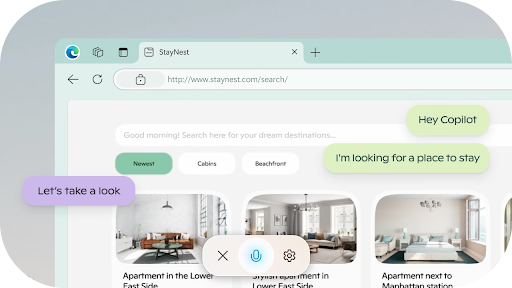
copilot assisting with shopping

For instance:

  • Looking at a complicated chart? Copilot Vision can break it down for you.
  • Browsing online stores? It can compare prices or suggest alternatives.

It is designed to help with tasks that usually require a lot of effort, like understanding technical documents or making shopping decisions.

According to Microsoft, “It is a new way to invite AI along with you as you navigate the web, tucked neatly into the bottom of your Edge browser whenever you want to ask for help.”

How Does it Work?

Think of Copilot Vision as a personal assistant that lives inside the Microsoft Edge browser. Here is what it does:

  1. Reads the Webpage Content: Whether it is a text, image, or even messy handwriting, the AI understands it all.
  2. Gives Real-Time Help: Ask questions like, “What does this diagram mean?” or “Can you summarize this article?”
  3. Makes Suggestions: It can recommend products, explain tricky terms, or highlight important parts of a webpage.

This kind of smart assistance turns regular web browsing into a more interactive experience, almost like chatting with a tech-savvy friend.

Why is This a Big Deal?

For one, it simplifies our digital lives. Imagine how much easier research, shopping, or studying becomes with an AI assistant that can dive deep into the content and give you exactly what you need. It is also great for people who find certain tasks, like analyzing data-heavy pages, challenging.

A lot of people worry about privacy when it comes to AI. Microsoft says that Copilot Vision does not store or use your personal browsing data to train its AI models. Plus, you can turn the feature on or off anytime you want. This ensures the control stays with you.

Right now, only a small group of Microsoft Copilot Pro users can test it. The company is gradually rolling it out and gathering feedback to make it better. Over time, more people will have access to this feature.

This technology is not just about convenience—it is about making the internet more accessible and intuitive. Whether you are a student, a professional, or someone just casually browsing, Copilot Vision can save time, simplify tasks, and make complex information easier to digest.

For example:

  • Students can use it to summarize dense academic articles.
  • Shoppers can make better buying decisions with AI insights.
  • Professionals can quickly understand reports or diagrams.

Final Thoughts

Microsoft Copilot Vision is expanding the limits of AI’s capabilities in our daily lives. It demonstrates how technology can reduce the frustration of routine tasks and enhance their efficiency. Although it is still at a beginner’s stage, the possibilities are vast—it is not merely about searching; it is about transforming our engagement with the web entirely.

As more people get to use and test Copilot Vision, it could set a new standard for how AI assistants support us online, making the internet not just smarter but truly personalized.

Site logo

* Copyright © 2024 Insider Inc. All rights reserved.


Registration on or use of this site constitutes acceptance of our


Terms of services and Privacy Policy.