Home Blog Page 19

Major AI Trial for Breast Cancer Screening Set to Begin in England

0

Events are in order for another potential health breakthrough, as the National Health Service (NHS) in England initiates the largest trial of artificial intelligence (AI) globally in breast cancer screening. This significant research consists of almost 700,000 women and seeks to examine if AI can identify breast cancer sooner and with greater precision than conventional techniques. If achieved, this technology will change the methods of diagnosing and treating breast cancer, while also alleviating the psychological burden and fear for those affected and lightening the workload for medical professionals.

Why Is This Trial Important?

Breast cancer ranks amongst the most prevalent and terminal illnesses in women, and early detection is key to successful treatment. Currently, radiologists (specialist doctors who analyze medical images) examine mammograms to check for signs of cancer. However, this process can be time-consuming, and mistakes sometimes happen due to human error. The AI technology being tested will assist doctors by scanning mammograms and identifying suspicious areas, potentially spotting cancer earlier than human doctors alone.

How Will the AI Work?

The AI system will look for patterns that indicate cancer by comparing new and old  breast scans with thousands of past images . By doing this, it can help radiologists catch cancer at an earlier stage, when treatment is most effective. In this trial, the AI will work alongside human doctors, not replace them. Doctors will still have the final say in diagnosing cancer, but the AI will act as an extra set of eyes to improve accuracy and efficiency.

Benefits of Using AI in Cancer Screening

A major benefit of AI is that it can accelerate the screening process. At present, two radiologists are necessary to assess each mammogram, but with AI assistance, only one radiologist might be sufficient since the AI can act as a secondary reviewer. This might greatly shorten the time taken to receive results and assist in identifying cancer earlier.

Moreover, the NHS is experiencing a lack of radiologists, resulting in postponements for screening and diagnosis. AI may alleviate this load by managing part of the preliminary analysis, enabling doctors to concentrate on more complicated cases.

Will AI take over the role of doctors

No, AI will not take the place of doctors. Rather, it will collaborate with them to enhance precision and effectiveness. Dr. Katharine Halliday, president of the Royal College of Radiologists, highlighted that despite AI’s significant potential, human supervision remains crucial. Physicians will examine all AI results to verify correctness and prevent mistakes.

What Occurs Subsequently?

The trial is set to occur in 30 NHS clinics throughout England. Should the outcomes prove favorable, AI might become a typical resource for breast cancer screening in the UK and elsewhere. This could signify a significant advancement in utilizing technology to combat cancer and enhance patient results.

This trial is significant as it could enhance breast cancer screening by making it quicker, more precise, and available to a larger number of women. Should AI demonstrate its reliability, it has the potential to transform cancer detection, preserving lives and alleviating strain on healthcare systems.

U.S. Immigration Crackdown: 3,690 Nigerians Set for Deportation

0

In line with the suspension of PEPFAR funds, which has significantly impacted Nigeria alongside other nations, the United States government has intensified its immigration enforcement policies. As a result, 3,690 Nigerians are set to be deported. ‘It may seem as though Trump is after us,’ various Nigerians remarked”

This announcement follows a broader immigration crackdown, which has seen U.S. authorities identify over 1.4 million non-citizens with final removal orders, meaning their deportation is imminent. Nigerians make up a notable portion of those slated for removal, with only Somalia ranking higher among African nations affected by this policy shift. 

A Nationwide Immigration Crackdown

According to the U.S. Immigration and Customs Enforcement (ICE), this measure is part of ongoing efforts to address illegal immigration, especially concerning those who have overstayed their visas or violated immigration laws. Recent data indicates that the highest number of deportees comes from Mexico, amounting to over 252,044 people set for removal, followed by El Salvador at 203,822. Nigeria’s inclusion on this list highlights the increasing scrutiny of African migrants residing in the U.S.

The Biden administration, similar to earlier administrations, has maintained a strong enforcement of immigration laws. Although significant attention has been directed towards migrants from Latin America, nationals from Africa have similarly faced heightened deportation actions. The choice to deport these Nigerians brings up worries regarding the future of those who have established lives in the U.S. and the possible humanitarian issues they could encounter upon returning.

Nigeria’s Response and Plans for Returnees

The Nigerian government has reacted to the upcoming deportations by establishing an inter-agency committee to oversee the reintegration of returnees. The Ministry of Foreign Affairs, together with the Nigerians in Diaspora Commission (NiDCOM), the Ministry of Humanitarian Affairs, and the Office of the National Security Adviser, is organizing support for deported citizens upon their return home.

Abdur-Rahman Balogun, a representative of NiDCOM, assured the public that the commission is prepared to assist those impacted, facilitating their seamless reintegration into Nigerian society. He also highlighted that Nigerians who are deported would receive access to support programs to aid them in rebuilding their lives. Nonetheless, as thousands of deportees come back, worries persist regarding the government’s ability to manage the influx and offer adequate reintegration assistance.

The Human Impact of Mass Deportations

Mass deportations frequently result in significant social and economic repercussions. Numerous Nigerians at risk of deportation have lived in the U.S. for years, with several having built families, businesses, and careers. For these people, deportation signifies tearing apart their lives and beginning anew in a nation they might have departed from years earlier.

Moreover, worries have been expressed regarding due process in these deportations. Advocacy organizations claim that certain individuals facing deportation may have been denied fair hearings or lacked the chance to adequately contest their cases. Concerns regarding severe detention conditions and swift removals without adequate legal examination have also been identified as problems requiring immediate focus.

A Broader Discussion on Immigration Policy

This surge in deportations indicates a larger worldwide discussion regarding migration policies, border defense, and international affairs. The U.S. is experiencing considerable domestic pressure to strengthen its immigration laws, especially with forthcoming elections where immigration continues to be a contentious topic. Nonetheless, large-scale deportations generate ethical and diplomatic issues, especially for nations such as Nigeria, which now have to manage a rapid increase in returnees.

The upcoming weeks will be vital in shaping how these deportations proceed and in how Nigeria manages the repatriation of its nationals. Although the Nigerian government has committed to providing assistance, the lasting effects on the deported persons and their families are still unclear. As this situation evolves, it is crucial for officials on both sides to guarantee that deportees receive fair treatment and have access to the necessary resources for reintegration into their home nation.

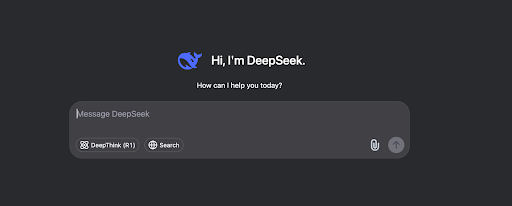
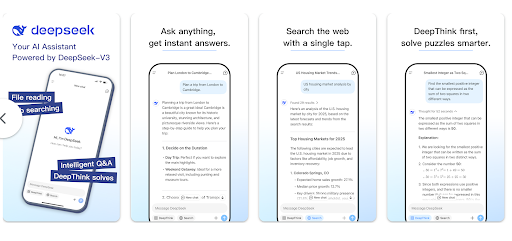
Be careful with DeepSeek, Australia says – so is it safe to use? 

0

Australia has provided a serious alert concerning the usage of DeepSeek, an AI model created in China that is becoming increasingly popular across the globe. The warning arises with increasing worries regarding privacy, censorship, and risks to national security linked to the technology. Australian authorities, including Treasurer Jim Chalmers, have encouraged users to be cautious in their interactions with the AI, emphasizing the government’s commitment to examine its consequences.

DeepSeek has established itself as a robust and affordable substitute for AI models such as ChatGPT. Nevertheless, its swift ascent has ignited discussions regarding possible dangers. A significant concern is censorship. Reports suggest that the AI deliberately steers clear of or shifts conversations about politically sensitive issues in China, including the 1989 Tiananmen Square protests and Taiwan’s sovereignty. This brings up worries regarding the dependability and impartiality of the information it offers, particularly for users beyond China’s borders who depend on AI for research and communication.

Confidentiality is another significant issue. DeepSeek’s data policy indicates that it gathers and saves user information, such as keystroke patterns, on servers located in China. This has sparked concerns about possible surveillance, especially concerning the ways personal or corporate information might be accessed or utilized. Due to China’s stringent cybersecurity regulations, certain experts are concerned that data held within the nation may be accessed by government officials, jeopardizing users’ privacy.

Housing Minister Clare O’Neil remarked that while there were opportunities for AI, users needed to be cautious about the information they pass on.

“It is fine to talk to the app, but perhaps do not give it personal information that you do not want the rest of the world to know,” O’Neil, the former cyber security minister, told Seven’s Sunrise program on Wednesday.

These worries have led Australia’s Science Minister Ed Husic to adopt a strong position, making him the initial Western official to openly caution about DeepSeek’s dangers. He highlighted the significance of digital security and urged companies and individuals to exercise caution prior to incorporating AI into their processes.

The emergence of DeepSeek is a reminder of the complex challenges posed by AI development. As more countries grapple with issues of data security, censorship, and regulatory control, the debate over AI governance continues to intensify. While DeepSeek offers impressive capabilities, its potential risks highlight the need for users to remain informed and cautious when engaging with emerging technologies.

Trump Administration Halts HIV Funding for Nigeria: A Blow to Global Health Efforts

0

The Trump administration has done it again, sending shockwaves through global health communities, by mandating a 90-day halt of U.S. foreign assistance, significantly affecting vital health initiatives such as the President’s Emergency Plan for AIDS Relief (PEPFAR). This choice, implemented via an executive order on his initial day in office, has resulted in the instant halt of HIV treatment funding in Nigeria and other developing countries. 

However, the U.S. Secretary of State Marco Rubio has now issued a waiver to allow the continuation of life-saving humanitarian assistance despite the pause. This means that, although foreign aid remains under suspension, certain critical forms of humanitarian aid are exempt from the freeze. Rubio had already granted an exemption for emergency food assistance a few days prior, and with this new waiver, additional essential aid is now permitted. Specifically, life-saving humanitarian assistance, as defined in the waiver, includes vital medical supplies, core life-saving medicines, urgent medical services, food, shelter, and basic subsistence support. The exemption also covers reasonable administrative costs necessary to deliver these forms of aid effectively.

Nonetheless, this waiver does not include vital health initiatives such as the President’s Emergency Plan for AIDS Relief (PEPFAR). Launched in 2003 under President George W. Bush, PEPFAR has served as a fundamental aspect of global HIV/AIDS assistance, delivering life-saving antiretroviral therapy (ART) to millions worldwide. In Nigeria, PEPFAR aids nearly 1.3 million individuals in receiving HIV treatment, while also implementing prevention initiatives for high-risk groups. The abrupt halt on these funds—said to be linked to wider changes in U.S. foreign aid focuses—has put healthcare providers and patients in uncertainty. 

The decision arrives at a precarious time. Nigeria’s healthcare system, already strained by COVID-19, now faces the dual challenge of maintaining HIV services amid dwindling resources. Experts warn that interrupted treatment could lead to drug resistance, increased transmission rates, and a spike in AIDS-related deaths. Women and children, who constitute over 60% of those receiving PEPFAR-supported care, are particularly vulnerable.  

While the Trump administration has not provided detailed reasoning for the halt, analysts speculate it aligns with recent efforts to redirect foreign aid toward initiatives with clearer ties to U.S. strategic interests (“America First”). Critics argue this approach overlooks the interconnectedness of global health security. 

Dr. Jirair Ratevosian, the chief of staff for PEPFAR during the Biden administration also added “HIV prevention and testing efforts can not be paused for 90 days — every delay allows new infections to spread unchecked. These programs are lifelines for millions, ensuring access to treatment, preventing transmission, and saving lives. Delaying them means lives hang in the balance and risks reversing decades of progress.”

Critics argue that this suspension could have devastating consequences. The U.S. is the largest single aid donor globally, and the freeze affects many dependent refugee camps and healthcare programs worldwide, including emergency responses to diseases like HIV, Marburg, mpox, bird flu, and polio. The Nigerian government has called for urgent dialogue to restore support, emphasizing the program’s role in stabilizing public health infrastructure. Local NGOs and global partners, such as the Global Fund, are working to address the deficit, but the magnitude of PEPFAR’s support—more than $400 million each year to Nigeria—creates a gap that no single organization can swiftly remedy.

As the 90-day evaluation period progresses, the worldwide community observes intently, worried about the possible lasting effects of this choice on global health programs and the millions who rely on them.

This choice also prompts queries regarding the future of American leadership in worldwide health. PEPFAR’s achievements in Nigeria, previously celebrated as a benchmark for successful foreign assistance, now confronts unpredictability. Health advocates emphasize that ongoing investment is essential not just to save lives but also to avert future pandemics. As Dr. Ayoade Alakija, a Nigerian epidemiologist, noted: “Health crises are interconnected. Neglecting HIV today could fuel the next global outbreak tomorrow.”  

For now, clinics across Nigeria brace for the worst. As the world watches, the suspension of HIV funding to Nigeria serves as a stark reminder: in global health, progress is fragile, and solidarity is not just a moral imperative—it is a practical necessity. 

Elon Musk Challenges DeepSeek’s Claims Amid Major Market Shifts

0

In a surprising twist, the introduction of an artificial intelligence (AI) system by DeepSeek, a Chinese AI startup, has caused ripples in the worldwide stock market. The company stated that its latest AI model, capable of competing with some of the strongest AI systems created in the West, was trained with an unexpectedly simple configuration—utilizing merely about 2,000 Nvidia chips, a small portion of the usually 16,000 or more extensive infrastructure required to train leading models by leading firms in the AI industry, according to The New York Times.

Even with the reduced hardware, the news of DeepSeek’s AI achievement triggered a significant sell-off in tech shares, particularly those associated with Nvidia. The shares of the top AI chip manufacturer dropped by 17%, resulting in a shocking loss of almost $600 billion in market capitalization.

While the market reacted sharply, the most significant response came from none other than Elon Musk, one of the world’s most prominent tech entrepreneurs. Musk, known for his bold and often provocative statements, expressed skepticism about DeepSeek’s claims. In a concise, one-word reply to a question on social media, Musk simply remarked, “obviously.” The comment referred to his belief that DeepSeek must have more Nvidia GPUs than it has publicly disclosed, suggesting that the startup may be hiding the true scale of its AI resources. Musk’s remark pointed to the possibility that DeepSeek, based in China, could be intentionally underreporting its GPU count to avoid attention from U.S. regulators, who have imposed strict export controls on advanced technology to China.

Musk also responded to a post from Salesforce CEO Marc Benioff, who reeported: “Deepseek is now #1 on the AppStore, surpassing ChatGPT—no NVIDIA supercomputers or $100M needed. The real treasure of AI is not the UI or the model—they have become commodities. The true value lies in data and metadata, the oxygen fueling AI’s potential. The future’s fortune? It is in our data. Deepgold.”

To this, Musk responded, “Lmao no.”

This interaction between Musk and the wider tech community emphasizes the escalating tensions between the U.S. and China regarding AI development. The unexpected emergence of DeepSeek has garnered attention not just due to the speed at which the firm asserts it has created a competitive AI system, but also because it indicates a change in the worldwide technological environment. As AI emerges as one of the most potent and profitable industries, the rivalry to lead this domain is escalating among both countries and companies. If verified, DeepSeek’s success could have significant consequences, particularly as the U.S. confronts increasing difficulties in preserving its dominance in AI innovation.

For some, the situation evokes memories of the Cold War-era “Sputnik moment,” when the Soviet Union’s launch of the first artificial satellite in 1957 sent shockwaves through the United States, signaling the need for rapid advancements in technology and space exploration. Similarly, DeepSeek’s breakthrough has been seen by some as a wake-up call for the U.S. to ramp up its investment in AI research and development to avoid falling behind in this crucial area. The U.S. is already grappling with the challenge of maintaining its technological dominance as China pours significant resources into developing advanced AI technologies.

Nonetheless, the enthusiasm for DeepSeek is moderated by doubt. Experts and industry figures have raised doubts about the verifiability of the startup’s assertions and whether the AI model it has created can meet the expectations. There is an urgent demand for increased transparency regarding how DeepSeek is developing its AI and the extent of its access to essential technologies such as Nvidia’s chips. Given AI’s significant transformative impact, the risks are substantial, and there is increasing apprehension regarding the possible outcomes of unverified progress, particularly if influenced by obscure or concealed elements.

Musk’s reply highlights a bigger problem in the tech industry: the necessity for examination and validation regarding remarkable assertions, especially those related to advanced technologies that might transform sectors and economies. As a business leader who has been involved in the advancement of some of the globe’s most cutting-edge technologies at Tesla and SpaceX, Musk is well-acquainted with the difficulties of developing groundbreaking innovations. His careful position on DeepSeek indicates that, although the AI sector is filled with opportunities, it is equally laden with dangers. He is promoting a stricter method for assessing AI advancements, which might avert speculative bubbles or sudden economic disruption similar to what occurred following DeepSeek’s announcement.

As the dust clears and additional information about DeepSeek’s AI system comes to light, global attention will be keenly focused. The reply to the startup’s assertions may have important consequences not just for the financial markets but also for international AI research and development. Musk’s single-word response highlights that, in a time of swift technological progress, the boundary between enthusiasm and caution is frequently extremely thin. The future of AI appears to be influenced by imaginative concepts alongside the thorough validation of those concepts to guarantee they fulfill their expectations.

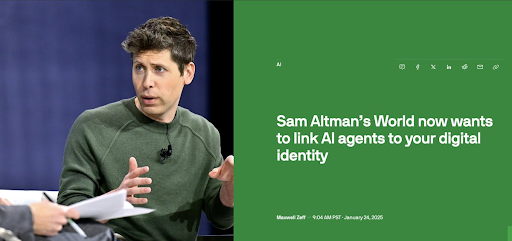
Sam Altman’s World Now Wants to Link AI Agents to Your Digital Identity

0

Sam Altman, the head of OpenAI and a prominent figure in the artificial intelligence (AI) sector, has an ambitious new concept: linking AI agents to our digital identities. If this seems futuristic—or perhaps even somewhat disturbing—it is because it actually is. Altman suggests a system in which AI serves not merely as a tool, but as a personalized companion that understands us well, utilizing the digital traces we have left on the internet.

Central to this notion is the belief that AI agents, like virtual assistants or bots, could provide significantly improved services if they were granted access to our personal information. Consider how your email inbox, web history, or social media activities disclose your preferences, habits, and even dreams. Altman proposes that by linking AI to this extensive wealth of knowledge, these systems could operate more like “human” helpers, foreseeing your needs and reacting in manners that seem personalized for you.

However, like all groundbreaking concepts, there is a drawback. Connecting AI with our digital identities reveals a multitude of ethical and privacy issues. Who holds control over the data? How safe is it? And what occurs if this private information falls into the wrong hands? For numerous individuals, the idea of an AI being so intimately familiar with them seems intrusive, despite offering convenience.

Altman’s vision expands on his previous project, Worldcoin, which sought to establish a worldwide digital identity authenticated via iris scans. Despite facing criticism for its intense data collection practices, Worldcoin paved the way for the next phase—merging AI agents with individual identities. Altman contends that, as AI systems grow more potent, establishing a system of accountability is crucial. He believes that linking AI agents to verified identities is a method to guarantee they function responsibly and align with personal requirements.

Nevertheless, critics continue to be doubtful. Advocates for privacy have voiced worries regarding how this type of system might worsen current inequalities. Would individuals lacking a digital identity—or those hesitant to disclose theirs—be excluded? And then there is the matter of corporate oversight. If an organization such as OpenAI were to oversee such a system, would it result in a monopoly on tailored AI?

Conversely, proponents highlight the possible advantages. Envision an AI that not only responds to inquiries but genuinely comprehends your situation. It may assist in simplifying various aspects, from financial planning to health management, thereby making our increasingly complicated lives somewhat easier. For companies, the consequences are significant, as personalized AI provides a method to transform customer support, advertising, and product development.

It is evident that Altman’s vision is not merely a fleeting concept—it is a component of a broader movement in which technology is increasingly integrated into our daily routines. As AI becomes more intelligent, the demand for it to be more personalized and aware of context will only increase. The outcome of this could result in a new age of ease or a bleak erosion of privacy, contingent upon the design and regulation of these systems.

Currently, the world observes as Altman and his team at OpenAI keep expanding the limits of AI capabilities. His suggestion to connect AI with our digital identities might be daring, yet it also serves as a reminder of the fragile balance between innovation and ethics within the tech industry. The future is continuously being shaped—and AI is in control of the writing.

French AI ‘Lucie’ Looks Très Chic, But Keeps Getting Answers Wrong

0

France’s venture into artificial intelligence (AI) with its chatbot “Lucie” has been garnering attention for all the wrong reasons. Designed to embody European values and distinguish itself in a tech environment frequently led by Silicon Valley, Lucie was intended to be an emblem of French elegance in AI. With sleek branding and high hopes pinned on it, the chatbot debuted with the promise of being not just intelligent but culturally and socially aware. However, it appears that Lucie’s charm ends at her chic exterior.

Within hours of its launch, users began sharing their interactions with Lucie online, and the results were, to put it kindly, baffling. From inconsistent answers to outright bizarre responses, Lucie seemed to struggle with even the simplest of queries. A user reported asking Lucie about the Eiffel Tower, only to be told it was in Belgium. Another interaction involved Lucie confidently “inventing” historical facts that left users scratching their heads.

The backlash was swift and unforgiving. Social media platforms lit up with memes and critiques, and #LucieFail started trending on Twitter. For a project meant to showcase the best of European innovation, it was a very public stumble. The French government, which had heavily promoted Lucie as a flagship project in AI, was left red-faced, and the chatbot was quickly pulled offline for re-evaluation.

So, what went wrong? Experts have pointed to several possible issues. One of the main criticisms is that Lucie may have been launched prematurely, without sufficient testing to iron out the kinks. Unlike other AI systems that undergo rigorous testing and pre-release evaluation, it seems Lucie was rushed to market in a bid to compete with global tech giants.

Another challenge lies in the sheer complexity of building a chatbot that is not only accurate but also culturally attuned. French officials wanted Lucie to reflect European ideals and offer a humanistic approach to AI, which is a noble goal but a technically demanding one. Ensuring that a chatbot embodies cultural nuances while also providing correct information is a task that requires time, resources, and a great deal of fine-tuning.

Despite its rocky start, many believe Lucie’s failure could be a valuable learning experience. Mistakes in AI development are not uncommon, and even industry leaders like OpenAI and Google have faced criticism for missteps with their systems. The important takeaway is how developers and policymakers respond. For Lucie, this means going back to the drawing board, addressing the underlying flaws, and taking the time needed to create a reliable and robust system.

France’s ambition to carve out its own space in the AI landscape is commendable. However, the Lucie debacle highlights the importance of substance over style. In a world where AI is more deeply woven into everyday living, individuals require tools they can rely on—not merely those that appear impressive on the surface. Lucie’s setbacks might have offered a lesson in humility, yet with the proper changes, it could ultimately turn into a success tale.

For now, though, Lucie’s legacy is a reminder that even the most elegant appearances can not mask a lack of preparation. Hopefully, when Lucie makes her comeback, she will be ready to charm not just with her sophistication but with her smarts too.

Young Chinese turn to AI pets for emotional relief

0

Lately, artificial intelligence (AI) has been taking a significant role in the daily lives of people worldwide. In China, this trend has developed distinctively, with younger generations increasingly desiring AI-based pets for emotional support and companionship. These digital companions, frequently appearing as robots or application-based avatars, are assisting in meeting the emotional requirements of a generation facing increasing stress, social isolation, and anxiety.

AI companions such as BooBoo, a tiny robotic guinea pig, have become extremely popular in the Chinese market. Since its launch in May 2024, BooBoo has sold numerous units, becoming popular among users seeking a supportive and non-critical companion. These AI companions are designed to replicate emotional interactions, including reacting to voice commands, participating in casual talks, and imitating loving behaviors like wagging tails or producing calming sounds. This enables users to experience a feeling of connection, which alleviates loneliness without the obligations tied to actual pets.

In Beijing, 19-year-old Zhang Yachun has found comfort in BooBoo, an AI-powered “smart pet” that chirps soothingly and eases her anxiety from school and work. Struggling to form close friendships, she says BooBoo helps her feel less alone, giving her someone to share happy moments with.

BooBoo, a guinea pig-like robot made by Hangzhou Genmoor Technology, is priced at 1,400 yuan (about $261) and has sold 1,000 units since May 2024. Originally designed to meet children’s social needs, BooBoo is now part of a growing trend in China where people use AI to combat social isolation and find emotional support.

For numerous young adults, these virtual pets provide a secure and stress-free method to manage social anxiety. They remove the intricacies and uncertainties of human connections while continuing to offer emotional support. Users indicate they feel more relaxed and content after engaging with their AI companions, whom they attribute to lowering daily stress and enhancing their overall mood.

Curiously, the attraction of AI pets goes beyond just young individuals. Chinese families are also embracing these virtual companions for their kids. Parents such as Guo Zichen, a 33-year-old expert, have discovered that AI pets not only offer companionship for children but also act as learning resources. Certain AI pets are created to assist children in acquiring new skills or organizing study schedules, serving as both fun and useful enhancements to homes.

The emergence of AI companions presents new societal changes in how individuals pursue comfort and connection in the digital era. As urbanization and job-related stresses rise, numerous individuals in China struggle to uphold traditional social connections. AI pets are becoming a practical substitute, offering the emotional comfort that could typically be derived from relatives, companions, or actual pets.

Market analysts foresee that this trend will persist. The worldwide market for social robots, such as AI companions, is projected to expand significantly, hitting an estimated $42.5 billion by 2033. This increase indicates a growing need for creative solutions that tackle emotional and mental health issues in contemporary society.

AI pets in China signify more than simply a technological advancement; they represent a transformation in how individuals are reshaping relationships and emotional health. As these intelligent companions advance, they could take on an even greater role in assisting individuals with the intricacies of life in a fast-evolving world.

DeepSeek AI might be smarter than OpenAI’s smartest AI, and you can try it out now

0

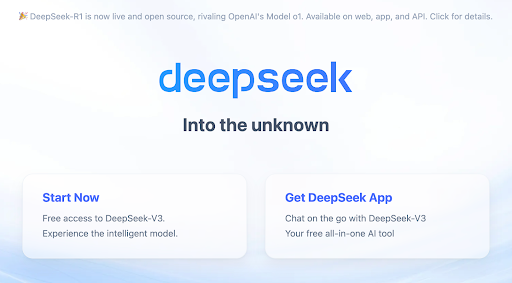
In the artificial intelligence (AI) field, it is not often that a newcomer can take on the industry giants. But that is exactly what DeepSeek R1 is doing. This new AI model is not just catching up to OpenAI—it is making a serious impact. The most impressive part? It is offering top-tier performance at a fraction of the cost.

With the launch of DeepSeek R1, it now matches OpenAI o1 in both performance and versatility. What makes it even more appealing is its open-access design and MIT license, allowing businesses and developers to use it freely for commercial purposes. This makes DeepSeek R1 a top choice for anyone looking for a powerful and flexible AI solution.

“According to DeepSeek, R1 wins over other popular LLMs (large language models) such as OpenAI in several important benchmarks, and it is especially good with mathematical, coding, and reasoning tasks.”

What sets DeepSeek-R1 apart is not only its impressive features but also its affordability and accessibility, highlighting it as a significant progression in the AI domain. 

DeepSeek  graph

DeepSeek-R1 has been designed to excel in tasks that demand high-level cognitive abilities. This includes logical inference, advanced mathematical reasoning, and solving real-world problems in real time. Reports suggest that in some key areas, such as mathematics and software development, DeepSeek-R1 matches or even surpasses the performance of OpenAI’s latest o1 model. This has led to widespread interest from developers, researchers, and organizations keen to explore its potential.

A notable aspect of DeepSeek-R1 is its affordability. While numerous advanced AI models necessitate considerable financial resources for access or implementation, DeepSeek-R1 is claimed to be as much as 50 times less expensive than similar models from OpenAI. This affordability reduces the entry barrier, allowing smaller organizations, individual developers, and educational institutions to harness the capabilities of advanced AI without excessive costs.

Another major advantage of DeepSeek-R1 is its open-source nature. Unlike many proprietary AI systems that restrict user access, DeepSeek-R1 is freely available for public use. This accessibility enables developers to test out the model, incorporate it into different applications, and even tailor it to meet particular requirements. Through promoting teamwork and creativity, DeepSeek is establishing itself as a significant player in the democratization of AI technology.

For individuals keen on experimenting with DeepSeek-R1, it is widely available on the internet. Literally anyone can assess its usability and measure how authentic it is through various tasks, including automating workflows, improving customer service, creating software, and performing intricate data analysis. The model’s adaptability guarantees its relevance in various industries, such as finance, healthcare, education, and technology.

DeepSeek’s bold entry into the AI market challenges the dominance of established players like OpenAI. By offering a model that combines cutting-edge performance with affordability and accessibility, DeepSeek-R1 represents a shift toward more inclusive AI development. This shift has the potential to empower businesses and individuals worldwide, fostering innovation in ways previously limited by cost and exclusivity.

In conclusion, DeepSeek-R1 is not just another AI model; it represents a new beginning. It serves as evidence of how innovation can be made more accessible to everyone, breaking the known barriers that have long restricted AI’s benefits to a select few. As DeepSeek continues to refine and expand its offerings, the model’s impact on the AI industry and beyond could be profound. For now, the ability to test and use DeepSeek-R1 is a unique opportunity for anyone looking to explore the possibilities of AI without the high costs typically associated with such technology.

Microsoft to Train 1 Million South Africans on AI Skills

0

Microsoft has made a notable move to enhance digital competencies in South Africa by revealing an extensive initiative to educate 1 million South Africans in artificial intelligence (AI) and cybersecurity by 2026. This initiative forms a component of the company’s wider pledge to meet the increasing need for enhanced technological expertise in today’s workforce.

The training initiative, concentrating on AI and cybersecurity, intends to equip South Africans to handle the swiftly evolving digital environment. Microsoft intends to offer access to widely acknowledged certifications that will improve job prospects and allow participants to compete efficiently in global employment markets. Lillian Barnard, President of Microsoft Africa, states that this initiative goes beyond technical skills; it also aims to generate fresh opportunities for young people and professionals to make significant contributions to the global digital economy.

This recent announcement strengthens Microsoft’s previous achievements in Africa. In the last five years, the firm has trained 4 million individuals throughout the continent, providing them with vital digital capabilities. Looking forward, Microsoft has established an even more ambitious goal, committing to educate 30 million individuals throughout Africa in the next five years.

In South Africa, this effort coincides with the nation’s aim to tackle unemployment and bridge the digital skills divide. By centering on AI, a technology that is swiftly reshaping sectors like healthcare, finance, and education, along with cybersecurity, essential for safeguarding data and systems in today’s digital world, Microsoft is guaranteeing that South Africans are equipped for future job opportunities.

The training will enhance not just individuals but will also bolster South Africa’s digital economy by developing a pool of skilled professionals capable of fostering innovation and aiding the nation’s technological progress. As technology becomes more integral to our lives, initiatives of this kind are crucial to guarantee that everyone benefits from the digital revolution.

Microsoft’s strategy highlights its dedication to uplifting communities via education and skill enhancement, reaffirming the firm’s position as a vital contributor to shaping Africa’s digital landscape. This initiative signifies a considerable commitment to the capabilities of South Africa’s labor force and illustrates how partnerships between public and private sectors can tackle urgent issues like unemployment and skill gaps.

With this initiative, Microsoft is not solely equipping South Africans for the future; it is also fostering a more inclusive and fair digital economy that can advantage the whole continent.

Site logo

* Copyright © 2024 Insider Inc. All rights reserved.


Registration on or use of this site constitutes acceptance of our


Terms of services and Privacy Policy.