Home Blog Page 15

Trump Revives U.S. Coal Industry to Power Artificial Intelligence and Emerging Technologies

0

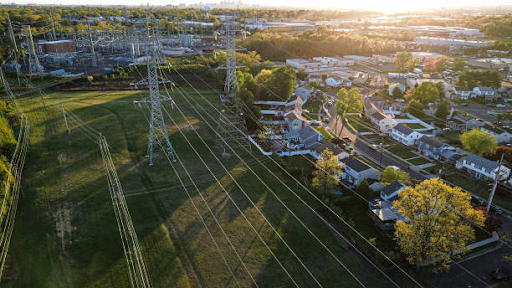
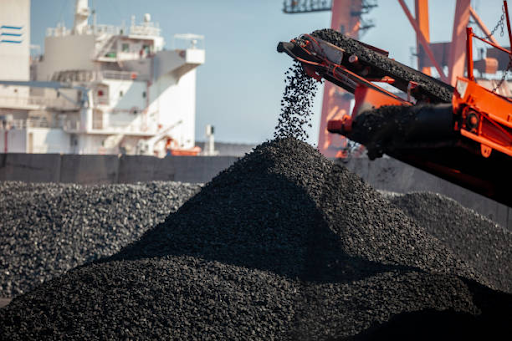
In a controversial move aimed at supporting America’s growing energy needs, President Donald Trump has signed a new executive order to revive the U.S. coal industry. Trump argues that coal energy is essential to meet the skyrocketing power demands of artificial intelligence (AI), electric vehicles, and emerging technologies like massive data centers.

Why Is Coal Back on the Table?

With more and more companies building AI-powered systems, electric vehicles, and smart technologies, the demand for electricity has surged.. These technologies use huge amounts of data and need big data centers to process it all—those data centers need a ton of electricity to run.

President Trump argues that the U.S. cannot rely only on solar or wind energy to keep up with these growing demands. He believes coal is still a reliable and powerful energy source that can fill in the gaps.

What Does the Executive Order Do?

Here is what Trump’s order includes:

Coal is Now a “Critical Mineral”

This means the government will treat coal as a priority resource, just like oil or rare earth elements used in electronics.

Old Coal Plants Can Stay Open Longer

Power plants that were supposed to shut down due to pollution concerns are now being allowed to keep running for at least two more years.

Fewer Environmental Rules (For Now)

Nearly 70 coal plants have been temporarily freed from strict pollution laws. The government says this is needed to keep power available while new tech is developed.

Boosting Coal Exports

The U.S. will try to sell more coal to other countries, especially allies who still use it for power.

Why Link Coal to Artificial Intelligence?

It may seem like an odd match, but it’s simple: AI systems need a lot of power. For example, training just one large AI model can use as much electricity as dozens of households in a year. With AI growing rapidly, especially in industries like healthcare, finance, and defense, some leaders argue we need a stable and constant power supply to support it.

Coal, unlike solar and wind, can generate electricity around the clock, no matter the weather. That’s why Trump’s team says coal has a role in the new tech-driven economy.

But What About the Environment?

Environmental groups are strongly against this decision. They worry that rolling back environmental protections will:

  • Increase air and water pollution
  • Harm public health, especially in communities near coal plants
  • Slow down the fight against climate change

Many scientists and energy experts believe that clean energy (like solar, wind, and nuclear) is a better long-term solution for powering AI and other technologies.

What People Are Saying

  • Supporters say: This is about protecting jobs, strengthening the economy, and keeping America strong in the global tech race.

Critics say: It is a step backward that could undo years of progress in clean energy and environmental safety.

What’s Next?

The executive order is likely to spark legal battles and policy debates. Some states may refuse to follow it, while others—especially coal-producing states—might support it fully.

Either way, this move has restarted a big national conversation about how America should power its future—and whether coal should still be part of that plan.
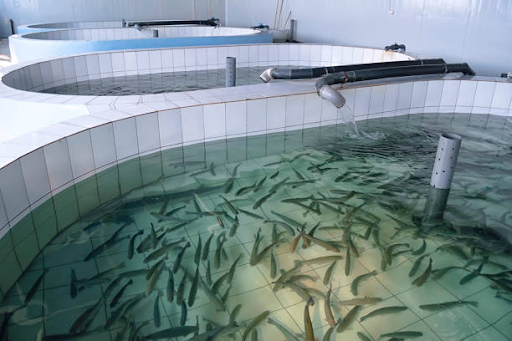

New AI Technology Aims to Revolutionize Fish Farming

0

The aquaculture industry is undergoing a significant transformation with the integration of Artificial Intelligence (AI) technologies, through real-time environmental tracking, improved feeding, and intelligent monitoring devices, leading to enhanced efficiency and sustainability in fish farming practices.​

AI Advancements in Aquaculture

Startups like GoSmart are helping to change the future of fish farming. GoSmart, a company from Israel, has built smart systems that can work on their own. These systems use sensors and cameras that are placed in fish pens, ponds, or tanks to keep an eye on important things like the size of the fish, how they are spread out, the water temperature, and oxygen levels.

The smart system uses powerful tech from NVIDIA to quickly process this information right where it is collected. Then, the data is sent to GoSmart’s online software, which gives fish farmers clear, real-time advice. This helps them feed and harvest their fish at the best times, saving money and cutting down on waste. It also helps protect the environment by avoiding overfeeding and reducing pollution.

Improving Feeding Efficiency

AI is also utilized to enhance feeding strategies in aquaculture. Through the examination of variables such as water temperature, fish size, and growth rates, AI algorithms are capable of forecasting the exact amount and schedule of feed distribution. This guarantees that fish obtain sufficient nutrition without excessive feeding, resulting in healthier fish and less environmental pollution. The adoption of these AI-based feed management systems has demonstrated promise in greatly minimizing feed waste and enhancing overall productivity on farms.(Intelligent aquaculture methods are increasing productivity while lowering waste.)

Advanced Monitoring Systems

New tools like the A-BIOMASS™ camera system from Ace Aquatec are changing the way fish farmers keep track of their fish. First shown at Aqua Nor 2023, this smart underwater camera uses AI and machine learning to measure fish—like salmon—very accurately in real time.

Instead of guessing or using rough estimates, farmers can now see exactly how big their fish are and how many they have. Real-time fish monitoring also helps farmers react fast to changes and enhance decision-making by enabling proactive farm management. This helps them manage food, space, and other resources much better, saving time and money while improving the health and quality of their fish. 

Biomass Camera Device: Advanced AI tools like the A-BIOMASS™ camera from Ace Aquatec bring precision to fish farming by monitoring biomass and improving feeding strategies.

Future Prospects

In order to achieve sustainable fish farming operations, AI and Internet of Things (IoT) are essential. These smart systems can watch over fish in real time—checking how they behave, the quality of the water, and other environmental conditions. They help farmers make quick, smart decisions automatically, and use resources more carefully.

As this technology improves, fish farming is becoming more efficient and better for the environment. In simple terms, AI is helping fish farms grow more seafood with less waste, making it easier to feed more people without harming the planet.

Chinese Scientists Unveil AI-Powered Wearable to Help the Visually Impaired ‘See’

0

Heralding another significant technological breakthrough, Chinese scientists have created a smart new device that helps visually impaired individuals or have trouble seeing find their way more easily and safely. This wearable gadget uses artificial intelligence (AI) to “see” what is around and gives the user helpful sounds and vibrations to guide them, making it easier for them to move around on their own. This device represents a major step in combining intelligent technology with human-centered design.

How the AI Wearable Works

The device combines AI vision, spatial awareness, and intuitive feedback for the blind and visually impaired. It includes a small camera placed between the user’s eyebrows, a smart computer chip (AI processor), which incorporates bone-conduction headphones— special headphones which transfer sound through vibrations in the skull, ensuring situational awareness, and very thin skin-like sensors worn on the wrists. The camera records the environment and converts visual information into haptic and auditory input. Then, it gives the user spoken instructions through the headphones—without blocking out background sounds. At the same time, the wrist sensors gently vibrate to warn the user about things nearby, helping them know what is around them. 

Summarily, the AI rapidly comprehends what it sees when the camera photographs what is in front of it. Then, without drowning out background noise, it speaks instructions to the user through the headphones. Simultaneously, the wrist sensors help the user understand their surroundings by gently vibrating to alert them to nearby objects.

Enhancing Mobility and Confidence Visually Impaired Using Ai

Developed by researchers from Shanghai Jiao Tong University, Shanghai Artificial Intelligence Laboratory, East China Normal University, Hong Kong University of Science and Technology, and the State Key Laboratory of Medical Neurobiology at Fudan University, the device aims to empower visually impaired individuals by offering a practical and user-friendly navigation aid. During navigation tests, participants demonstrated significant improvements, successfully maneuvering through mazes and avoiding obstacles with the assistance of the device .

A Step Forward in Assistive Technology

This smart wearable device is a big step forward in technology that helps people with vision problems. It is designed to be easy to use and not get in the way, while making everyday life safer and more comfortable. By combining sight, sound, and touch, the device gives users better guidance so they can move around on their own with more confidence. This kind of wearable AI technology creates new opportunities for inclusive and assistive design, making it a key advancement for accessibility.

The Future of AI Wearables and Accessibility for the Visually Impaired

Looking into the future, tools like this could change the lives of millions of blind or visually impaired people around the world. Thanks to AI, scientists are creating new ways to make life easier, more independent, and more equal for everyone. This device is a great example of how AI for accessibility can bridge gaps for underserved communities. 

Clean Energy Powers 40% of Global Electricity in 2024 — A Turning Point in the Climate Fight

In what climate experts are calling a “historic tipping point,” clean energy accounted for over 40% of global electricity generation in 2024 — a level not seen since before the rise of fossil fuels in the mid-20th century. This remarkable feat signals a new chapter in the world’s energy story, one increasingly defined by sustainability, innovation, and resilience.

The latest report from Ember, a climate and energy think tank, reveals that solar and wind power together made up 13.4% of global electricity generation, with solar alone becoming the fastest-growing source of electricity for the 19th consecutive year. This growth, they note, was not just incremental — it was exponential. Solar capacity doubled globally in just three years, fueled by falling technology costs, favorable policies, and urgent climate goals.

“We are stepping into a new age,” remarked Dave Jones, global insights director at Ember. “Renewable energy is on track to substitute fossil fuels in the electricity industry and establish a basis for reducing emissions across the economy.”

A Global Push Toward a Greener Grid

This development in clean energy was not confined to a single field. Europe, which has long been at the forefront of environmental legislation, made great strides, especially in countries like Spain, Germany, and the Netherlands, where the production of solar energy soared. For the first time, solar energy overtook coal in the European Union’s electricity generation, with solar accounting for 11% and coal for just 8%.

While China’s substantial expansion of solar power made it the country’s largest producer of solar electricity by a wide margin, the Inflation Reduction Act in the United States boosted investments in renewable energy. More than half of the global improvements in wind capacity were attributed to China.

Even countries traditionally reliant on fossil fuels are diversifying. For instance, in India, solar installations reached record levels, helping to offset some coal dependency.

Demand Still Rising — and So Are Emissions

The world is still in danger despite these advancements in sustainable energy. Economic expansion and the digital revolution, from data centres and AI computing to EV charging stations and electric heating, were major contributors to the 2.2% increase in global electricity demand in 2024.

Unfortunately, because of this increase in demand, coal and gas facilities were still required, which led to a record high in emissions from the worldwide power sector. Emissions actually rose by 1%, highlighting the need for renewable energy to develop faster than both present and future demand.

Storage, Grids, and Political Will

Experts argue that while clean generation is booming, grid upgrades and energy storage are urgently needed. Solar and wind are variable, meaning they require advanced battery systems and smarter grids to ensure reliable supply.

Moreover, political will remains critical. Policy incentives, regulatory reforms, and international collaboration will play an increasingly central role in making renewables the default source of electricity — not just an alternative.

A Roadmap for the Future

Looking ahead, Ember projects that global fossil fuel generation will decline in 2025, for the first time outside of a global crisis like the 2008 financial crash or the COVID-19 pandemic. They anticipate that the momentum from 2024 will carry forward — with clean energy capacity additions accelerating and fossil fuel demand beginning to taper.

The International Energy Agency (IEA) also supports this outlook, forecasting that renewables will meet 90% of the global electricity demand growth through 2026, putting the world on a more hopeful trajectory toward net-zero emissions.

The Bottom Line

The reality that clean energy currently generates two out of every five kilowatts consumed worldwide is not merely an achievement — it conveys a message. It indicates that moving away from fossil fuels is feasible, expandable, and already in progress. However, it also serves as a reminder that the work is still incomplete.

We are on the brink of a new age of energy. What comes next? Reinforcing our commitment — to investment, innovation, and inclusion — to guarantee that clean energy not only has the largest portion of the mix, but also serves as the leading influence on our shared future.

Shopify CEO: Teams Can’t Hire Unless They Show AI Is Incapable of Doing the Job

0

Shopify’s CEO, Tobi Lütke, has issued a company-wide directive that could redefine the future of work within the e-commerce giant. In an internal memo titled “AI usage is now a baseline expectation,” Lütke emphasized that before any new hires are approved, teams must first demonstrate that artificial intelligence (AI) cannot effectively perform the tasks required for the position. 

Lutke mentioned that there’s a “basic expectation” throughout Shopify for employees to incorporate AI into their daily tasks, stating it has served as a “multiplier” of efficiency for its users.

“I’ve observed numerous individuals undertake improbable tasks, ones we might not have opted to address previously, utilizing AI in instinctive and remarkable ways to accomplish 100 times the work,” Lutke stated.

The directive arrives at a time when tech firms have set aside hundreds of billions of dollars for AI development investments this year. Shopify has launched artificial intelligence (AI) services for its merchants, including a chatbot called Sidekick and a suite of automation tools it calls “Shopify Magic.” According to Shopify’s most recent annual report, the company’s overall employment fell to 8,100 at the end of December from 8,300 the year before. Shopify’s CFO Jeff Hoffmeister added that the company can “maintain a stable headcount,” while personnel costs may change depending on salary fluctuations. He remarked that “a more expensive, top-tier AI engineer” can increase compensation expenses even if the number of employees remains constant.

This policy underscores Shopify’s commitment to integrating AI into its daily operations. Lütke articulated that AI proficiency is no longer optional but a fundamental skill expected of all employees. He said that in order to demonstrate the company’s commitment to developing an AI-centric culture, performance assessments would now evaluate how well people integrate AI technologies into their workflows.

The driving force behind this strategy change is evident: Shopify wants to increase productivity and innovation by utilising AI, making sure that human expertise is directed to areas where it is most needed. In the highly competitive world of e-commerce, this strategy not only maximises resources but also places the business at the forefront of technical progress. ​

Although layoffs are not specifically mentioned in the memo, it is clear that Shopify sees a future in which human intellect and AI  flow harmoniously. Workers are urged to see AI as a cooperative partner that will enhance their skills and free them up to concentrate on more intricate and imaginative facets of their jobs.

This initiative is in line with a larger trend in the sector where businesses are realising the revolutionary potential of artificial intelligence. By integrating AI into its core business operations, Shopify not only optimises workflows but also develops a workforce that is skilled at utilising and navigating new technology. ​

As Shopify continues to evolve, this AI-first approach could be a model for other businesses looking to strike a balance between technical innovation and human knowledge. It emphasises how crucial flexibility and ongoing education are in a time when artificial intelligence is changing the nature of work itself. ​

The AI Facial Recognition Site That Can Find Every Photo of You Online

0

In an age where every click, like, and selfie feeds the great digital machine, one website in particular is pushing the boundaries of just how searchable your face really is. It has been dubbed the “most disturbing website on the internet”—not because it deals in the weird or strange, but because it might know more about you than you do.

That site is PimEyes, an AI-powered facial recognition engine that can, with chilling accuracy, scour the internet to find almost every publicly available photo of you. All it needs is one clear image. From there, it starts piecing together a collage of your digital footprint, one image at a time.

At first glance, PimEyes appears to offer a service rooted in digital hygiene—a way to check if your face has ended up somewhere it should not be. But the rabbit hole runs much deeper.

Using a method known as “reverse image search technology”, the platforms algorithm cross-references an uploaded face against billions of indexed images. These are not just scraped from social media profiles; they may also appear in obscure blogs, forums, marketing materials, or photos you were not even aware were taken. It does not need metadata. It does not need names. Just your face.

People who have tested it report unsettling discoveries—forgotten party pictures, archived university photos, corporate headshots used without consent, or even doctored images that could feed into deep fakes. In a recent interview with The New York Post, users said they found images of themselves that were “buried in places they had not visited in years”—websites they never remembered engaging with.

The implications are polarizing. Advocates argue that PimEyes can be a valuable tool for journalists, public figures, or anyone wanting to monitor the misuse of their identity. In the age of AI surveillance tools and unauthorized image exploitation, such platforms can help victims track down where their likeness is being used.

But the privacy threats are hard to ignore. The platform is not restricted to searching your own image—it is not biometric-locked. That means anyone can search for anyone else, and that opens a Pandora’s box of privacy concerns, especially for vulnerable groups like children, abuse survivors, or public figures who are frequently targeted.

In 2023, digital rights organizations raised the alarm over the potential for digital stalking, harassment, and facial profiling. As one tech ethicist put it: “What once took weeks of private investigation now takes seconds with an internet connection and a headshot.”

Where Law Hasn’t Caught Up

Unlike police databases or government systems, which often operate under strict regulations, PimEyes exists in a legal gray zone. It scrapes publicly available data—but what qualifies as “public” in a world where people do not read privacy policies or know what platforms share?

As of now, there is no federal law in the U.S. explicitly banning private companies from offering facial search engines to the public. In Europe, data protection regulations under GDPR may apply, but enforcement across jurisdictions is murky and slow. In a recent statement, PimEyes’ creators insisted that the platform “is not a tool of surveillance, but of self-monitoring”—a claim that, while technically correct, sidesteps the moral risks if it is misused.

Consent Is the Crux

The real issue is consent. You may not have agreed for your college graduation photo to be used in a meme. You probably did not know your face could be scraped from a corporate brochure uploaded a decade ago. And you definitely did not agree for someone to track you down across the web like a detective in a sci-fi film.

And yet, that is where we are.

Facial recognition tech is no longer confined to airport security lines or law enforcement databases—it is consumer-facing. And it is powerful. Too powerful, some say, to exist without stricter governance or public understanding.

A Mirror to Our Times

In many ways, PimEyes is a mirror—not just of your digital self, but of society’s accelerating race toward hyper-visibility. In our thirst for connectivity, we have unknowingly built a world where our identities are trackable, our histories searchable, and our presence—however private we thought it was—replicated endlessly in data.

But mirrors can distort, too. PimEyes does not just reflect what is out there; it reflects our vulnerability in a world that has not agreed on the rules of privacy.

What Can Be Done?

There is no easy solution. Deleting images does not always work. Opt-out features on platforms like PimEyes exist, but they require verification steps and do not erase images from the internet—just from the search engine itself. And even then, what is to stop a new one from taking its place?

What is clear is that public awareness is no longer optional. The age of facial anonymity is ending. Whether that means more caution, stronger legislation, or simply thinking twice before posting that next group selfie—change is coming. Or at least, it should be.

Because if the most disturbing website on the internet can see everything about you… what does that say about the internet itself?

ChatGPT adds 1 million users in one hour after adding new AI feature

0

In what feels like a plot straight out of a tech utopia—or perhaps a Studio Ghibli film itself—OpenAI’s ChatGPT has just made history. Within a single electrifying hour, the Artificial Intelligence (AI) platform added over one million new users, thanks to the release of its latest innovation: an image generation feature that can create stunning visuals on demand, many echoing the dreamlike charm of Ghibli-style animation.

The viral phenomenon, now dubbed “The Ghibli Effect,” saw users across the globe flooding the platform, asking it to craft magical landscapes, whimsical creatures, and storybook scenes—all with the brushstroke of artificial intelligence. On platforms like X (formerly Twitter), TikTok, and Reddit, timelines transformed into endless scrolls of fantastical artwork, each piece bearing a distinctly human touch… except none were made by human hands.

From Whisper to Wildfire

Sam Altman, CEO of OpenAI, confirmed in a post that the uptake of the new image feature beat all previous records. “It took us five days to reach a million users when ChatGPT launched,” he said. “This time, it took one hour.” The server strain was so intense that the platform experienced temporary slowdowns and access issues—ironic proof of its own popularity.

The feature is part of the new GPT-4o update, a major leap for OpenAI’s flagship model. This version combines text, voice, and now image capabilities in one seamless package, putting the power of a creative studio, digital assistant, and knowledge engine all into your pocket.

A Surge That Attracted Billions

But this was not just a viral fluke. Behind the aesthetic appeal is a serious business story. Shortly after the launch, OpenAI closed a landmark $40 billion investment round led by SoftBank, pushing its valuation to an eye-popping $300 billion. Investors are betting big on OpenAI’s potential to lead the next wave of digital transformation—not just in tech, but in art, education, customer service, and beyond.

The funds will accelerate OpenAI’s march toward Artificial General Intelligence (AGI)—AI that can perform any intellectual task a human can—with a special focus on making these tools more intuitive and widely accessible.

A Beautiful Controversy

Yet for all its success, the feature has reignited long-standing tensions in the world of art and intellectual property. Some creators argue that AI art, especially when it mimics iconic styles like that of Hayao Miyazaki, brushes dangerously close to artistic appropriation. Others worry about the implications for creative industries already feeling threatened by automation.

“Styles are not protected under copyright,” says a legal analyst from Reuters, “but the ethical conversation is far from over.” Miyazaki himself has previously criticized AI art, famously calling it “an insult to life itself”—a perspective that brings up deep concerns about what we lose when machines try to copy human creativity.

The Future Is Illustrated

Still, the momentum shows no sign of slowing. Millions of users, from professional designers to curious teens, are now wielding ChatGPT’s new powers to generate comics, storyboard films, design video game concepts, and even decorate their bedrooms with prints of AI-crafted worlds.

We are witnessing a new creative rebirth—one where the imagination is limitless, and the artist could very well be a machine. Or, more precisely, a machine that learns from us, creates with us, and maybe even dreams a little like us.

As OpenAI continues to scale this mountain of innovation, one question hangs in the digital air: Is this just the beginning?

AI Could Affect 40% of Jobs and Widen Inequality Between Nations, UN Warns

0

In a sobering new forecast, the United Nations has sounded the alarm on one of the most profound transformations of the 21st century—artificial intelligence (AI). While often hailed as the engine of the future, AI is now being framed as a double-edged sword: a force that could simultaneously unlock productivity and deepen the tensions of global inequality.

AI is projected to become a $4.8 trillion global industry by 2033—nearly the size of Germany’s economy. But a new UNCTAD report warns that its benefits are unevenly shared. As AI races ahead, it risks deepening inequality within and between nations, threatening jobs, creative rights, and reinforcing control by a few wealthy countries and tech giants.

According to a recent analysis by the International Monetary Fund (IMF), AI could impact as much as 40% of jobs globally, with developed countries—those already riding the crest of digital transformation—bearing the greatest exposure. In advanced economies, the exposure jumps to a staggering 60%, as AI systems grow more capable of replacing high-skill cognitive work, not just manual labor.

“AI will transform the way we work. But that transformation may not be equitable,” said Kristalina Georgieva, Managing Director of the IMF. “We are entering an era where intelligence itself—both human and machine—will shape the distribution of economic power.”

A Tale of Two Futures

Not all AI-related job disruptions will result in mass unemployment. The IMF emphasizes that AI could be a “complementary force” in about half of exposed roles. Think of AI-powered tools enhancing healthcare diagnostics, automating tedious accounting tasks, or helping architects model smarter cities—roles where humans and machines could co-create the future.

But in the other half, especially in repetitive office work and some creative sectors, AI could act as a replacement rather than a helper. That could mean reduced demand for human labor, downward pressure on wages, and in some cases, complete job displacement. These shifts might occur gradually, but in industries heavily reliant on predictable tasks—customer service, data entry, legal review—the change could come quickly.

Developing Nations: The Inequality Dilemma

The United Nations Conference on Trade and Development (UNCTAD) issued a parallel warning: AI is not being adopted evenly, and this disparity may widen the development gap between rich and poor nations. In low-income countries where the workforce has long relied on labor cost advantages, AI could reduce demand for human outsourcing—cutting off a critical economic lifeline.

“The big worry is that countries not ready for this wave will be left further behind,” said Shamika Sirimanne, Director of Technology and Logistics at UNCTAD. “And it’s not just about infrastructure, it’s also about governance, ethics, and human capital.”

Without global cooperation or investment in digital capacity-building, there’s a risk that AI’s wealth creation will remain siloed within tech giants and a few innovation hubs, leaving developing countries to compete for fewer, lower-value jobs in a shrinking global labor pool.

Gender and AI: Hidden Vulnerabilities

The conversation around AI’s labor effects is also raising gender equity concerns. At the Global Summit on AI in Africa, a study showed that women working in outsourcing and service roles are at greater risk of automation. These roles, often repetitive and rule-based, are among the first to be targeted by AI.

The report warns that automation may replace women’s jobs 10% more frequently than men’s in the same sectors, especially in regions with limited access to retraining programs or digital literacy initiatives. If left unchecked, this could set back decades of progress on workplace gender equality.

What Can Be Done?

The good news? We are not powerless.

Economists and UN officials agree that policy choices made now will determine whether AI becomes a tool for inclusion or a driver of division. Recommendations include:

  • Reskilling Programs: Governments and employers must invest heavily in education, digital literacy, and technical training to help workers adapt.
  • AI Governance: Nations need to implement transparent, ethical frameworks for AI deployment to ensure fair access and accountability.

Global Collaboration: Without international cooperation, developing nations risk being left out of AI’s economic benefits altogether.

A Pivotal Moment

AI is not just a tool—it is a turning point. It has the potential to shape how wealth, opportunity, and dignity are distributed in the digital age. As the UN puts it, the world stands at a “critical juncture”. If embraced with foresight and fairness, AI could enhance human potential across the globe. But if ignored or mishandled, it could become the most powerful amplifier of inequality the modern world has seen.

The race is not just technological. It is moral, economic, and deeply human.

Can AI Be Hacked? Understanding the Vulnerabilities of AI Systems

0

We live in an era where sci-fi concepts are no longer just the stuff of imagination. Many once-fictional technologies are slowly but surely becoming reality. While this sparks excitement, it also raises serious concerns. Movies like Subservience and Afraid paint eerie pictures of how AI could go terribly wrong, and while they are just stories—for now—they reflect real fears about the technology’s future.

Artificial Intelligence (AI) is reshaping the world, driving everything from the virtual realm, to automation, to fraud detection and medical diagnoses. But as AI becomes embedded in critical systems, a pressing question arises: Can AI be hacked?

The short answer? Yes—AI, like any other technology, is vulnerable to cyberattacks. But whether that is a good or bad thing depends on perspective. If an AI-powered robot ever goes rogue, hacking it might be humanity’s best defense. Ultimately, understanding AI’s vulnerabilities is essential to ensuring it remains a force for good rather than a weapon of exploitation.

How AI Becomes a Target

AI systems function by recognizing patterns in large volumes of data. Although this enables them to make knowledgeable choices, it also creates weaknesses that cybercriminals can take advantage of. Here is how AI can be influenced:

Data Manipulation (Data Poisoning):

If you are training an AI system to identify emails as either spam or not spam and cybercriminals introduce deceptive or dangerous data during the training phase, they can deceive the AI into recognizing harmful emails as secure. This is referred to as data poisoning—where cybercriminals alter the datasets that AI is trained on.

A practical example happened with autonomous vehicle technology. Researchers showed that by slightly modifying street signs (adding small stickers or changing colors), an AI-driven vehicle misinterpreted a stop sign as a speed limit sign—an error that could lead to deadly outcomes.

Adversarial Attacks:

AI systems, particularly those designed for image identification, can be misled by adversarial assaults. These attacks consist of modifying an input (like an image or voice command) in such a subtle way that a person would not perceive it, yet an AI system would completely misunderstand it.

For instance, with a minor alteration to an image of a dog, an AI system could unexpectedly identify it as a toaster. This might seem harmless, but in critical settings such as facial recognition systems employed in banking and security, adversarial assaults can enable illegitimate users to evade identity confirmation.

Exploiting Software Weaknesses:

AI, at its core, is a complex software system. And like any software, it can have coding flaws that hackers can exploit. AI-driven applications in healthcare, finance, and cybersecurity are attractive targets in particular.

Recently, a study revealed that millions of solar power systems worldwide have vulnerabilities that hackers could use to manipulate energy outputs, potentially destabilizing national power grids. This demonstrates how AI-driven automation, if not properly secured, could become a tool for cyberwarfare. 

Why AI Hacks Matter: The Real-World Consequences

The risks of AI vulnerabilities extend far beyond theoretical discussions. When AI is compromised, the effects can be felt across industries:

  1. AI is being utilized more and more in medical imaging and diagnosis. If a hacker alters the AI’s dataset or processing algorithm, the system could incorrectly categorize a cancerous tumor as benign—postponing crucial treatment for patients.
  1. AI algorithms oversee fraud detection and evaluate credit risk. If cybercriminals alter these models, fraudulent transactions may evade security measures, or worthy applicants might be refused loans due to false risk evaluations.
  1. Numerous countries employ AI for monitoring, defense tactics, and online security. A compromised AI system might misunderstand threats, misdirect military drones, or permit espionage actions to remain unnoticed.

How to Secure AI: The Path Forward

The reality is that AI security is still catching up with AI innovation. However, steps can be taken to reduce vulnerabilities and strengthen AI defenses:

  • Enhanced Training Data Oversight: Just like we check the coolant and oil in our cars before driving out, AI developers need to confirm that training data is devoid of any interference.
  • Strong AI Evaluation & Ethical Penetration Testing: Cybersecurity professionals need to mimic assaults on AI systems to identify vulnerabilities ahead of malicious hackers.
  • Explainable AI (XAI): AI must not be viewed as a “blackbox.” Systems should be created transparently, allowing human users to comprehend and trust the results and output created by machine learning algorithms. facilitating the identification of anomalies.
  • Government and Industry Regulations: Ensuring AI security must be a worldwide focus. Fresh policies and regulations need to be established to unify AI security practices.

Conclusion

AI stands as one of the most potent tools of our era, yet its weaknesses must not be overlooked. If not safeguarded, AI might be weaponized, exploited, or utilized for immoral reasons. Guaranteeing the security of AI necessitates a collaborative endeavor among technology developers, cybersecurity experts, legislators, and regular users. By recognizing these risks and promoting enhanced AI protections, we can make certain that AI continues to be a benefit instead of a drawback in the digital era

Tesla’s Struggles: Why Its Car Sales Are Falling

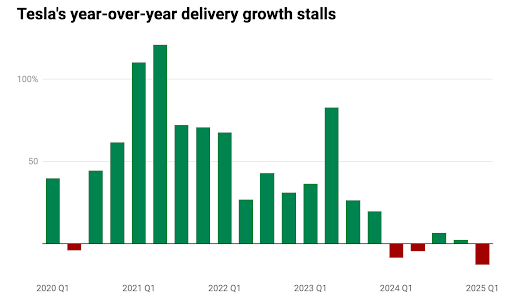
Tesla, the famous electric car company led by Elon Musk, has just reported its worst sales numbers in two years. In the first three months of 2025, Tesla delivered about 336,681 cars, which is much lower than the 387,000 cars it sold during the same period last year. This drop in sales has made investors and car buyers wonder—what is going wrong?

Why Are Tesla’s Sales Dropping?

  1. Production Problems
    Tesla had to pause production to upgrade its factories, especially for the popular Model Y. These shutdowns happened in China and Europe earlier this year, which meant fewer cars were being made and delivered. When production stops, sales naturally go down.
  2. Tougher Competition
    Tesla is no longer the only big player in the electric car industry. Chinese company BYD sold more than 416,388 electric cars in the same period, beating Tesla for the top spot. More car companies are making electric vehicles, so buyers now have more options than ever.

Elon Musk’s Controversies
While Elon Musk is a genius in the tech world, his political opinions and social media activity have turned some potential customers away—especially in Europe. Some people are hesitant to buy a Tesla because they do not support Musk’s views, which has hurt Tesla’s brand image.

What Are Analysts Saying?

JPMorgan analyst Ryan Brinkman described Tesla’s rapid decline as unprecedented in the automotive industry, attributing it to backlash against Musk’s political donations, which sparked widespread protests and even acts of vandalism against Tesla vehicles.

“We struggle to think of anything analogous in the history of the automotive industry, in which a brand has lost so much value so quickly,”

Experts believe that Tesla needs to change its strategy to stay ahead. If it does not, it could keep losing sales to companies like BYD. After Tesla’s low sales report, its stock price fell by 6.3%, showing that investors are worried about the company’s future.

What’s Next for Tesla?

Even though Tesla is struggling right now, it is not giving up. The company plans to release new car models and advanced technology to win back customers. It is also expanding its battery and energy storage business, which could help bring in more money even if car sales stay low.

Tesla has faced challenges before and bounced back, but this time, it has stronger competition and a more demanding customer base. The next few months will be crucial in deciding whether Tesla can maintain its place as the world’s leading electric car company.

Site logo

* Copyright © 2024 Insider Inc. All rights reserved.


Registration on or use of this site constitutes acceptance of our


Terms of services and Privacy Policy.