Home Blog Page 12

New Loan Rules in Nigeria: If You Owe Money, You May Not Get a Passport or Driver’s License

0

The Nigerian government is making a big change: if you take a loan and do not pay it back, it could affect your ability to get a passport, driver’s license, or even rent a house.

Let us break it down in simple terms.

What is Happening?

The government has set up a group called CREDICORP. They are creating a new system where your credit score (how good you are at paying back loans) will be connected to your NIN (National Identification Number).

So now, whenever you borrow money from a bank, a loan app, or even a small finance company, it will be tracked and tied to your NIN. If you pay back on time, great! If not, there will be consequences.

What Happens If You Do not Pay Your Loan?

If you do not pay your loan, you may:

  • Be denied a new passport or passport renewal
  • Not be able to apply for a driver’s license
  • Have trouble renting a house
  • Be blacklisted from getting another loan

According to CREDICORP’s boss, Uzoma Nwagba, this move is not to punish people, but to stop the bad habit of borrowing money and refusing to pay back. As he put it:

“There is no hiding place anymore.”

Why Is the Government Doing This?

There are a few reasons:

  • To make people more responsible with money
  • To help loan companies trust people again so they can give out more loans
  • To help young Nigerians (especially NYSC members and those between 18–35) through a new loan program called YouthCred
  • To grow the economy, especially by encouraging people to spend money on Nigerian-made products

Right now, Nigerians need ₦183 trillion worth of loans every year for things like school, small businesses, farming, or health. But many lenders are afraid to give loans because people often do not pay back.

What Is a Credit Score?

A credit score is like a report card for your borrowing habits. It tells lenders:

  • If you have borrowed money before
  • If you paid it back on time
  • How much debt you have

A good credit score means you are trustworthy. A bad one means you are a risk. With this new system, your credit score will be tied to your identity (NIN), and it will follow you around like your BVN.

Is This Fair?

That depends.

  • The good side:
    If you are responsible and pay your debts, you will be rewarded maybe with easier access to loans, better services, and more trust from lenders.
  • The worrying side:
    If someone falls on hard times and genuinely can not pay, will they be punished too harshly? Will the system be fair and transparent?

That is what many people are now asking. The government says the goal is to discipline, not punish.

What Should You Do?

  1. Only borrow what you can afford to pay back.
  2. Pay your loans on time, even small ones.
  3. Check your credit record and know your score.
  4. Ask questions before taking any loan, understand the interest and repayment terms.

Keep your NIN updated and protected.

End Note

This is a big shift in how money and identity are handled in Nigeria. Whether you are a student, a trader, a farmer, or a civil servant, this affects everyone.

If you are careful with loans, this new system could help you get more support and trust. But if you ignore repayments, it could literally close important opportunities for you

So, in this new era: borrow wisely, repay faithfully, and protect your name.
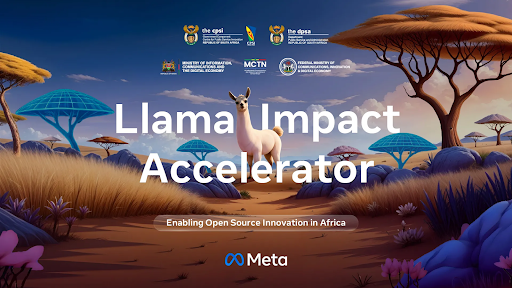
FG & Meta Launch 8-Month AI Programme for Nigerian Startups

0

A big opportunity for young tech minds across the country!

In a powerful move to support local tech talent, the Federal Government of Nigeria has teamed up with Meta (the company behind Facebook, Instagram, and WhatsApp) to launch a new 8-month program that helps Nigerian startups build smart solutions using Artificial Intelligence (AI).

It is called the Llama Impact Accelerator and no, it is not about animals! “Llama” is the name of Meta’s open-source AI model that startups will now get to use.

So, What is This Programme All About?

The programme is designed to help small Nigerian startups use AI tools to solve real problems in healthcare, farming, safety, and even areas they come up with themselves!

It is free, it comes with no strings attached, and you do not need to give up any part of your business to join. That is a big deal.

How It Works (In Simple Steps):

  • Start with 6 weeks of training
    • You will get practical lessons on AI, how to use it, and how to build products with it.
    • Learn from Meta’s experts and Nigerian tech mentors.
    • Meet other smart young innovators like you.
  • Then 6 months of full support
    • You keep working on your solution, with ongoing help.
    • Access Meta’s AI tools and computing power for free.
    • Regular check-ins and coaching to keep you on track.

End it all with a big Demo Day, where you will show your idea to investors, policymakers, and global tech leaders.

What Kind of Ideas Are They Looking For?

They want Nigerian startups to use AI in areas like:

  • Agriculture – e.g., AI that tells farmers when to plant or what crops are sick
  • Healthcare – e.g., tools that remind patients to take medicine or help detect diseases early
  • Security – e.g., smart systems that detect threats or track missing persons

Wildcard – any other fresh and brilliant idea YOU come up with that helps society

What Do You Get?

If your startup is chosen, here is what you will enjoy:

  • Free access to Meta’s Llama AI models
  • No equity taken – you keep full ownership of your business
  • Expert mentorship – both local and international
  • Tech support – tools, infrastructure, and resources to build your idea
  • Connections – meet investors, government leaders, and other startups

Demo Day – pitch your idea on a big stage

Deadline & How to Apply

  • Applications are open now and close on June 27, 2025.
  • You can apply online

It is open to all Nigerian startups focused on solving local problems using AI.

Why This Matters

This programme is not just about fancy tech, it is about using AI to solve real problems that Nigerians face every day.

And here is the best part:

It is made for local startups, powered by global tech, and guided by local mentors.

In summary, the Llama Accelerator will help Nigerian innovators take their ideas to the next level and make life better for millions.

End Note

If you are a Nigerian startup founder with a powerful idea, this is your chance. You do not need to be a coding genius, you just need a great idea, a willing heart, and a drive to solve real problems.

Do not wait. Apply before June 27 and take your seat at the future of AI in Nigeria.

Why Your Next Job Interview Might Be with an AI

The narrative recently is that companies are using AI to screen resumes and assessments. Now they are taking things further. You can be rest assured that soon enough, when you apply for a job, instead of a human, machines will be taking charge of the interviewing process, one that analyzes your facial expressions, tone of voice, choice of words, and even your body language.

Across the globe, more companies are turning to Artificial Intelligence (AI) to streamline their hiring processes. While this promises efficiency and scale, it also raises serious questions about fairness, privacy, and the future of work.

How AI is Changing the Hiring Process

Automated Resume Screening

Before a human recruiter reviews your CV, AI programs may have already screened it. There are many platforms such as HireVue that use natural language processing (NLP) to analyze resumes for relevant keywords, educational background, and employment history, evaluating candidates according to their alignment with the job specifications.

Some systems also monitor how often and how recently you have updated your LinkedIn or portfolio, indicating an “active” candidate.

AI-Powered Video Interviews

One of the fastest-growing trends is on-demand video interviews, where candidates record responses to preset questions on a platform powered by AI.

The software then analyzes:

  • Facial expressions (Are you smiling? Frowning?)
  • Eye movement (Are you looking at the camera?)
  • Speech patterns (Is your tone confident? Calm? Energetic?)
  • Language use (Are you using keywords related to the job?)

Some tools claim to assess “soft skills” like communication, collaboration, or emotional intelligence, all without human interaction.

Behavioral and Psychometric Algorithms

Platforms like Pymetrics use short games and behavioral tasks to build psychological profiles of candidates. These results are then compared to top-performing employees at the company to decide if you are a “fit.”

Similarly, AI chatbots are now used for first-round interviews, especially for high-volume roles like customer service, sales, and tech support.

Why Companies Are Doing This

  • Pace and effectiveness: AI is capable of reviewing numerous applications within minutes, a task no human recruiter can match.
  • Cost efficiency: Automated tools minimize the necessity for extensive HR teams, particularly during initial screening.
  • Standardization: Ideally, AI eliminates human bias and guarantees that every candidate is evaluated using the same standards.
  • Constant availability: AI interviews can be conducted at any time and from any location, simplifying coordination across different time zones.

But Here’s the Catch: Concerns About Bias and Fairness

Algorithmic Bias

AI is only as fair as the data it is trained on. If the system learned from biased hiring practices of the past, it may repeat them, rejecting candidates based on race, gender, age, or even accents.

For example, some facial analysis tools have been criticized for misreading expressions on darker skin tones or underrepresenting certain groups.

Lack of Transparency

Most candidates do not know how they are being scored or even that an AI is evaluating them. There is often no way to appeal a poor AI score or understand what went wrong.

Privacy and Consent

AI interviews may collect biometric data (like facial movement and voice tone), raising concerns about how that data is stored, used, and shared.

Regulators Are Paying Attention

Countries like the United States, European Union, and United Kingdom are exploring rules for AI accountability in hiring. In New York City, companies are already required to audit and disclose their AI hiring tools. The EU’s AI Act also includes provisions on “high-risk” AI applications, including recruitment.

But enforcement is still catching up and until laws are widespread, many companies operate in a grey zone.

Tips: How to Prepare for an AI-Driven Job Interview

Know your keywords

Customize your resume and video answers with key terms from the job description. AI tools scan for matches.

Practice speaking clearly and confidently

AI tracks your tone, pace, and clarity. Avoid speaking too fast or in a monotone.

Dress professionally and keep eye contact

Even if there is no human watching, the AI may analyze visual cues. Sit in a quiet, well-lit space.

Avoid filler words

Words like “um,” “like,” and “you know” can hurt your speech score. Practice structured, direct responses.

Ask questions if you can

If the platform allows it, ask about the process. For example: “Will a human review this interview?”

Do your research

Look up whether the company uses tools like HireVue, Modern Hire, or Pymetrics. Each has unique expectations.

Final Thoughts

AI is not replacing human recruiters yet, but it is rapidly becoming the initial screening step you need to clear. Although it enhances the speed and organization of recruitment, it simultaneously introduces new issues concerning fairness, accuracy, and privacy.

For those looking for jobs, understanding how these systems function and how to adjust accordingly is becoming equally essential as crafting an exceptional cover letter.

Ultimately, your next employment chance could be merely a clever algorithm away. 

Is Google About to Destroy the Web?

What Google’s New AI Search Means for You, Websites, and the Internet

Google is changing the way we search online. Instead of giving you a list of websites to choose from, Google now shows AI-generated answers at the top of the search page. It is fast, convenient, and feels a bit like chatting with a smart assistant.

But many people, especially website owners, writers, and news publishers are getting worried. They say that Google’s new AI features might actually hurt the open web and the people who help make it useful.

Let us break down what is going on.

What Did Google Change?

AI Overviews

When you search for something, Google now often gives you a short AI-generated answer at the very top. You no longer need to click on a website to get the information.

AI Mode

This is a more advanced feature where you can have a full conversation with Google’s AI, kind of like ChatGPT. It gives you direct answers instead of links.

Why Are Website Owners Upset?

Websites Are Losing Visitors

News websites, recipe blogs, travel guides, and review sites are recording fewer clicks because fewer people are visiting their pages, because users are just reading the AI’s summary instead of clicking the links.

For example:

  • Business Insider lost over half of its search traffic.
  • Other major sites like HuffPost and The Washington Post are also seeing big drops.

This is a big deal, because many websites earn money from ads. Fewer visitors means less money and some have already started cutting jobs because of it.

Why Is This a Problem for the Web?

For many years, there was a trade-off:

  • You got free information from websites.
  • Google sent those websites visitors in return for letting it show short previews in search results.

But now, with AI, Google is giving full answers up front, sometimes using words directly from those websites. And users often do not click any further. That means the websites do the work, but Google gets all the credit.

Is the AI Always Right?

No! In fact, when the AI answers first started showing up, there were some big mistakes:

  • It told users to put glue on pizza to keep the cheese from falling off.
  • It gave medical advice that was factually wrong.
  • It pulled fake answers from joke websites as if they were real.

AI is smart, but it can make things up or get confused especially if it is summarizing lots of sources too quickly.

What Might Happen Next?

Websites Could Shut Down or Go Behind Paywalls

If websites stop getting visitors and can not make money, some may disappear or start charging for access. That could mean less free information online.

The Web Could Become Less Diverse

Smaller blogs, local news sites, and niche communities might struggle the most. Without clicks or income, we might lose the unique voices and local content that make the web so rich.

More People Will Rely Only on Google’s AI

And if Google’s AI gives wrong or shallow answers, users might not even realize they are being misled because they did not visit a trusted site with real expertise.

Is Anyone Doing Anything About It?

Yes, governments and media companies are starting to take action.

  • The U.S. Department of Justice is already accusing Google of having too much power in search.
  • New laws in Europe and the U.S. are being discussed to make sure AI respects copyrights and shares profits fairly.

News companies want Google to pay them for using their content to train AI or include them in summaries.

What Does This Mean for You?

  • If you are a reader, AI answers are fast, but do not always give the full picture. Try to click the links and explore trusted websites, especially for important topics like health, law, or news.
  • If you are a content creator, you may need to focus more on building a direct audience through email newsletters, social media, or paid subscriptions.

Think about ways to partner with AI tools instead of fighting them. Some platforms may offer licensing deals.

The Big Picture

Google wants to make search better. But in doing so, it might hurt the very websites that built the internet as we know it.

Instead of helping you discover the web, Google’s AI might become the web itself. Summarizing everything, showing fewer links, and keeping you on Google longer.

That may be good for convenience but it is dangerous for independent creators, journalism, and online freedom.

End Note

The question is not just “Is Google about to destroy the web?”
The real question is: What kind of internet do we want to have in the future?
One controlled by a few tech giants or one that supports the millions of people who create, share, and keep the web alive?

This Is the Decade of Robots and Self-Driving Cars” — Nvidia CEO

0

Nvidia’s CEO, Jensen Huang, emphasised that the world is slowly transitioning into a new phase, one where robots and self-driving cars will shift from test runs and experimentation to adoption. During a significant tech event in Paris, he mentioned that these technologies will define the 2020s, much as smartphones defined the 2010s.

So, what does this signify for regular individuals?

Why Are Robots and Autonomous Vehicles Gaining Such Significance?

Artificial Intelligence is moving beyond the screen.

AI is no longer merely a feature found in smartphones or on websites. Currently, it is being developed into various devices such as self-driving vehicles, robots operating in warehouses, and even robotic assistants for households and medical facilities.

Nvidia is building the brainpower

Nvidia makes the chips and software that help machines “think.” These are used by companies making self-driving cars, delivery robots, and smart machines. Nvidia even created a virtual world where robots can train and learn before they operate in real life, just like a video game that teaches them real-world tasks.

Humanoid robots could arrive by 2027

Jensen Huang, along with OpenAI’s CEO Sam Altman, predicts that smart, human-like robots could start appearing in homes and businesses within the next few years. These robots could assist with caregiving, cleaning, security, and more.

It is a massive opportunity

Experts say this technology could grow into an industry worth trillions of dollars, creating jobs, businesses, and new ways of living.

Real-World Examples Are Already Here

This is not just future talk. It is already happening:

  • Waymo, a subsidiary of Google, operates autonomous taxi services in cities such as San Francisco and Phoenix. These vehicles transport riders without a human operator present.
  • Amazon and various firms are employing robots in their warehouses to sort, lift, and transport packages more swiftly than ever.

In Dubai, the future is coming quickly. The city has introduced self-driving, robotic taxis to achieve its aim of making 25% of transport completely autonomous by 2030. The cars that operate autonomously without human intervention are currently undergoing tests on public streets. Dubai is utilizing robots for deliveries and various airport services. It demonstrates how this technology can be implemented in an actual city rather than only in laboratories.

Challenges Still Exist

While the excitement is real, some things still need to happen:

  • The U.S. and other countries must construct roads, charging stations, and data systems to support these technologies.
  • Clear laws and safety standards are needed to make sure robots and self-driving cars work properly and do not cause harm.
  • The government and tech companies must make sure these systems protect jobs and respect communities, especially where robots may replace human workers.

Prices must stay stable so the industry can grow and be affordable for more people.

Why This Matters

This shift is not just about fancy cars or cool gadgets. It is about how people will live, work, and move in the future. Imagine:

  • Elderly people getting help from home robots
  • Clean, driverless buses running on time
  • Safer roads with fewer accidents
  • Packages delivered by robots in under an hour

According to Nvidia’s CEO, this is not a far-off dream. This is already beginning, and it will only grow faster in the coming years.

Conclusion

The 2020s are shaping up to be the robot decade. With companies like Nvidia leading the way, and cities like Dubai already showing what is possible, it is clear that robots and autonomous vehicles are here to stay.

The future is not just digital anymore, it is rolling, walking, and driving all around us.

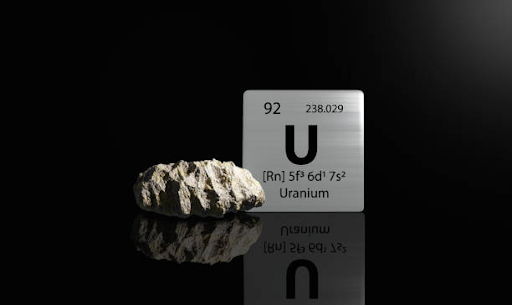
The Quiet Comeback: Uranium Mining Resurges in the U.S

After years of sitting in the background, uranium mining is back in the spotlight in the United States. Why? Because the country is changing the way it thinks about energy, security, and the future.

Federal policy drives a revival

The main reason for the comeback of uranium is that the government has made several big decisions, through official orders and new laws that now place uranium at the center of the country’s energy and security plans. In May 2025, President Trump issued four executive orders aimed at quadrupling U.S. nuclear capacity, fast-tracking the domestic fuel cycle including uranium mining, conversion, and enrichment, and speeding the Nuclear Regulatory Commission’s approvals. Years earlier, legislative acts like the Prohibiting Russian Uranium Imports Act (2024) and the ADVANCE Act (2024) had already elevated uranium to “Tier 1 critical mineral” status and streamlined permitting.

Moreover, key stops were issued for projects like Utah’s Velvet‑Wood mine, cutting environmental review time from years to mere days under the banner of a “national energy emergency”.

Reducing dependence on foreign suppliers

Historically, the U.S. has been import-reliant, importing over 95% of its uranium from Canada, Kazakhstan, Australia, and Russia. Strategic tensions, especially sanctions against Russian LEU, have pinched those channels. As a result, government leaders are now working quickly to produce more uranium inside the country. They are supporting this effort by giving contracts to six companies and investing billions of dollars to build new facilities that can process and enrich uranium for use in nuclear power.

A nuclear renaissance, data centers, AI, and climate goals

The demand for electricity is increasing quickly, particularly for power-intensive activities like artificial intelligence (AI), cryptocurrency mining, hydrogen generation, and converting saltwater into potable water.

To satisfy this increasing demand, there is significant motivation to construct small nuclear facilities known as Small Modular Reactors, or SMRs. These reactors are more compact than conventional nuclear facilities, and they can be constructed more quickly and nearer to the demand for electricity.

Leading tech firms like Amazon, Google, Microsoft, and Meta are now participating. They intend to utilize nuclear energy to operate their expansive data centers, which hold and manage vast quantities of information and need a steady flow of electricity.

Due to its lack of carbon emissions and ability to supply consistent energy around the clock, nuclear power is increasingly recognized as a vital component in addressing climate change and maintaining grid stability.

Consequently, uranium, the fuel that drives nuclear reactors is gaining significance and value again

Industry response: mines reopening

Major mining companies, such as Energy Fuels, are reactivating mines in Arizona, Utah, Wyoming, and Texas. In-situ recovery (ISR) operations; cheaper, quicker to scale are leading the resurgence, though conventional milling (e.g., Utah’s White Mesa plant) remains a bottleneck. Energy Fuels alone plans production of over 2 million pounds of U₃O₈ by 2025.

Market momentum and investor confidence

Uranium spot prices have doubled from early 2024 lows, hovering around $90 / lb. Physical uranium was one of 2023’s top-performing commodities, up ~90%, while uranium mining equities rallied even more. Stocks like Cameco, Cameco-backed Westinghouse, and SMR players like Oklo have seen 16–27% gains since Trump’s orders.

Lingering challenges and community impact

Yet, the resurgence is not without obstacles:

  • Environmental and Indigenous concerns: Locally, there is significant resistance. Native communities in Alaska, Navajo lands, and near mine sites express fears based on past contamination.
  • Infrastructure constraints: Limited domestic processing capacity slows production; White Mesa remains the only conventional mill, and permit approvals remain uneven.
  • Price sustainability: Domestic mining remains marginal unless uranium prices stay high. Despite fast-tracking, some projects await market viability.

Whats next?

If the government continues to provide support by giving money, speeding up approvals, and strengthening national policies, the United States could produce much more of its own uranium by the year 2030. Key mining areas will include states like New Mexico, Texas, Wyoming, and Utah.

However, success will depend on whether uranium prices remain steady, whether the country can build enough processing facilities, and how well it handles environmental concerns and respects the rights of Indigenous communities.

In summary, a mix of government action, global tensions, rising demand from technology companies, and investor interest is bringing uranium mining back in the United States. But for this comeback to last, the country must fix problems in its infrastructure, protect local communities, and keep uranium production financially worthwhile.

How Bill Gates Is Funding Africa’s Future: Innovation, Not Just Charity

0

If you had $200 billion, what would you do with it? Buy islands? Build space rockets? Well, Microsoft co-founder and philanthropist Bill Gates has a different idea: he is giving most of it away — and Africa is at the heart of his plans.

Yes, you read that right.

In a bold and deeply human move, Gates has pledged the bulk (99%) of his fortune in 2045 to support Africa’s development across healthcare, agriculture, education, and tech innovation. Why? Because he believes Africa is not just in need,  it is full of untapped potential.

More Than Just Giving, it is Investing in People

Over the years, the Bill & Melinda Gates Foundation has spent billions on fighting diseases like malaria, HIV/AIDS, and tuberculosis across Africa. But this new pledge is a step up. It is not just about charity, it is about empowering people with tools to thrive.

In recent interviews and statements, Gates has emphasized that Africa’s young, fast-growing population is key to the future of global progress. 

“If the world wants to solve its biggest problems, from food security to innovation — Africa has to be part of the solution,” Gates said during his recent visit to Kenya and Nigeria.

In recognition of this impactful gesture, Nigerian President Bola Ahmed Tinubu bestowed the national honor of CFR upon Bill Gates for his impact on global development. The CFR is one of the most prestigious national awards granted by the Nigerian government, usually designated for those who have significantly contributed to the nation’s progress or improved Nigeria’s reputation internationally.

What Will the Money Do?

This is not a one-size-fits-all donation. Gates’ funding will be spread across:

  • Healthcare: Funding vaccines, maternal health programs, and emergency care systems.
  • Agriculture: Helping small farmers grow more resilient crops with fewer resources.
  • Education & Tech: Supporting digital education, data science training, and research infrastructure.
  • Climate Resilience: Funding local innovations that help African communities adapt to climate change.

According to the World Bank, Africa needs an estimated $100 billion annually to meet its infrastructure and development goals. Gates’ contribution, while not solving everything, could be a serious catalyst.

A Long Game, With Local Voices

Notably, Gates is not doing this alone or acting as a savior. One of the key messages from the Gates Foundation is the importance of working with African leaders, communities, and innovators to create solutions that actually work. This means listening, not lecturing.

“We do not bring solutions from the outside. We support the brilliant work that is already happening across the continent,” Gates shared in an interview with Al Jazeera earlier this year.

So, Why Should We Care?

Because it is rare to see someone at the top of global wealth lists genuinely commit to long-term change that benefits others, especially people who have been historically underserved.

Bill Gates is not just donating money, he is redefining what global wealth and responsibility should look like in the 21st century. And he is putting his fortune where his heart is: on a continent that is rising, evolving, and full of brilliance.

Spiritual Shopping: The Rising Wellness Trend in 2025

0

Any day of the week, if you pause for just a moment and really look around, you will see it—people trying to make ends meet, pushing through under harsh conditions. Deadlines are endless, social media never sleeps, and burnout feels like a permanent state. We are all running on fumes. Everyone is tired, overwhelmed, and quietly struggling. But we keep going, don’t we? Because that is what life demands.

In the middle of all this noise and pressure, a quiet shift is happening. More and more people are turning inward. Searching for peace. Craving calm. Spiritual wellness—once a niche interest—is now becoming a lifeline. Not because it’s trendy, but because people just want to feel okay. To feel grounded. To feel something good.

But let’s be clear—this isn’t just about pretty crystals or burning incense. It’s about using small, meaningful tools to nurture your emotional well-being, clear your mind, and reconnect with yourself. And the beauty of it? You don’t have to be religious—or even particularly “spiritual”—to join in.

This is personal. It’s gentle. And it fits perfectly into a world that’s finally starting to understand that real wellness goes beyond fitness goals and green smoothies. It’s about healing the inside too.

So, What Is Spiritual Shopping?

Spiritual shopping is essentially the act of buying products that support your emotional, psychological, or spiritual needs. These can include:

  • Healing crystals believed to promote energy balance
  • Candles infused with calming scents like lavender or sandalwood
  • Aromatherapy oils for relaxation and mood enhancement
  • Journals for gratitude or intention-setting
  • Tarot or affirmation cards for self-reflection
  • Wellness boxes or ritual kits for setting daily routines

These items serve as gentle reminders to slow down, breathe, reflect, and reconnect with yourself, something that many of us desperately crave in our busy lives.

Why It’s Gaining Momentum

  1. People are craving meaning and connection
    Many are turning away from traditional paths of wellness (like diet culture or intense workouts) and toward approaches that feel more emotionally nourishing. Spiritual shopping gives people a sense of control and comfort, especially during uncertain times.
  2. Mental health is a top priority
    The pandemic sparked a global mental health crisis. Even after a few years, people are still seeking ways to manage stress and anxiety outside of traditional therapy or medication. Tools like energy stones or mindful journaling offer a form of gentle self-care.
  3. It is all over social media
    Platforms like TikTok and Instagram have become hotspots for spiritual influencers showcasing everything from “aura cleansing” sprays to full moon rituals. This visibility has made spiritual tools less niche and more mainstream.

It is personalized and non-judgmental
Unlike some wellness practices that require strict routines or rules, spiritual shopping lets people build their own path. Whether it’s lighting a candle each morning or carrying a rose quartz in your bag for love, there’s no right or wrong.

The Business of Soulful Retail

The industry is taking note. Major beauty and wellness brands now offer product lines with a spiritual twist. For instance:

  • Vyrao, a fragrance brand, has developed perfumes infused with energy-healing crystals to support everything from confidence to clarity.
Green heart-shaped gift box featuring Vyrao wellness perfumes, representing mood-enhancing spiritual fragrance collection.

Goop, the wellness brand founded by Gwyneth Paltrow, frequently features curated “spiritual” kits for everything from heartbreak to grounding.

Wellness product lineup featuring a gemstone heat therapy mat, "Calm the Chaos" mindfulness cards, and a Skyview 2 circadian rhythm lamp.

Independent creators on Etsy and Instagram are building full-time businesses around hand-crafted spiritual tools.

Illustration of a house surrounded by glowing crystals and flowers promoting energetic house cleaning, spiritual home cleansing service ad

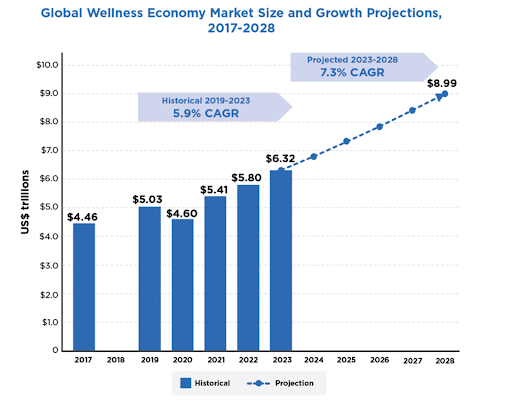
According to a report from Global Wellness Institute (2023), the global wellness economy is expected to surpass $7 trillion by 2025 and spiritual wellness is one of the fastest-growing segments.

Global wellness economy market size chart showing growth from 2017 to projected 2028 with rising trend and CAGR data.

Is It Just News? Or Something Deeper?

Skeptics may see spiritual shopping as a trend driven by influencers and marketing but for many, it is a meaningful part of daily life. These purchases are not just impulse buys or for show; they are tied to real emotional experiences. Lighting a candle before meditating, pulling an affirmation card after a tough day, or holding a calming crystal during a stressful meeting, these small acts can actually bring genuine and deep comfort.

Experts like psychologist Dr. Nicole LePera, also known as “The Holistic Psychologist,” argue that incorporating rituals and symbolism into your life can create powerful shifts in your mindset. Even if the science behind crystals is debated, the intention behind using them can spark positive behavior change.

Final Thoughts: More Than Just a Trend

Spiritual shopping, initially seen as a niche interest, is rapidly emerging as a popular wellness resource for individuals across various ages and backgrounds. It indicates a larger cultural transformation, where individuals are embracing responsibility for their healing and discovering happiness in simple, intimate practices.

In a time when we are always connected and overwhelmed, spiritual shopping provides a calm, purposeful opportunity to stop, contemplate, and reestablish connections. It might not substitute therapy or resolve life’s major issues, but for numerous people, it serves as a minor yet impactful means to feel a little more complete.

How Physics Is Making AI Faster, Smarter, and More Efficient

Artificial Intelligence (AI) is revolutionizing our world, from introducing smart assistants to predicting weather patterns. However, as AI models become more complex, they demand more computational power and energy. Interestingly, scientists are now turning to physics to enhance AI’s performance, making it faster, smarter, and more efficient.

Physics Meets AI: A New Frontier

Traditionally, AI systems learn patterns from vast amounts of data. However, integrating principles from physics allows AI to understand the world more naturally and efficiently. This fusion leads to models that not only learn from data but also respect the underlying physical laws governing real-world phenomena.

Real-World Applications

Traffic Flow and Climate patterns

Dr. Rose Yu, a computer scientist, has applied concepts from fluid dynamics, a branch of physics that studies how liquids and gases move, to improve AI models predicting traffic flow and climate patterns. By embedding physical principles into AI, her models require less data and offer more accurate predictions, aiding in urban planning and disaster preparedness . Instead of asking AI to figure everything out on its own, she teaches it basic rules from physics first. This way, the AI already has some understanding of how things should behave whether it is cars on a road or clouds in the sky.

Because her AI models start with built-in knowledge from physics, they do not need as much data to make good predictions. This makes them faster and easier to use, especially in places where collecting data is hard or expensive. Her approach also helps the AI make better decisions in unusual situations, like when there is a sudden traffic accident or a rare weather event. That is because the model is not just copying past data, it is reasoning based on the laws of nature.

In practice, Dr. Yu’s work is helping cities manage traffic more smoothly. Her AI can predict where congestion is likely to happen and suggest better routes or traffic light timings before problems arise. In the case of weather, her methods are helping scientists and governments forecast storms, heatwaves, and floods more accurately. This gives communities more time to prepare, save lives, and reduce damage.

What makes this work even more important is that it is not just powerful, it is also efficient. Traditional AI models can use a lot of electricity, especially when processing big data. But Dr. Yu’s physics-based models use fewer resources because they are smarter by design. That means they are more environmentally friendly and accessible to places that cannot afford massive computing power.Researchers at the University at Albany’s Atmospheric Sciences Research Center are also collaborating with a Boston tech firm to revolutionize weather forecasting through artificial intelligence and high-performance computing. The initiative seeks to vastly improve the speed and accuracy of predicting extreme weather and wind events by integrating satellite-based data with UAlbany’s New York State Mesonet system, comprising 127 weather observation sites and historical weather information .

Brain-Inspired Computing: Neuromorphic Engineering

Neuromorphic computing is an approach that designs computer systems inspired by the human brain’s structure and function. These systems use “neurons” and “synapses” to process information, enabling faster and more energy-efficient computations. Such designs are particularly beneficial for tasks like image and speech recognition .

Thermodynamics and AI: Energy Efficiency

Thermodynamics, the study of heat and energy, offers insights into making AI models more energy-efficient. By understanding and applying thermodynamic principles, researchers aim to develop AI systems that consume less power without compromising performance .

The Future: Physics as AI’s Catalyst

The collaboration between physics and AI is just beginning. As we continue to explore this interdisciplinary approach, we can expect AI systems that are not only more powerful but also more aligned with the physical realities of our world. This synergy promises advancements in healthcare, environmental monitoring, and beyond.

By embracing the principles of physics, we are not just enhancing AI, we are paving the way for a smarter, more efficient future.

How Design Thinking Can Drive Social Impact in Emerging Markets

In various parts of the world, particularly in regions like Africa, Asia, and South America, people face challenges just to meet their basic needs including access to electricity, education, clean water, healthcare, and stable jobs. Solving these problems should not be difficult but in reality, they persist due to social, economic and infrastructural barriers. However, one creative approach is making a real difference now is Design Thinking.

Design Thinking is not about throwing money or technology at a problem. Instead, it is about understanding what people really need and coming up with smart, practical solutions; designed with them, not just for them.

Let us explore how this method is helping improve lives in powerful ways.

What is Design Thinking?

At its core, Design Thinking is a way of solving problems by focusing on the people who are affected by them. It follows five simple steps:

  1. Empathize – Understand people’s struggles and needs
  2. Define – Clearly state the problem
  3. Ideate – Brainstorm possible solutions
  4. Prototype – Build a basic version of the solution
  5. Test – Try it out, get feedback, and improve

In other words, you listen first, design second. Read  more.

Real-Life Impact of Design Thinking

South Africa – Clean Energy for Townships

In many South African townships, people do not have reliable electricity. A startup called Kasi Gas came up with a local solution: affordable, clean cooking gas made from organic waste. But instead of simply selling it, the founder talked to families, learned about their cooking habits, and involved the community in designing how the service would work.

By using Design Thinking, listening first, designing with the community, they built a solution that people actually wanted to use. It is clean, safe, and owned by the people who use it.

India – Helping Farmers with Video Learning

In rural India, millions of farmers struggle with low crop yields. A nonprofit called Digital Green asked a simple question:

“How can farmers learn better farming practices from each other?”

Instead of sending experts to lecture them, they gave farmers video cameras. The farmers recorded short videos sharing tips; like how to plant a certain crop or save water. These videos were shown in group meetings using low-cost projectors.

It worked. Farmers trusted each other, the advice felt relevant, and crop yields improved. This is a perfect example of designing with empathy and context.

Ethical Fashion That Empowers Artisans

In the Andes, many Indigenous women have centuries-old weaving skills, but not much income. Fashion brands like Sake partnered with these artisans to co-create clothing using traditional methods, natural dyes, and fair trade pricing.

Instead of treating these women as laborers, the designers worked side-by-side with them to build products that respected their culture and creativity. They used Design Thinking to create beautiful, ethical fashion that is now sold around the world—while providing stable incomes to rural families.

Why Design Thinking Works in Emerging Markets

  • It puts people first: Too many “solutions” fail because they ignore the real needs of the people they are supposed to help.
  • It works with limited resources: You do not need millions of dollars. You need creativity, local knowledge, and small experiments.

It encourages local ownership: When communities help design the solution, they are more likely to support and maintain it.

Simple Tools, Big Results

You might think Design Thinking is just for tech companies, but it is not. Anyone—teachers, nurses, farmers, local entrepreneurs—can use this method to solve real problems.

Here is how:

  • Talk to real people before building anything.
  • Ask questions like “What is hard for you?” or “What would make this easier?”
  • Try small versions of your idea first (a prototype).

Listen to feedback and improve it.

What’s Next?

As emerging markets grow, Design Thinking offers a powerful tool for creating change from the ground up. It helps avoid one-size-fits-all solutions by creating ideas that are locally rooted, community-owned, and globally inspiring.

If we want to build a fairer, more sustainable world, we need more ideas designed with people in mind, not just for them.

“When you design something for someone, but not with them, you might solve the wrong problem.”

Design Thinking reminds us that the best way to make change is to listen first, learn deeply, and build together.

Site logo

* Copyright © 2024 Insider Inc. All rights reserved.


Registration on or use of this site constitutes acceptance of our


Terms of services and Privacy Policy.